
Revised Maritime Code Effective May 1, 2026: Shipper Bears First Liability for Unclaimed Cargo
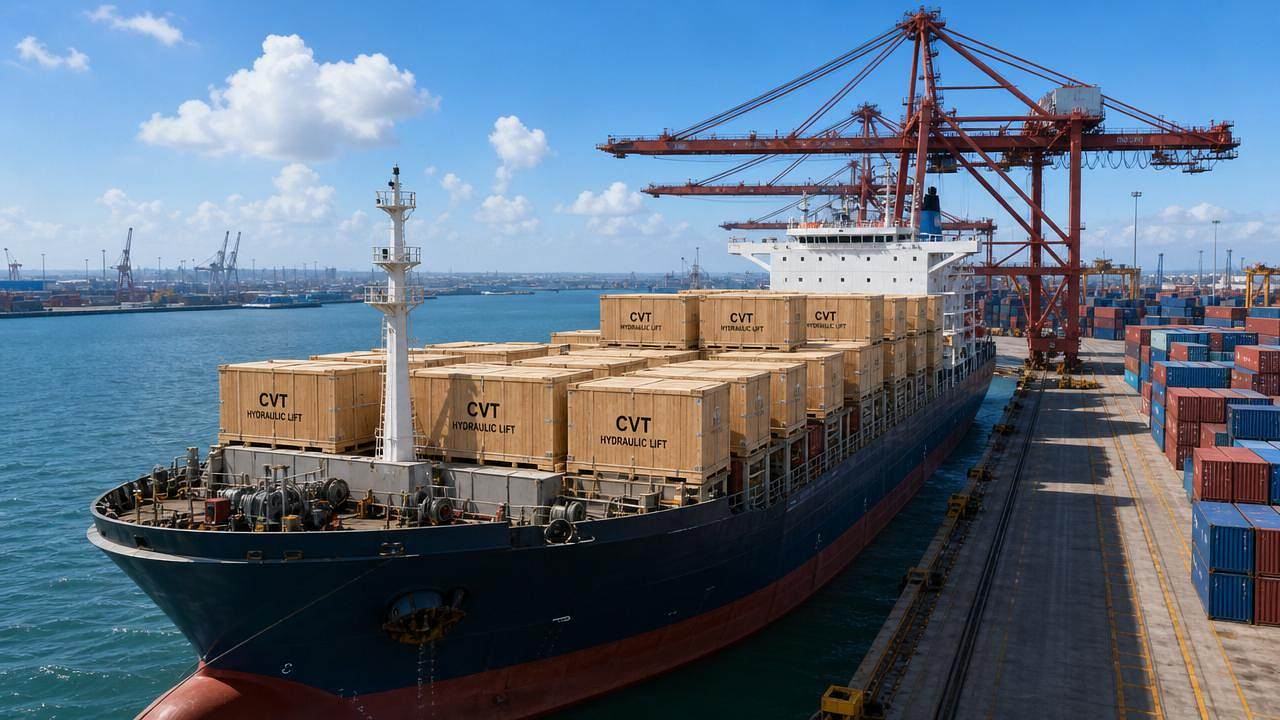




Effective May 1, 2026, the newly revised People’s Republic of China Maritime Code shifts primary liability for unclaimed cargo at discharge ports from consignees to shippers — a structural change with direct implications for exporters of high-value, long-lead-time agricultural machinery components, including CVT transmissions and hydraulic lift systems.
Event Overview
On May 1, 2026, the amended Maritime Code of the People’s Republic of China enters into force. Article 93 explicitly establishes the shipper as the party bearing first responsibility for unclaimed cargo at the port of discharge — replacing the prior framework under which liability primarily rested with the consignee. This revision is publicly confirmed and codified in the official legislative text.
Industries Affected by This Change
Direct Exporters (OEMs and Tier-1 Suppliers)
Exporters of high-value, long-lead-time agricultural machinery components — such as continuously variable transmission (CVT) units and hydraulic lift systems — are directly exposed. These products often involve extended manufacturing cycles, elevated unit values, and complex post-shipment logistics coordination. Under the new rule, if overseas importers delay customs clearance or abandon cargo, Chinese shippers may be held liable for demurrage, storage fees, repatriation costs, and potential letter-of-credit discrepancies.
International Trade Service Providers (Freight Forwarders & Customs Agents)
These intermediaries frequently assist exporters in drafting INCOTERMS-aligned contracts and arranging marine insurance. The shift in statutory liability necessitates updated contractual guidance and risk disclosures — particularly when advising clients on FOB, CIF, or DAP terms where control over post-discharge handling remains ambiguous.
Supply Chain Finance & Credit Risk Managers
Financial institutions and internal credit teams assessing export receivables must now re-evaluate counterparty risk models. A consignee’s failure to take delivery no longer automatically triggers recourse against the buyer alone; the shipper’s statutory liability may affect collateral coverage, LC negotiation outcomes, and bad-debt provisioning assumptions — especially for transactions involving emerging markets with volatile import compliance records.
Key Considerations and Practical Responses for Stakeholders
Review and revise INCOTERMS usage in active and upcoming contracts
Shippers should assess whether current INCOTERMS (e.g., CIF or CFR) inadvertently obscure responsibility for post-unloading obligations. Where feasible, consider shifting to DPU (Delivered at Place Unloaded) or DAP with explicit clauses assigning responsibility for customs clearance and cargo release — ensuring alignment with Article 93’s liability allocation.
Expand marine cargo insurance scope to cover statutory liabilities
Standard cargo policies typically exclude liabilities arising from delay, abandonment, or regulatory non-compliance. Exporters should verify whether their existing marine insurance covers shipper-incurred demurrage, detention, or repatriation costs triggered by consignee inaction — and procure endorsements or supplemental coverage where gaps exist.
Strengthen pre-shipment due diligence on overseas consignees
Given heightened exposure, exporters should formalize checks on consignee import licensing status, historical customs clearance timelines, and financial capacity to absorb duty/tax liabilities. This may include requesting recent import declarations or engaging local agents for real-time verification prior to shipment release.
Monitor implementation guidance from MSA and MOFCOM
No administrative interpretations or enforcement guidelines have yet been issued by the Ministry of Transport (MOT), China Maritime Safety Administration (MSA), or Ministry of Commerce (MOFCOM). Stakeholders should track official notices for clarifications on liability thresholds, force majeure exceptions, and interplay with international conventions such as the Hague-Visby Rules.
Editorial Perspective / Industry Observation
Observably, this amendment signals a deliberate recalibration of risk allocation in China’s maritime legal framework — prioritizing carrier protection and port operational efficiency over traditional consignee-centric liability models. Analysis shows it is not yet a fully operationalized regime: enforcement precedent, judicial interpretation, and cross-border conflict-of-law applications remain untested. From an industry perspective, the change functions more as a structural signal than an immediate operational reset — one that incentivizes proactive contract governance rather than triggering automatic penalties. Current attention should focus less on hypothetical worst-case scenarios and more on documented shifts in insurer underwriting criteria and bank documentary review practices.
Concluding, this revision marks a material adjustment in statutory responsibility — not a blanket expansion of commercial liability. Its practical impact will depend heavily on how consistently courts and banks apply Article 93 across jurisdictions and transaction types. For now, it is better understood as a catalyst for contractual precision and risk documentation — not as an imminent source of widespread claims or losses.
Source Attribution:
Main source: Official promulgation notice of the Revised Maritime Code of the People’s Republic of China, effective May 1, 2026.
Note: Implementation guidance from regulatory authorities (MSA, MOFCOM) and judicial interpretation from the Supreme People’s Court remain pending and are subject to ongoing observation.
Related News

How to Compare Agricultural Equipment Platforms for Fleet Management and ROI
Agricultural equipment platform comparison: evaluate fleet data, maintenance, precision workflows, and ROI to choose a system that delivers measurable results.

Drip vs. Micro-Sprinkler Irrigation: Which System Fits Your Orchard?
Irrigation solution comparison for orchards: discover whether drip or micro-sprinklers best match your water, soil, roots, fertigation, and frost needs.

Orchard Water Management: Using Soil Moisture Data to Schedule Irrigation
Agricultural water management for orchards made practical: use soil moisture data to optimize irrigation timing, protect yield, reduce costs, and improve resilience.

Tractor Chassis Price: What Buyers Should Compare Beyond the Initial Quote
Tractor chassis price is only the start. Compare load capacity, compatibility, durability, and lifecycle costs to choose a reliable, high-value chassis.

How to Select Smart Irrigation Valves for Multi-Zone Water Management?
Intelligent irrigation systems valves: learn how to match smart valves with multi-zone flow, pressure, control, feedback, and communication needs for reliable water management.

Climate-Smart Farming for Drought: A Practical Plan for Protecting Yields
Climate-smart farming for drought: build smarter water budgets, protect critical crop stages, improve irrigation uniformity, and safeguard yields with practical field-proven strategies.

How Digital Agriculture Platforms Turn Field Data Into Better Input Decisions
Digital agriculture platforms turn field data into smarter fertilizer, water, seed, and equipment decisions—helping farms cut risk, improve margins, and scale sustainability.

GPS-Guided Farm Machinery: Where It Delivers Measurable Field Efficiency Gains
Agri-mechanization GPS guided systems deliver measurable field efficiency gains through reduced overlap, precise planting, smarter inputs, and reliable farm data.

How Sensor Feedback Enables Accurate Variable-Rate Fertilization in Field Conditions
Precision fertilization systems with sensor feedback improve variable-rate accuracy by verifying flow, managing latency, and ensuring reliable field application.
Related News
- 00
0000-00
Fuel-Efficient Tractor Powertrain: Which Specs Matter Most for Total Operating Cost? - 00
0000-00
CVT Transmissions Price Explained: What Drives Cost in Agricultural Machinery? - 00
0000-00
Dedicated CVT Rail Link Signals New Export Execution Standard - 00
0000-00
TUV Rheinland Sets New ASIL-B Rule for CVT Systems - 00
0000-00
ANVISA Clears First China-Made Bio-Based CVT Fluid for Brazil
Popular Tags
Tractor Power Architect
Weekly Insights
Stay ahead with our curated technology reports delivered every Monday.