
FDA Sets New Cybersecurity Rule for Soil Moisture Sensors
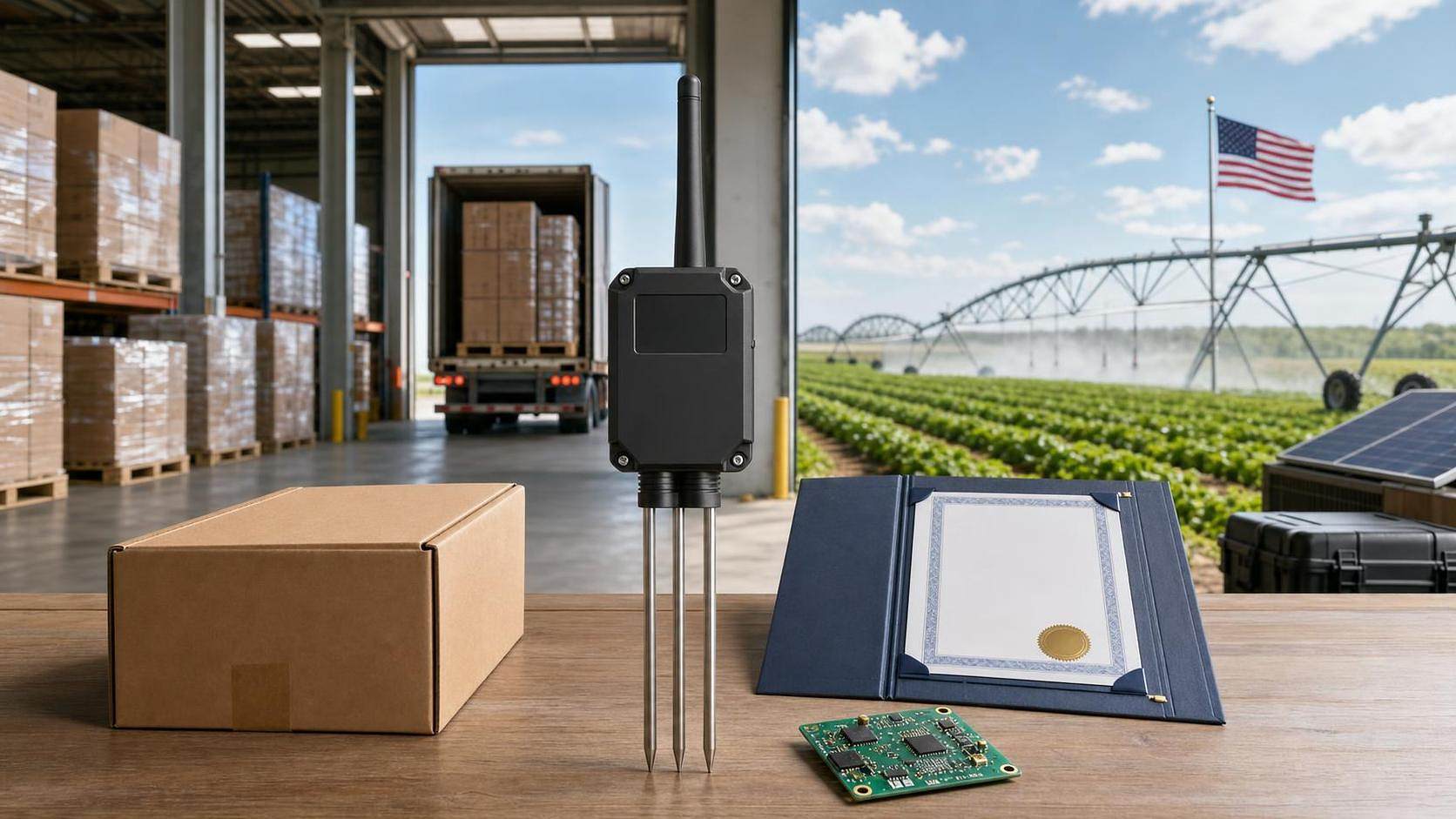




On July 18, 2026, the U.S. Food and Drug Administration (FDA) issued an additional import compliance guide for smart agricultural sensing devices, introducing a new cybersecurity gate for wireless Soil Moisture Sensors entering the U.S. market from October 1, 2026. The update matters not only for sensor manufacturers, but also for exporters, importers, supply chain coordinators, and buyers whose delivery plans depend on whether products can meet certification and firmware audit document requirements before shipment.
What the new import requirement says
According to the information provided, the FDA released the Additional Compliance Guide for Imported Smart Agricultural Sensing Devices on July 18, 2026. The guide states that, starting October 1, 2026, all Soil Moisture Sensors with wireless communication functions imported into the United States must obtain FDA-recognized ISO/IEC 27001 and IEC 62443-4-2 cybersecurity certification, and must also submit a firmware security audit report.
The same information indicates that this requirement directly affects the export route of Chinese manufacturers. Products that do not obtain the required certification will face detention at port or be returned.
Where the immediate pressure is likely to appear
Export-facing manufacturers will face a compliance checkpoint before shipment
From an industry perspective, manufacturers supplying wireless Soil Moisture Sensors to the U.S. market are the first group likely to feel the impact. The main pressure point is no longer limited to product shipment readiness; it extends to whether certification status and firmware audit documentation can support customs clearance. What deserves closer attention is the short gap between the July announcement and the October 1 enforcement date.
Trading companies and import coordinators will need tighter document control
For companies managing cross-border transactions, the issue is not only whether a product can be sold, but whether the import file is complete at the time of entry. Analysis shows that certification proof and firmware security audit materials are likely to become core documents in shipment preparation, customer communication, and delivery scheduling. Any mismatch between cargo status and compliance status could affect port handling outcomes.
Buyers and downstream users may need to reassess supplier readiness
Purchasing parties and end-use businesses connected to U.S. imports may be affected through procurement continuity rather than through the rule text itself. Observably, a supplier's ability to present recognized certification and the required audit report may become a near-term screening factor. This could affect supplier confirmation, order timing, and delivery expectations for products intended for the U.S. market.
Supply chain service providers may face higher execution risk around the deadline
Service providers involved in shipping, customs coordination, or delivery planning may need to pay closer attention to the October 1 implementation threshold. The practical risk is concentrated in cargo already in preparation or in transit close to the effective date. From an operational perspective, compliance timing may become as important as physical delivery timing.
What companies should watch now
Confirm whether the product scope includes wireless Soil Moisture Sensors
The first practical step is to determine whether the products involved fall within the stated category: Soil Moisture Sensors with wireless communication functions imported into the United States. This distinction matters because the requirement described in the provided information is tied to both product type and communication capability.
Track certification status against shipment schedules
Companies with existing or planned U.S.-bound orders should compare shipment timelines with the October 1, 2026 effective date. Analysis shows that certification readiness is now linked to delivery feasibility, not just long-term compliance planning. Where certification has not yet been completed, shipment commitments may require reassessment.
Review firmware audit documentation as a transaction document, not only a technical file
The provided information makes the firmware security audit report part of the import requirement. That means the issue should not be handled only by engineering teams. What deserves closer attention is how this document is prepared, retained, and aligned with export paperwork and customer-facing documentation.
Prepare for customer and partner communication before enforcement begins
For exporters and supply chain partners, communication may become a key risk-control step in the near term. Buyers, distributors, and logistics counterparts may need advance confirmation on whether a product has obtained the required FDA-recognized certifications and whether the related audit materials are available for import procedures.
Why this matters beyond a single filing requirement
Analysis shows that this update should not be read only as an administrative document request. It links market access for a specific category of smart agricultural hardware to recognized cybersecurity certification and firmware audit evidence. That makes the compliance threshold more operational and more document-driven than a general policy signal.
At the same time, it is more appropriate to understand this as both an immediate short-term change and a longer-term signal that connected agricultural sensing equipment may face closer scrutiny at the import stage. Based on the provided information alone, it would be premature to extend that conclusion beyond the stated product category or beyond the stated U.S. import context. Continued observation is still necessary.
How this update is best understood at this stage
At this stage, the clearest takeaway is that the FDA's July 18, 2026 update creates a defined compliance condition for wireless Soil Moisture Sensors entering the U.S. market from October 1, 2026. For affected businesses, the issue is not abstract regulatory direction; it is whether certification and firmware audit requirements can be met in time to avoid detention or return at port.
From an industry perspective, this is best understood as a concrete near-term import compliance change with possible longer-range implications for connected agricultural device trade. The immediate priority remains execution: product scope confirmation, document readiness, supplier qualification review, and shipment planning against the enforcement date.
Basis of this article and points requiring continued verification
This article is based on the user-provided news title, event date, and event summary. For developments of this kind, relevant source types usually include official notices, company disclosures, industry association updates, authoritative media reporting, and standards-related documentation. A specific official source link was not provided in the input, so the exact original document path still requires ongoing verification.
Further attention should remain on any subsequent official wording, implementation clarifications, or document-handling details related to the FDA guide, especially where those details may affect certification recognition, filing practice, and shipment execution for products bound for the U.S. market.
Related News

Choosing Drip Irrigation Systems for Open Fields: Soil, Slope, and Water Quality
Choose drip irrigation systems for open fields with confidence. Discover how soil, slope, and water quality shape emitter spacing, pressure, and filtration—and avoid costly design mistakes.

Choosing Crop Protection Equipment for Hot, Windy Middle Eastern Farms
Compare crop protection equipment Middle East farms need for hot, windy conditions. Discover key nozzle, drift-control, and durability checks to choose the right sprayer.

Choosing an Agriculture 4.0 Supplier: Compatibility, Support, and Total Cost
Choose an Agriculture 4.0 supplier with confidence. Learn how to verify compatibility, assess support, and compare total ownership costs to avoid hidden fees and costly downtime.
Low-Pressure Drip Irrigation: How to Fix Uneven Watering Without Raising Pressure
Optimize low pressure water-saving irrigation systems: discover how to fix uneven watering, clear blockages, and reduce hydraulic losses without raising supply pressure.

Comparing Farm Equipment Supplier Quotes: Price, Freight, and Warranty
Simplify supplier comparison for farm equipment price: assess freight, field-ready costs, and warranty coverage. Learn how to avoid hidden charges and choose a reliable supplier.
Choosing a Digital Farming Platform Provider: Compatibility and Data Ownership
Compare digital farming platforms providers on equipment compatibility, data ownership, and export rights. Discover practical checks to avoid lock-in and choose with confidence.
How Large-Scale Farm Telematics Cuts Downtime Across Mixed Fleets
Large-scale farm equipment telematics cuts mixed-fleet downtime with real-time alerts, smarter maintenance, and stronger operational control. Learn how to protect critical farm workflows.
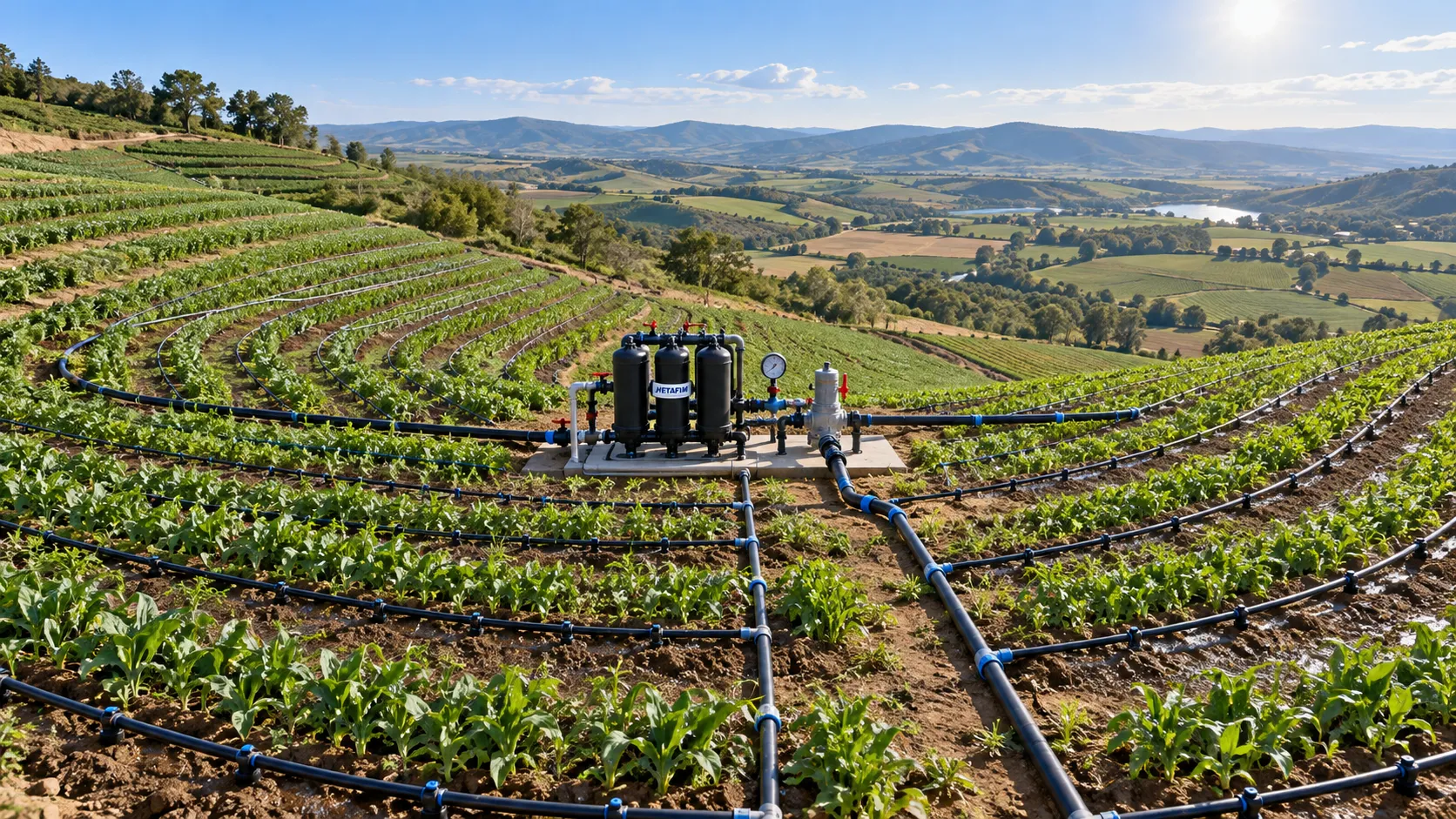
How to Size Low-Pressure Water-Saving Irrigation Systems for Uneven Fields
Low pressure water-saving irrigation systems for uneven fields: learn zoning, pressure mapping, pipe sizing, and pump selection to improve uniformity and reduce water waste.

Farm Machinery Sourcing: How to Vet Suppliers, Specs, and Lifecycle Costs
Farm machinery information for sourcing: learn to vet suppliers, compare specifications, control lifecycle costs, and secure reliable uptime for smarter equipment purchases.
Related News
- 00
0000-00
Orchard Water Management: Using Soil Moisture Data to Schedule Irrigation - 00
0000-00
Climate-Smart Farming for Drought: A Practical Plan for Protecting Yields - 00
0000-00
Selecting Real-Time Soil Moisture Sensors for Irrigation Zone Control - 00
0000-00
How Does Climate-Smart Farming Reduce Water Use in Semi-Arid Areas? - 00
0000-00
USDA Rule Takes Effect: Dual FCC and NRCS Approval for Soil Moisture Sensors
Popular Tags
Hydrological Resource Strategist
Weekly Insights
Stay ahead with our curated technology reports delivered every Monday.