
EN 17892-3:2026 Enforced for Soil Moisture Sensors in EU
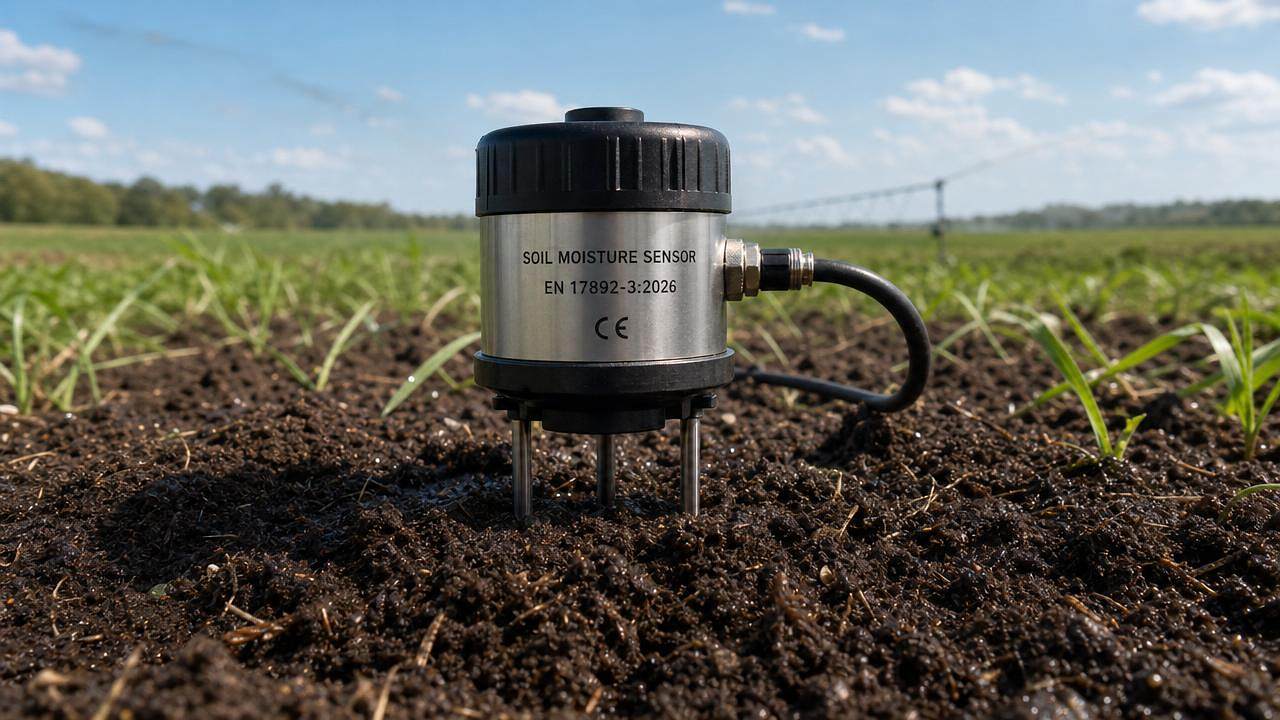




On 16 May 2026, the European Union’s Official Journal (OJEU) confirmed that EN 17892-3:2026 becomes mandatory for all imported soil moisture sensors effective the day after publication. This development directly affects manufacturers, exporters, and importers engaged in precision agriculture hardware, environmental monitoring equipment, and IoT-based soil sensing solutions operating in or supplying the EU market.
Event Overview
The European Union published EN 17892-3:2026 in the Official Journal of the European Union (OJEU) on 16 May 2026. The standard mandates electromagnetic compatibility (EMC) immunity testing for soil moisture sensors and requires CE marking issued by an EU-notified body. Enforcement begins the day following publication. As confirmed in the OJEU notice, non-compliant products risk detention or rejection at major EU ports—including Rotterdam and Hamburg—upon entry.
Industries Affected
Direct Exporters and Trade Enterprises
Exporters shipping soil moisture sensors from third countries—particularly those based in China—must now ensure each product model undergoes full EMC immunity assessment per EN 17892-3:2026 and obtains CE certification from a notified body. Impact manifests in delayed shipments, customs clearance failures, and potential return logistics costs if documentation or test reports are incomplete or outdated.
Manufacturers and OEMs
Manufacturers producing soil moisture sensors—even for rebranding or private-label distribution—bear primary responsibility for design compliance and technical file preparation. Non-conforming circuit layouts, unshielded signal paths, or lack of immunity-oriented firmware validation may result in failed testing, requiring redesign iterations before certification can be granted.
Supply Chain and Logistics Service Providers
Fulfillment centers, freight forwarders, and customs brokers handling sensor consignments must verify CE documentation prior to EU arrival. Absence of valid, notified-body-issued CE certificates triggers mandatory inspection under EU Regulation (EU) 2019/1020, increasing dwell time and administrative overhead at border control points.
Key Considerations and Recommended Actions
Monitor official updates on harmonised standards status
While EN 17892-3:2026 is now listed in the OJEU, its inclusion in the EU Commission’s Official List of Harmonised Standards (under Directive 2014/30/EU on EMC) remains pending confirmation. Stakeholders should track this list for formal presumption of conformity—critical for legal defensibility during market surveillance.
Verify notified body scope and accreditation for EN 17892-3:2026
Not all notified bodies accredited under the EMC Directive currently list EN 17892-3:2026 within their designated scope. Exporters must confirm that the chosen body has active accreditation for this specific standard—not just generic EMC testing—to avoid invalid CE declarations.
Review existing product certifications and technical documentation
Products previously certified to older versions (e.g., EN 61326-1) or generic EMC standards do not automatically meet EN 17892-3:2026 requirements. Affected enterprises should audit current CE files and initiate gap analysis against the new standard’s clause-specific immunity test levels (e.g., electrostatic discharge, radiated RF immunity).
Prepare for port-level verification procedures
EU customs authorities have begun cross-checking CE documentation against shipment manifests at key gateways. Enterprises should ensure physical or digital copies of test reports, EU Declaration of Conformity, and notified body certificates accompany every consignment—and that all documents reference EN 17892-3:2026 explicitly.
Editorial Observation / Industry Perspective
Observably, this enforcement reflects a broader shift toward application-specific EMC regulation in environmental sensing devices—moving beyond generic industrial equipment frameworks. Analysis shows EN 17892-3:2026 introduces stricter immunity thresholds calibrated to field deployment conditions (e.g., transient surges near irrigation controllers, RF interference from telemetry radios), suggesting future standards for similar agri-tech sensors may follow comparable domain-focused approaches. It is more accurately understood as an operational milestone than a policy signal: compliance is no longer optional, and enforcement mechanisms are already active at EU borders.
From an industry perspective, this marks the first mandatory EMC requirement exclusively targeting soil moisture sensors. Current attention should focus less on whether the rule applies—and more on how quickly legacy product lines can be revalidated and documented under the new standard without disrupting supply continuity.
Conclusion
This enforcement establishes a clear, enforceable baseline for market access of soil moisture sensors in the EU. It does not introduce new directives or legislative changes—but rather activates an existing regulatory pathway with heightened scrutiny. For stakeholders, it is best understood not as a temporary compliance hurdle, but as a permanent feature of technical market access requirements for this product category.
Information Sources
Main source: Official Journal of the European Union (OJEU), C/2026/3124, published 16 May 2026.
Points requiring ongoing observation: Formal inclusion of EN 17892-3:2026 in the EU Commission’s Official List of Harmonised Standards under Directive 2014/30/EU.
Related News

GPS-Guided Farm Machinery: Where It Delivers Measurable Field Efficiency Gains
Agri-mechanization GPS guided systems deliver measurable field efficiency gains through reduced overlap, precise planting, smarter inputs, and reliable farm data.

How Sensor Feedback Enables Accurate Variable-Rate Fertilization in Field Conditions
Precision fertilization systems with sensor feedback improve variable-rate accuracy by verifying flow, managing latency, and ensuring reliable field application.

How to Select Precision Crop Protection Equipment for Variable Field Conditions
Precision crop protection equipment selection made simple: compare terrain, canopy, weather, control accuracy, and data workflows for reliable applications.

When Does Agricultural Machinery Leasing Cost Less Than Owning Equipment?
Agricultural machinery leasing can lower farm costs when use is seasonal or uncertain. Compare utilization, maintenance, cash flow, and risk to make a smarter equipment decision.

How to Evaluate Precision Fertilization System Suppliers for Farm-Scale Deployment
Precision fertilization systems suppliers: learn how to compare accuracy, integration, uptime, service, and total cost for confident farm-scale deployment.

ISOBUS for Smart Agriculture: How It Connects Tractors, Implements, and Farm Data
ISOBUS for smart agriculture connects tractors, implements, terminals, and farm data—helping growers improve precision, documentation, and smarter field decisions.
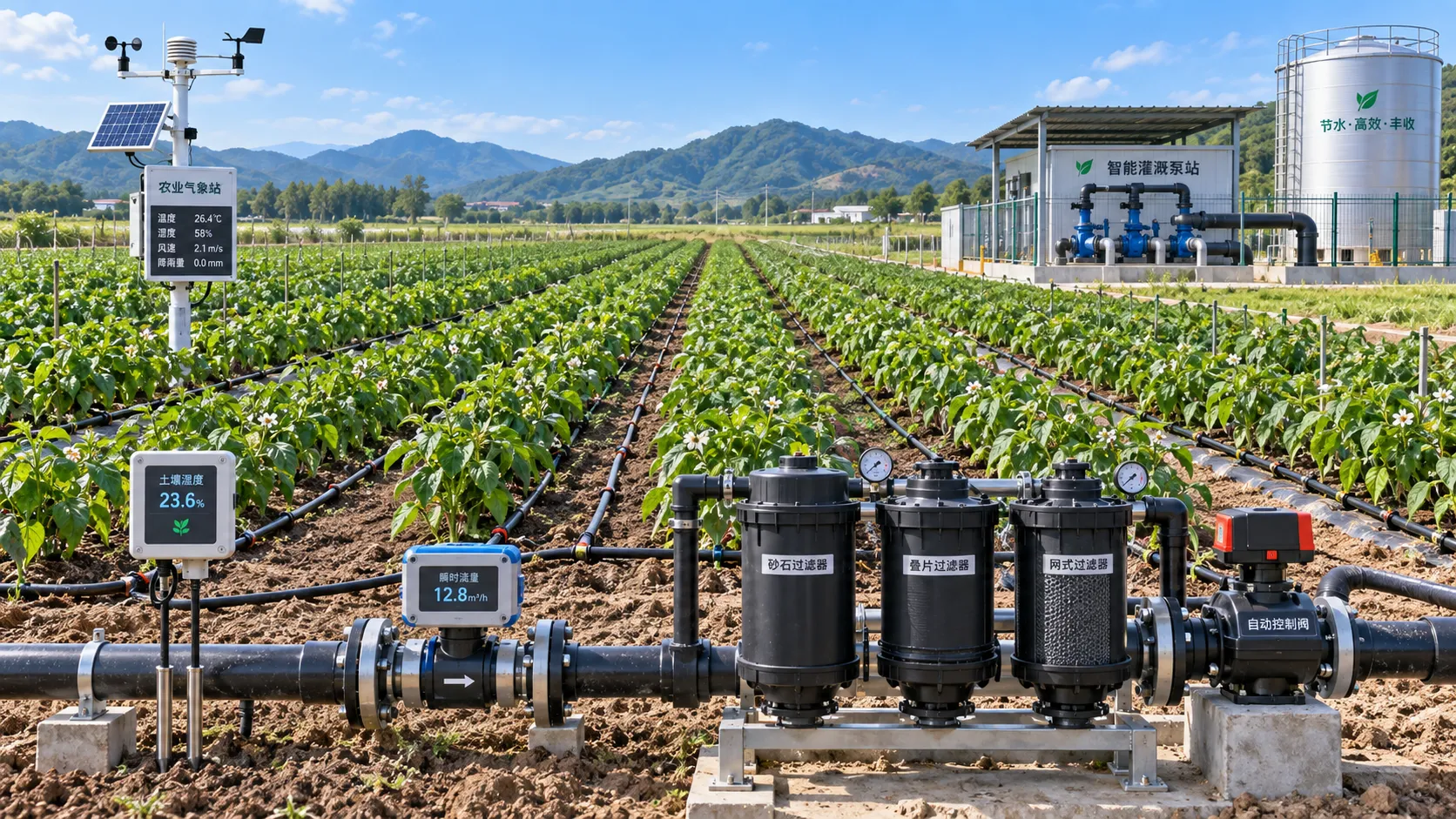
Automated Water-Saving Irrigation: How to Cut Water Use Without Reducing Crop Yields
Automated water-saving irrigation helps farms cut water use, protect crop yields, improve scheduling, and gain reliable control with sensors, flow monitoring, and smart zones.

Selecting Grain Farm Equipment by Acreage, Crop Mix, and Harvest Window
Agricultural equipment selection for grain farming: match machinery to acreage, crop mix, and harvest windows to improve uptime, efficiency, and returns.
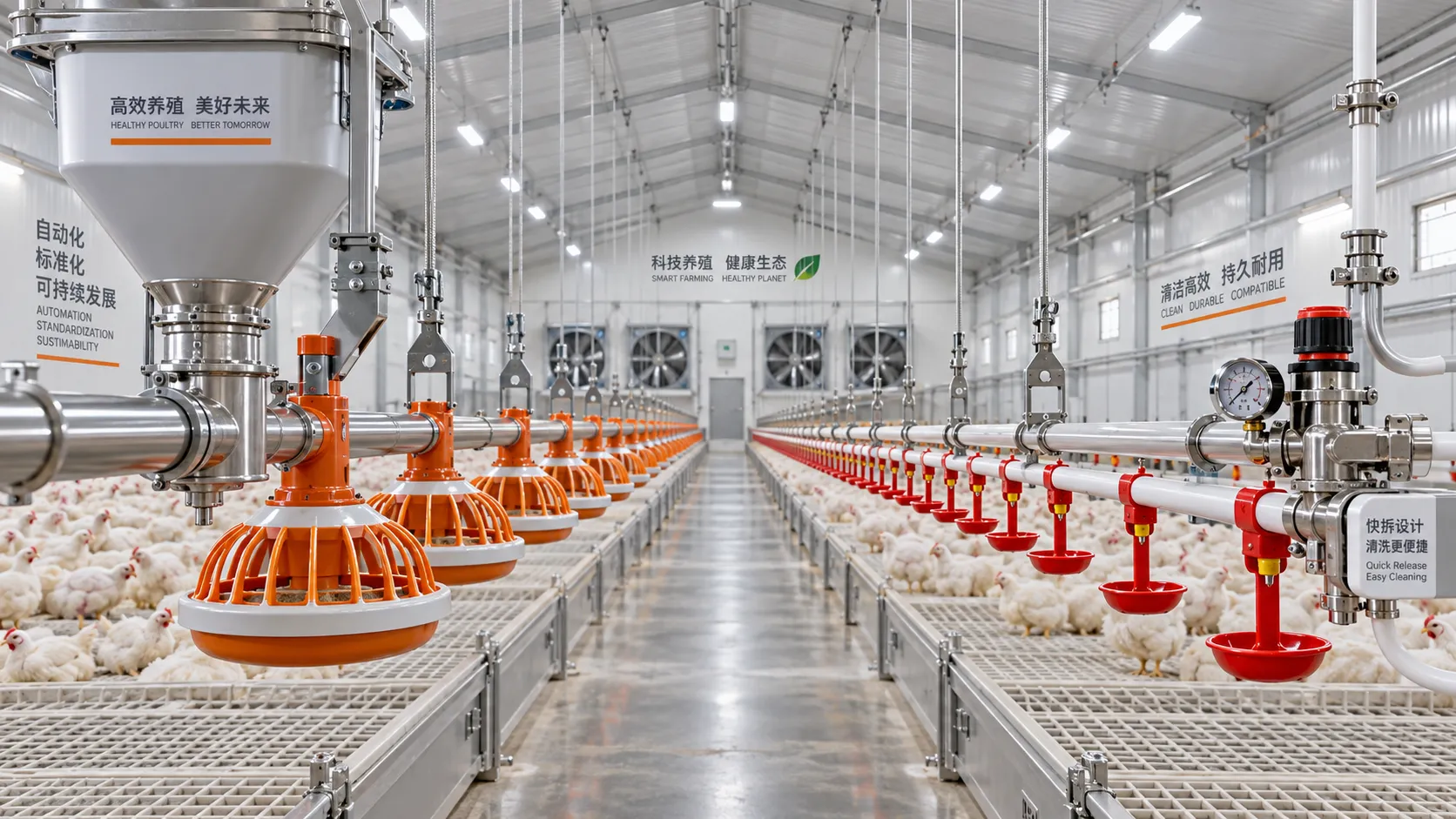
Poultry Equipment Selection: Evaluating Durability, Cleaning, and Compatibility
Poultry equipments selection guide: evaluate durability, cleaning access, and system compatibility to improve hygiene, reduce downtime, and support efficient flock management.
Related News
- 00
0000-00
Selecting Real-Time Soil Moisture Sensors for Irrigation Zone Control - 00
0000-00
How Does Climate-Smart Farming Reduce Water Use in Semi-Arid Areas? - 00
0000-00
USDA Rule Takes Effect: Dual FCC and NRCS Approval for Soil Moisture Sensors - 00
0000-00
EU Rule Takes Effect: Soil Moisture Sensors Need Revised CE-EMC Certification - 00
0000-00
How to Choose Wireless Smart Irrigation Systems for Better Water Control
Popular Tags
Hydrological Resource Strategist
Weekly Insights
Stay ahead with our curated technology reports delivered every Monday.