
Crop Monitoring Systems: Common Data Gaps, Sensor Errors, and How to Fix Them
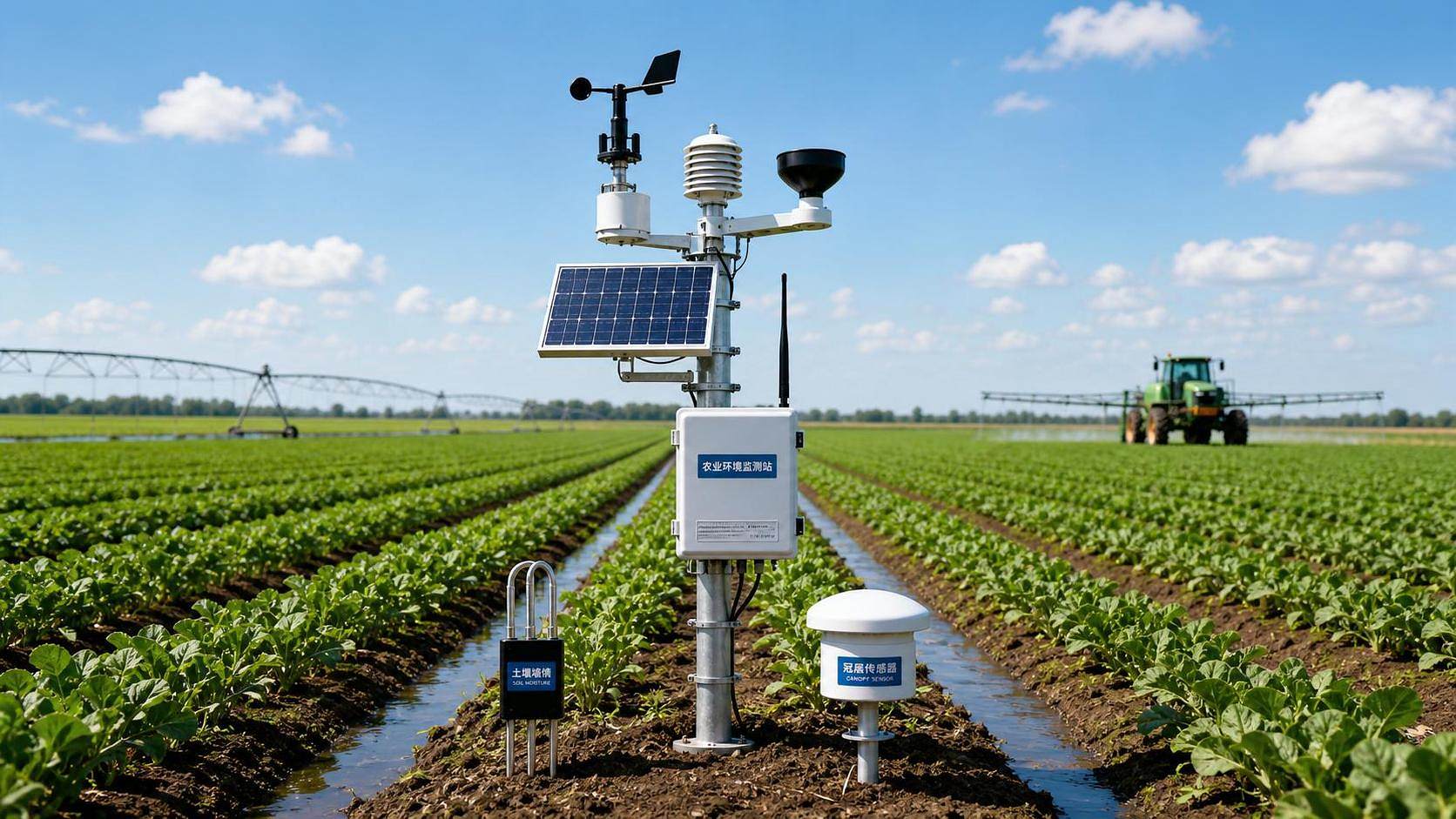




Why do crop monitoring systems still lose trust in the field?
Crop monitoring systems are built to turn field activity into timely decisions.
Yet daily use often exposes a harder reality.
A moisture reading disappears, a canopy sensor drifts, or a gateway stops reporting overnight.
When that happens, users stop trusting the dashboard before they stop needing it.
The real issue is rarely one broken device.
More often, crop monitoring systems fail at the connection between sensor behavior, field conditions, and maintenance response.
In large-scale agriculture, that gap matters.
It can distort irrigation timing, weaken crop stress alerts, and mislead machinery scheduling during narrow operating windows.
This is why intelligence platforms such as AP-Strategy pay attention not only to hardware performance.
They also track how precision algorithms, farm equipment, and water-saving systems behave under real operating pressure.
A reliable crop monitoring system is not just installed.
It is maintained, validated, and corrected over time.
What usually causes data gaps in crop monitoring systems?
Missing data is one of the most common complaints, but not all gaps mean the same thing.
Some come from power loss.
Others come from weak signal coverage, poor antenna placement, firmware faults, or bad timestamp synchronization.
In practice, the first check should be the pattern of the gap.
If data disappears at fixed intervals, scheduling or sleep-mode settings may be wrong.
If it vanishes during irrigation or harvesting, vibration, water ingress, or cable stress may be the trigger.
A more common mistake is assuming the sensor failed first.
Many crop monitoring systems lose records because the edge device collected data locally but never pushed it upstream.
That distinction changes the repair path completely.
A short diagnostic table helps separate the most likely causes.
This approach saves time because it treats crop monitoring systems as linked networks, not isolated parts.
When is a sensor wrong, and when is the field simply changing fast?
This is where many service decisions go off course.
A sharp temperature shift or sudden soil moisture drop may be real.
Crop monitoring systems are supposed to capture abrupt changes, especially around irrigation, heat stress, and drainage events.
The better question is whether the reading fits the surrounding context.
If one probe changes dramatically while adjacent zones stay stable, sensor error becomes more likely.
If several related values move together, the event may be genuine.
For example, a real irrigation response often changes soil moisture, root-zone temperature, and valve activity at nearly the same time.
A drifting sensor often tells a lonelier story.
It trends away gradually, ignores nearby references, or keeps reporting despite impossible field conditions.
Useful signs of sensor drift include:
- Readings that stay flat during known weather changes.
- Slow offset growth after installation or recalibration.
- Values that remain technically valid but agronomically unlikely.
- Differences that increase after machinery passes or soil disturbance.
The most reliable crop monitoring systems use cross-check logic, not single-point faith.
Comparing sensor data with weather logs, irrigation commands, and equipment movement usually reveals whether the error is digital or physical.
Which faults deserve immediate correction, and which can wait?
Not every alert should trigger a field visit.
The smarter method is to rank faults by decision impact.
If the failed point feeds irrigation timing, disease pressure alerts, or machine dispatch, response should be fast.
If it supports long-term trend analysis only, remote checks may be enough for the first step.
In mixed fleets, this matters even more.
Crop monitoring systems often sit beside intelligent irrigation controls, tractor telemetry, and harvesting performance tools.
A single bad sensor can spread false assumptions across several decisions.
A practical ranking method usually looks like this:
- High priority: root-zone moisture, pump status, pressure, and weather station core channels.
- Medium priority: canopy metrics tied to crop stress modeling or spray timing.
- Lower priority: duplicate reference nodes or secondary analytics channels.
This is also where AP-Strategy’s broader view becomes useful.
In Agriculture 4.0, maintenance choices affect not only one sensor line, but the performance chain from water efficiency to machine productivity.
How do you fix unstable crop monitoring systems without replacing everything?
A full hardware swap is rarely the best first move.
Most unstable crop monitoring systems improve when teams correct installation discipline and data-handling rules.
Start with the physical layer.
Check probe depth, mounting stability, seal integrity, cable bend radius, grounding, and exposure to vibration.
Then verify the digital layer.
Confirm firmware versions, sampling intervals, timezone settings, retransmission rules, and local buffering capacity.
The next step is often overlooked.
Rebuild baseline expectations after maintenance.
If a soil sensor was moved, old thresholds may no longer fit the new zone texture or irrigation pattern.
That makes a repaired system look broken again.
A compact recovery checklist helps keep repairs consistent:
- Record the fault pattern before touching hardware.
- Inspect power, connectors, seals, and antenna position.
- Pull device logs before rebooting or updating firmware.
- Compare repaired readings with nearby reference points.
- Reset alarm thresholds only after field validation.
This sequence reduces repeat failures and preserves useful evidence.
What mistakes keep recurring after a “successful” repair?
The most expensive problems are the ones that return quietly.
A device may come back online, but the underlying reason for failure may still be there.
In crop monitoring systems, repeat faults usually come from process gaps rather than component defects alone.
Common repeat issues include unsealed cable entries, skipped calibration records, reused damaged connectors, and outdated network maps.
There is also a data governance side.
If the platform does not flag stale data separately from zero values, users may act on false normality.
That can be more dangerous than a visible alarm.
A good repair closes both loops: field reliability and data interpretation.
For long-life performance, crop monitoring systems should have a service routine that matches the operating calendar.
Pre-irrigation checks, pre-harvest inspections, and seasonal recalibration windows are usually more effective than waiting for faults to accumulate.
What does a stronger maintenance standard actually look like?
It looks less like emergency repair and more like controlled verification.
The best crop monitoring systems stay reliable because every intervention leaves a traceable record.
That record should include the observed symptom, confirmed cause, corrective action, post-repair validation, and any threshold changes.
This matters across modern agricultural operations where sensors support irrigation planning, machine timing, and sustainability reporting.
AP-Strategy’s view of food security infrastructure reflects the same principle.
Strong field intelligence depends on dependable links between mechanical systems, sensing layers, and decision models.
If crop monitoring systems show frequent gaps, drifting channels, or unstable uploads, the next step is not guesswork.
Map the error pattern, rank its operational impact, and verify whether the problem starts with power, communication, placement, or interpretation.
That process usually restores confidence faster than broad replacement.
A useful next move is to build a site-level checklist around three questions:
- Which data points directly drive irrigation or machinery decisions?
- Which sensors lack a nearby reference or validation method?
- Which recurring faults appear after weather, washing, or heavy field operations?
Once those answers are clear, crop monitoring systems become easier to stabilize, and the data becomes useful again instead of merely available.
Related News
How to Evaluate Agricultural Product Information Sources for Reliable Farm Decisions
Agricultural product information reference guide: evaluate reliable farm data, verify claims, and make smarter machinery, irrigation, and crop decisions.
Farm Machinery Guide: Matching Tractor Horsepower and Implements to Farm Size
Farm machinery guide for tractors: match horsepower, implement width, hydraulics, traction, and fleet capacity to farm size for lower costs and reliable field performance.
How to Evaluate Drip Irrigation System Manufacturers for Large Farm Projects
Drip irrigation systems manufacturer evaluation guide for large farms: compare hydraulic design, filtration, quality control, scalability, delivery, and support.
Specification Planning: A Practical Framework for Defining Equipment Requirements
Application guidance for specification planning: define measurable equipment requirements, prioritize performance, and avoid costly procurement mistakes.

How North American Farms Can Select Crop Monitoring Systems by Acreage and Connectivity
Crop monitoring systems North America: learn how to match acreage, connectivity, sensors, and data workflows for reliable, actionable farm decisions.

Where to Find Reliable Product Information for Comparing Farm Equipment
Product information resources agriculture buyers can trust: compare farm equipment with technical specs, manuals, field data, dealer support, and lifecycle insights.
Selecting Real-Time Soil Moisture Sensors for Irrigation Zone Control
Soil moisture sensors real time: learn how to select reliable probes, optimize zone control, improve irrigation decisions, and scale precision water management.
Tractor Hydraulic Systems Troubleshooting: Diagnosing Weak Lift and Slow Implements
Tractor hydraulic systems troubleshooting made practical: diagnose weak lifts and slow implements with proven pressure, flow, valve, and oil-supply checks.
How Tractor Intelligence Systems Improve Field Efficiency and Input Accuracy
Agricultural machinery intelligence for tractors improves field efficiency, input accuracy, data traceability, and implement control. Explore smarter evaluation strategies.
Related News
- 00
0000-00
Selecting Real-Time Soil Moisture Sensors for Irrigation Zone Control - 00
0000-00
How Does Climate-Smart Farming Reduce Water Use in Semi-Arid Areas? - 00
0000-00
USDA Rule Takes Effect: Dual FCC and NRCS Approval for Soil Moisture Sensors - 00
0000-00
EU Rule Takes Effect: Soil Moisture Sensors Need Revised CE-EMC Certification - 00
0000-00
How to Choose Wireless Smart Irrigation Systems for Better Water Control
Popular Tags
Hydrological Resource Strategist
Weekly Insights
Stay ahead with our curated technology reports delivered every Monday.