
India Expands Kisan Drone & Smart Irrigation Mission White List
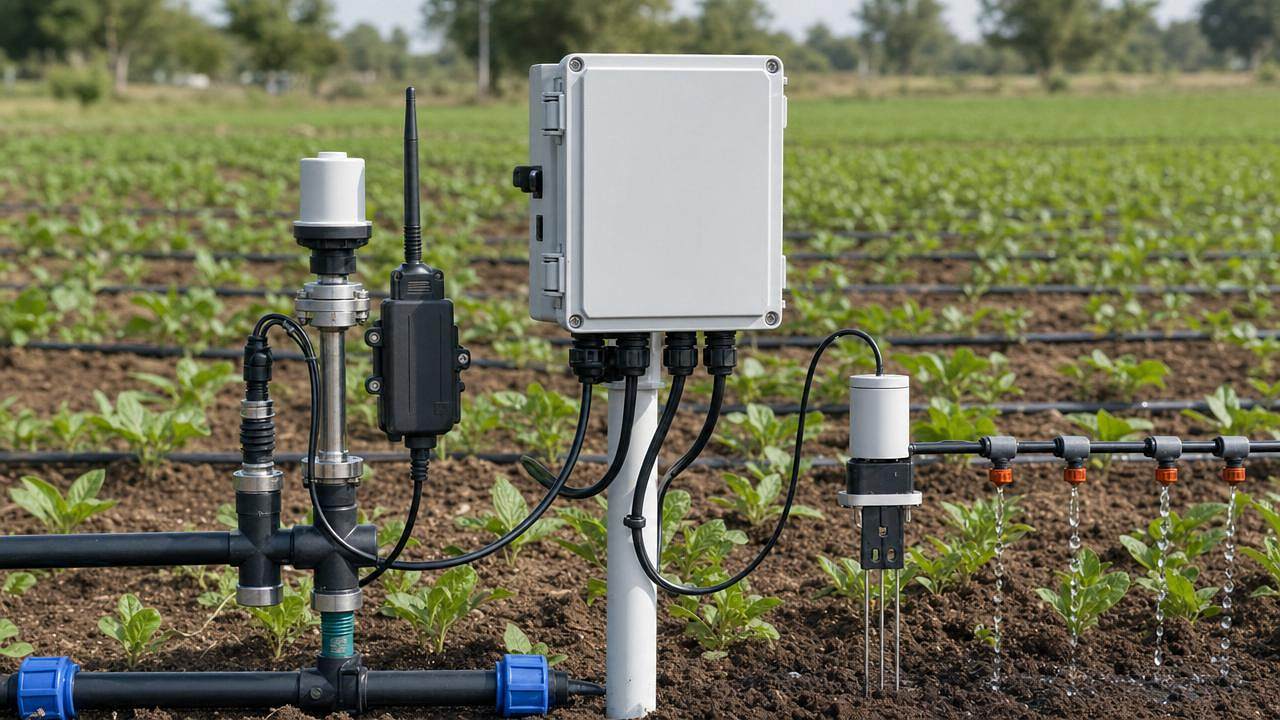




On May 11, 2026, India’s Ministry of Agriculture updated the white list of qualified suppliers under the Kisan Drone & Smart Irrigation Mission (KDSIM), adding five Chinese manufacturers of smart drip irrigation logic systems. This move signals a strategic recalibration in India’s public procurement for precision agriculture infrastructure—and marks a notable inflection point for cross-border agri-tech trade between China and India.
Event Overview
India’s Ministry of Agriculture announced on May 11, 2026, the expansion of the KDSIM white list to include five additional Chinese enterprises specializing in drip irrigation logic systems. To qualify, each applicant underwent mandatory ISI certification and on-site water-use efficiency validation conducted by designated Indian testing agencies. The white-listed status is valid for three years and confers eligibility to bid directly for state government-subsidized procurement contracts under KDSIM.
Impact on Specific Industry Segments
Direct Trade Enterprises: These firms—primarily export-oriented distributors and OEM service providers—gain immediate access to a high-potential, subsidy-backed channel in India. Impact manifests in expanded tender participation, reduced pre-qualification friction, and shorter sales cycles; however, compliance maintenance (e.g., annual ISI re-certification, local performance reporting) introduces new operational overhead.
Raw Material Procurement Enterprises: Suppliers of microcontrollers, pressure-compensating emitters, flow sensors, and low-power wireless modules face increased demand visibility—but only for components meeting IS 17594:2022 (Indian Standard for Smart Drip Systems) specifications. Non-compliant inventory or untested material grades may require revalidation or reformulation, delaying supply chain responsiveness.
Manufacturing Enterprises: Chinese producers of integrated drip logic units—especially those with embedded IoT telemetry, AI-based scheduling, or solar-powered control—see enhanced market entry leverage. Yet, white-listing does not waive local assembly or post-installation support obligations under certain state-level KDSIM implementation guidelines; thus, manufacturing flexibility (e.g., modular design for regional calibration) becomes a competitive differentiator.
Supply Chain Service Enterprises: Logistics providers, customs brokers, and technical compliance consultants catering to agri-tech exports must now accommodate tighter documentation requirements—including bilingual test reports, traceable batch logs for field-tested units, and digital submission via India’s e-Tendering Portal (ETP). Delayed document harmonization poses near-term execution risk.
Key Considerations and Recommended Actions
Verify State-Level Implementation Variance
While the central white list enables bidding, individual Indian states retain authority over subsidy disbursement rules, installation protocols, and after-sales verification timelines. Firms should map their target states’ KDSIM rollout schedules and assess whether local partnerships (e.g., with certified agronomists or irrigation cooperatives) are de facto prerequisites.
Prepare for Dynamic Certification Maintenance
The three-year validity is conditional on continued adherence to ISI standards and periodic re-testing of product variants. Companies must institutionalize internal audit triggers—for example, firmware updates or sensor supplier changes—that may necessitate re-submission to the Bureau of Indian Standards (BIS).
Align Product Documentation with Indian Tender Requirements
White-listed status alone does not satisfy all tender evaluation criteria. Bidders must submit localized user manuals (in Hindi, Marathi, or regional languages per state), warranty terms compliant with the Indian Consumer Protection Act, 2019, and proof of minimum two-year local service center coverage.
Editorial Perspective / Industry Observation
Observably, this white-list expansion reflects India’s dual-track approach: accelerating adoption of affordable smart irrigation while tightening technical sovereignty controls. It is not a broad liberalization—but rather a calibrated opening targeting proven, interoperable logic layers within drip systems. Analysis shows that the five newly listed firms share two traits: prior experience supplying to Indian state pilot projects (e.g., Telangana’s ‘Smart Drip Subsidy Scheme’) and modular hardware architecture compatible with India’s fragmented farm sizes and power infrastructure. From an industry standpoint, the policy shift better signals growing trust in Chinese-origin control logic—not in full-system turnkey offerings.
Conclusion
This update underscores a maturing phase in India’s agricultural technology policy: moving beyond hardware import substitution toward performance-based vendor integration. For global suppliers, it reinforces that regulatory alignment—not just cost competitiveness—is now the primary gatekeeper to India’s $2.1 billion smart irrigation subsidy pipeline. A rational interpretation is that white-listing serves as a technical credibility signal, not a commercial guarantee; sustained engagement requires localized R&D responsiveness and institutionalized compliance discipline.
Source Attribution
Official announcement issued by the Ministry of Agriculture & Farmers Welfare, Government of India, dated May 11, 2026 (Ref: MoA&FW/KDSIM/WHITELIST/2026/05). Supporting technical criteria published in BIS Standard IS 17594:2022 and KDSIM Operational Guidelines v3.1 (April 2026). Note: State-level implementation frameworks—including Maharashtra’s pending ‘Drone-Assisted Irrigation Verification Protocol’ and Karnataka’s draft IoT Data Governance Addendum—are under active consultation and warrant continuous monitoring.
Related News

When hybrid technology makes sense for farm machinery fleets
Hybrid technology for agricultural machinery makes sense when fleets need lower fuel use, better uptime, and smarter ROI. See where hybrid farm equipment delivers real value.
Climate-resilient agriculture practices with measurable field gains
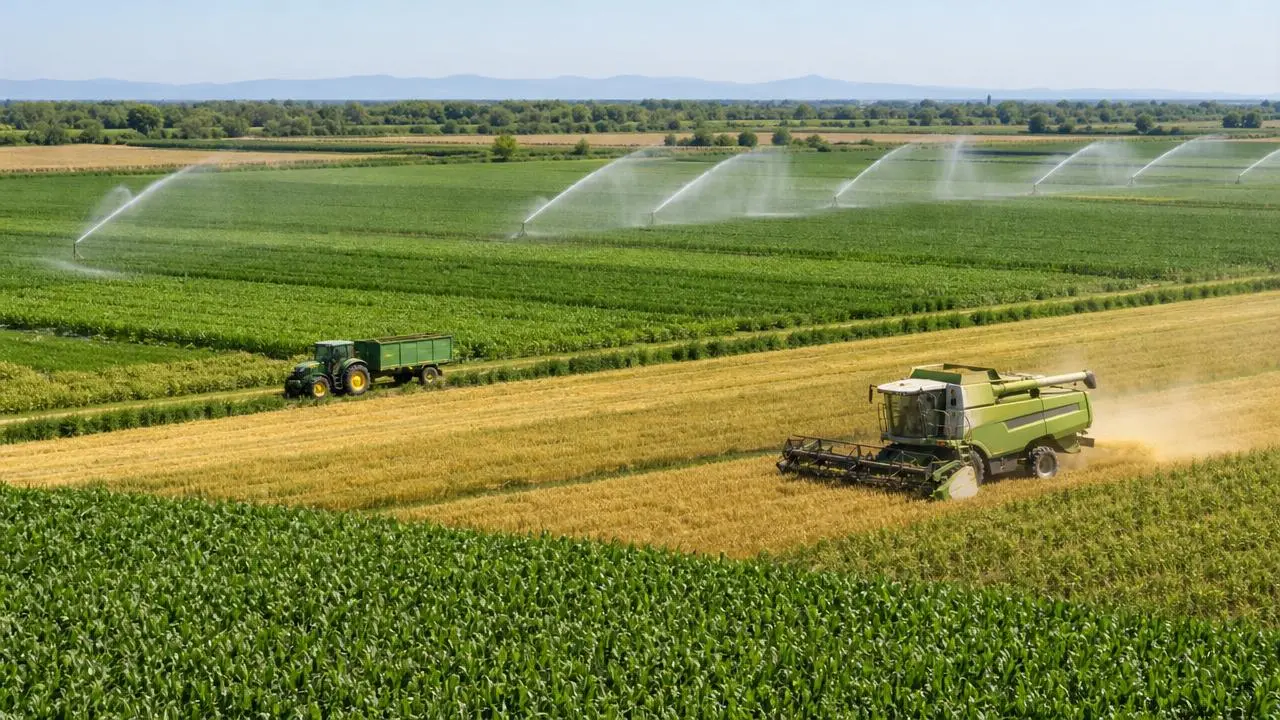
Climate-resilient agriculture practices deliver measurable field gains through smarter irrigation, precision operations, and equipment efficiency—helping farms cut risk, stabilize yields, and improve ROI.
Plant protection solutions that fit precision agriculture better
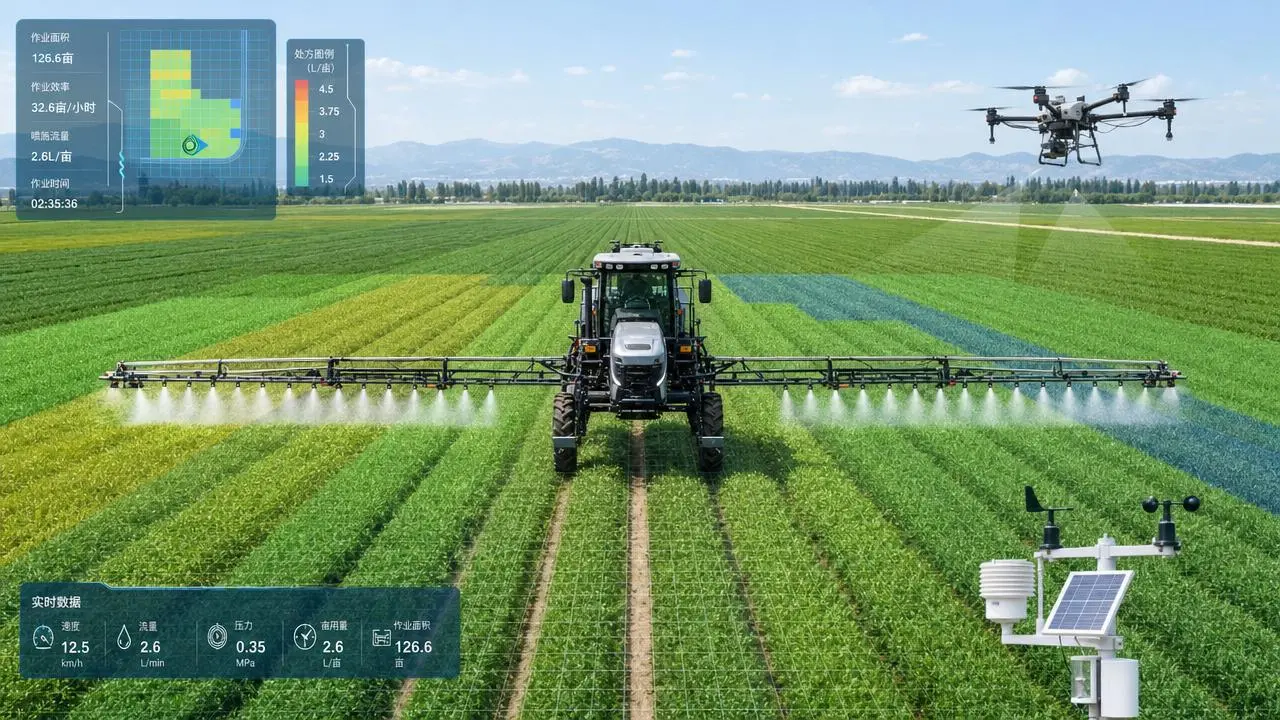
Plant protection solutions for precision agriculture that improve sprayer compatibility, reduce waste, and strengthen ROI. Discover smarter sourcing strategies for modern farming.

Soil preparation equipment gaps that hurt precision results
Soil preparation equipment for precision agriculture can hide depth, leveling, and residue gaps that cut emergence and efficiency. Learn what to check before losses spread.
Hydraulic control system faults that slow combine harvesters
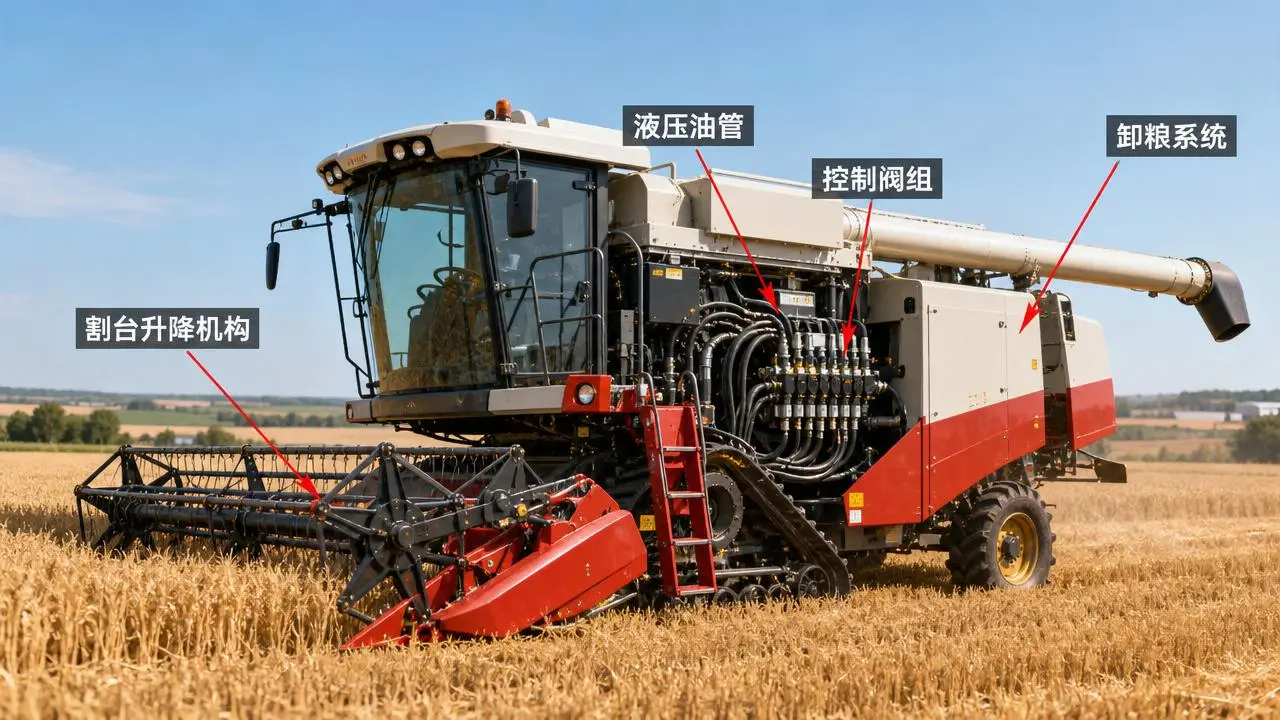
Hydraulic control systems for combine harvesters can hide the faults behind slow header lift, heavy steering, and delayed unloading. Learn fast field diagnostics to cut downtime and protect yield.
What weakens food security in climate-smart farming plans
Climate-smart farming practices for food security can fail when machinery, irrigation, data, and inputs break down. Discover the hidden risks weakening yields and resilience.
Sustainable farming practices that hold up in extreme weather
Sustainable farming practices for climate resilience help farms withstand drought, floods, and heat with smarter soil, water, equipment, and data strategies. Learn what works.
Can precision agriculture really improve food security?
Food security through precision agriculture: discover how smart irrigation, sensors, and data-driven machinery can reduce waste, protect yields, and build more resilient farming systems.
Precision agriculture technology for sustainable farming in dry years
Precision agriculture technology for sustainable farming helps growers save water, reduce input waste, and protect yields in dry years with smarter irrigation, sensors, and data-driven field decisions.
Related News
- 00
0000-00
Iran FM's China Visit Spurs Agri-Equipment Cooperation - 00
0000-00
India Expands Kisan Drone & Smart Irrigation Mission White List - 00
0000-00
Indonesia BPOM Accelerates Approval of Chinese Smart Irrigation Water Quality Monitor - 00
0000-00
Iran FM's China Visit Boosts Agri-Tech Cooperation - 00
0000-00
India Expands Kisan Drone & Smart Irrigation Mission White List with 5 More Chinese Drip Irrigation Logic Providers
Popular Tags
Hydrological Resource Strategist
Weekly Insights
Stay ahead with our curated technology reports delivered every Monday.