
Why Hydrological Resource Strategists Are Reshaping Irrigation Plans
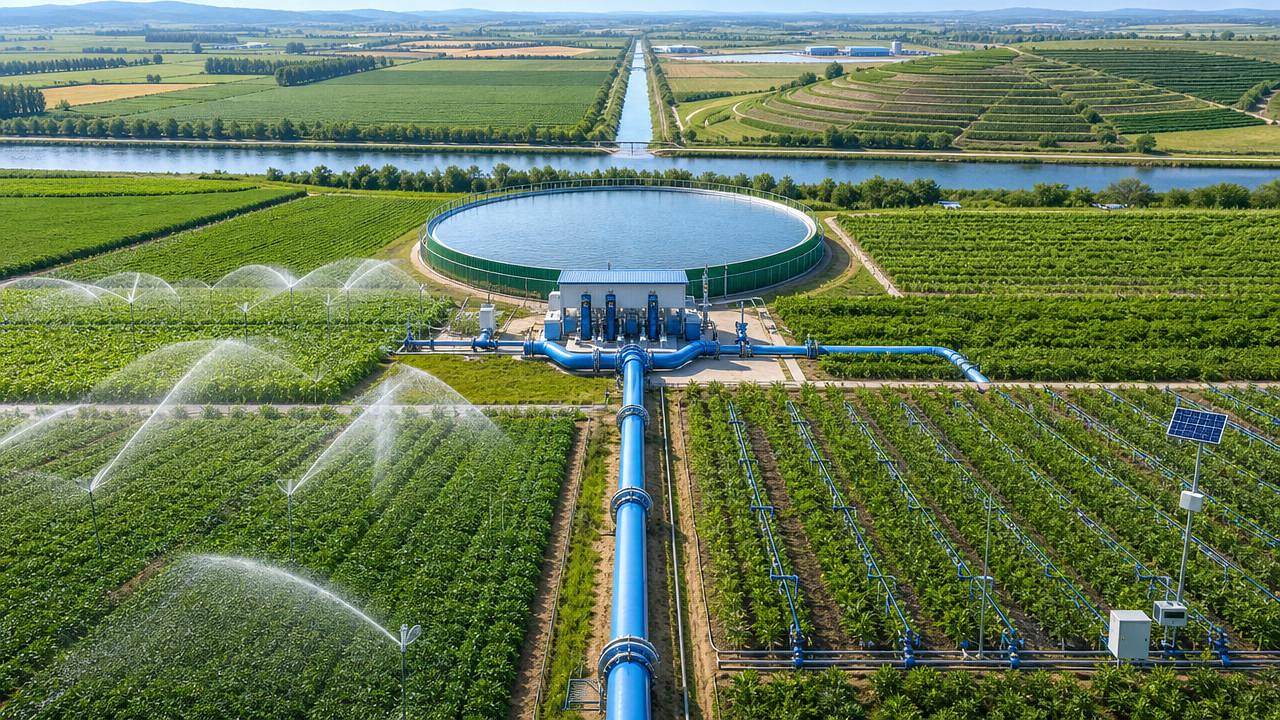




As water stress, climate volatility, and yield targets collide, hydrological resource strategists are becoming essential to modern irrigation planning. For project managers overseeing complex agricultural systems, their expertise connects field data, hydraulic design, and long-term resource efficiency into actionable decisions. This article explores why their role is reshaping irrigation plans and how smarter water strategies can strengthen performance, sustainability, and investment outcomes.
In large-scale agriculture, irrigation is no longer a narrow engineering task focused only on pipe sizing, pump selection, or field coverage. It has become a multi-variable management challenge shaped by rainfall volatility, aquifer pressure, energy costs, drainage constraints, and compliance requirements. For project leaders responsible for timelines, capital allocation, and operational performance, hydrological resource strategists help translate these variables into irrigation plans that are technically sound and commercially resilient.
This shift matters across the Agriculture 4.0 landscape observed by AP-Strategy, where intelligent farm tools, water-saving irrigation systems, and decision-grade field intelligence increasingly work as one system. When irrigation plans are designed without hydrological strategy, projects often face 3 common outcomes: underperforming water distribution, higher-than-expected operating costs, and weak adaptability during 1-in-5-year or 1-in-10-year climate stress events. Strategic water planning reduces those risks before installation begins.
Why irrigation planning now requires hydrological strategy
Traditional irrigation design often starts with crop demand and equipment layout. That remains important, but it is no longer sufficient for projects spanning 200 hectares, 2,000 hectares, or multi-zone farming estates with mixed soils and variable topography. Hydrological resource strategists expand the planning lens by evaluating water source reliability, recharge rates, runoff behavior, seasonal storage gaps, and distribution losses across the full operating cycle.
For project managers, this means fewer surprises during execution. Instead of treating water availability as a fixed input, strategists model it as a dynamic constraint. In practical terms, they ask whether the system can sustain peak irrigation loads during a 10- to 21-day heat window, whether pumping schedules align with off-peak power tariffs, and whether conveyance losses above 8% to 12% are financially acceptable over a 5- to 10-year horizon.
From water delivery to resource governance
Hydrological resource strategists are reshaping irrigation plans because the objective has changed. The goal is not simply to deliver enough water to the field. The goal is to govern water as a constrained production asset. That includes matching irrigation events to soil infiltration rates, preventing over-application, protecting source stability, and balancing agronomic demand against regulatory and environmental limits.
In many projects, the strategist’s contribution becomes visible in 4 planning decisions: source diversification, storage sizing, distribution zoning, and scheduling logic. A design that appears efficient on paper can fail in operation if one borehole drops below expected yield, if canal inflow arrives 48 hours late, or if drainage capacity is too low during consecutive rainfall and irrigation events.
What has changed in the field environment
- Rainfall patterns are less predictable across 7-day and 30-day planning windows.
- Energy costs increasingly influence pumping strategies and night irrigation schedules.
- Precision agriculture tools generate more data, but data without hydrological interpretation does not improve water use.
- Projects are expected to support both yield stability and sustainability reporting.
These pressures explain why hydrological resource strategists now sit closer to the project management core. They connect agronomy, hydraulics, infrastructure, and risk management into one planning framework instead of allowing each discipline to optimize separately.
How hydrological resource strategists change project outcomes
The value of hydrological resource strategists is most visible when irrigation plans move from concept design into execution and operation. Their work changes assumptions, sequencing, and acceptance criteria. For engineering project leads, that often means better cost control in the first 6 to 12 months and more predictable performance over the next 3 to 7 seasons.
1. They improve source reliability planning
A water source is rarely as stable as its nominal capacity suggests. A canal may deliver seasonal variability, a reservoir may lose capacity through evaporation, and groundwater may fluctuate under regional abstraction pressure. Hydrological resource strategists test the difference between installed capacity and dependable capacity. That distinction can determine whether a project should size around 85% source confidence or maintain buffer storage for 10 to 14 critical irrigation days.
2. They align hydraulic design with actual field behavior
Field systems do not perform in a laboratory. Pressure drops vary across elevation changes, emitter uniformity declines with maintenance gaps, and soils with infiltration rates below 10 mm/hour behave very differently from soils above 25 mm/hour. Strategists help engineering teams avoid mismatches between design flow and field absorption, reducing runoff, root-zone saturation, and uneven crop stress.
3. They turn irrigation into a measurable efficiency program
A modern irrigation plan should define measurable targets, not just installed hardware. That may include application uniformity ranges, response times for pressure anomalies, seasonal water productivity goals, and thresholds for intervention. For many large projects, even a 5% to 9% improvement in application efficiency can materially change energy use, pumping hours, and water availability during peak crop demand.
The table below shows how the strategist’s involvement typically changes the planning model for project managers comparing conventional irrigation design with a more integrated water resource approach.
For project management teams, the key takeaway is simple: hydrological resource strategists do not replace irrigation engineers. They improve design quality by ensuring that the system is built around field reality, not only equipment capability. This distinction becomes more valuable as projects increase in area, crop complexity, and compliance exposure.
What project managers should evaluate before approving an irrigation plan
Many irrigation plans look complete because they include layout drawings, bill of materials, and pump calculations. Yet for large agricultural investments, a plan should also answer whether the system remains viable under changing water conditions, maintenance realities, and financial constraints. Hydrological resource strategists help project managers test that viability before procurement contracts are finalized.
Core evaluation criteria
- Source security across at least 2 seasonal scenarios: normal year and dry year.
- Storage adequacy for 3 to 14 days of operational buffer, depending on source volatility.
- Distribution losses, including seepage, leakage, and pressure-related non-uniformity.
- Energy profile by pumping hour, head requirement, and control strategy.
- Serviceability of filters, valves, sensors, and emitters within local labor capacity.
- Control integration with farm management software, telemetry, or sensor networks.
Questions that reveal plan quality
Strong project managers ask a different set of questions than purely technical reviewers. How many hours per day must the system run during peak demand? What happens if one pump station is offline for 12 hours? Is the design based on average evapotranspiration or peak-week demand? What maintenance frequency is assumed for filtration, and who will perform it? These questions often expose whether a plan is robust or merely adequate.
In AP-Strategy’s intelligence framework, this is where hydrological resource strategists deliver decision value. They turn fragmented inputs from weather data, field sensors, hydraulic modeling, and crop demand into a set of practical go/no-go criteria for capital deployment.
The following table can be used as a procurement-side review checklist when comparing irrigation proposals from multiple vendors or engineering partners.
This checklist is especially useful when procurement teams are evaluating smart irrigation systems that combine pumping, sensing, variable-rate control, and software analytics. Without hydrological review, digital features may appear advanced while the underlying water strategy remains weak.
Implementation steps for smarter irrigation planning
For project managers, one of the most practical questions is how to operationalize this role. The answer is not to add complexity for its own sake. The answer is to structure irrigation planning in a sequence where hydrological resource strategists influence early decisions, not just post-design corrections. A 5-step implementation model is often effective for medium to large agricultural projects.
Step 1: Baseline the water system
Map all water inputs and constraints: source type, average and peak availability, water quality, elevation profile, drainage routes, and historical disruption points. This stage should also identify whether the project is dealing with one source or a hybrid configuration such as canal plus reservoir, well plus storage pond, or recycled water plus freshwater backup.
Step 2: Build demand zones instead of one uniform schedule
Large fields rarely behave as one irrigation unit. Strategists typically divide land into 3 to 8 management zones based on soil texture, slope, crop stage, and hydraulic access. This avoids a common mistake in which an average irrigation schedule causes both deficit stress in one zone and over-application in another.
Step 3: Stress-test the design
Before procurement, run at least 2 to 3 stress scenarios: a high-temperature week, a delayed water delivery period, and a component outage such as pump downtime or blocked filtration. This process reveals whether storage, control logic, and labor response are sufficient. It is often far less expensive to adjust storage volume or zoning on paper than to retrofit after installation.
Step 4: Define operational thresholds
A strong irrigation plan should include trigger points. Examples include minimum storage level, allowable pressure deviation, soil moisture thresholds, filtration pressure differential, and maximum hours between fault alert and field inspection. Clear thresholds allow managers to act before small deviations become yield losses or equipment failures.
Step 5: Review after the first cycle
The first 30 to 90 days of operation provide the best evidence for calibration. Compare designed water application against actual field outcomes. Review whether zones required rescheduling, whether sensors aligned with crop response, and whether losses exceeded expectation. This feedback loop is where hydrological resource strategists support continuous improvement rather than one-time planning.
Common mistakes and how to avoid them
Even well-funded projects make avoidable mistakes when water planning is treated as secondary to machinery selection or crop scheduling. Because AP-Strategy operates at the intersection of mechanization, intelligent irrigation, and field intelligence, one recurring pattern is clear: irrigation underperformance often starts with planning assumptions that were never challenged.
Mistake 1: Designing for average conditions only
Average-year thinking can distort investment decisions. Crops do not fail in average conditions; they fail in stress windows. A plan should account for peak demand periods, not only average monthly use. Hydrological resource strategists add value by planning for operational extremes without oversizing the entire system unnecessarily.
Mistake 2: Overvaluing hardware and undervaluing water intelligence
A premium pump set, advanced telemetry, or precision emitters cannot compensate for poor source assessment or weak scheduling logic. Technology works best when the hydrological foundation is correct. For project managers, this means vendor comparison should evaluate decision support quality alongside equipment performance.
Mistake 3: Ignoring maintenance realism
Some irrigation plans assume maintenance discipline that local teams cannot sustain. If filtration needs inspection every 7 days, but the site can only support checks every 14 days during harvest overlap, then the system should be redesigned around operational reality. Hydrological resource strategists factor labor and service constraints into planning, which protects long-term performance.
Practical avoidance measures
- Validate source assumptions with seasonal records or repeated measurements.
- Review field zoning before finalizing pipe network and controller logic.
- Set 3 to 5 operational thresholds tied to alarms and response actions.
- Align maintenance intervals with actual labor availability and harvest calendars.
Why this matters for long-cycle agricultural investment
For project management leaders, irrigation is not only an agronomic system. It is a capital asset with a service life, operating profile, and risk exposure. Hydrological resource strategists are reshaping irrigation plans because they help ensure the asset performs under variable field conditions, not just under ideal design assumptions. That is increasingly important where farms integrate autonomous machinery, intelligent farm tools, and data-driven cultivation models.
Within AP-Strategy’s broader view of Agriculture 4.0, smart water planning strengthens the performance of adjacent systems as well. Better irrigation timing supports field trafficability for tractors and implements, reduces avoidable crop stress before harvest, and improves the value of sensor-driven decision models. In other words, water strategy is not isolated infrastructure; it is a coordination layer across the production system.
For organizations evaluating intelligent irrigation upgrades, new farm development, or water-saving retrofit programs, the message is clear: involve hydrological resource strategists early, define measurable thresholds, and test plans against operational stress before committing full-scale capital. If you are seeking a more resilient irrigation framework, tailored project intelligence, or practical evaluation support for complex agricultural systems, contact AP-Strategy to explore a customized solution and learn more about water-smart cultivation planning.
Related News
How to Select Precision Crop Protection Equipment for Variable Field Conditions
Precision crop protection equipment selection made simple: compare terrain, canopy, weather, control accuracy, and data workflows for reliable applications.

When Does Agricultural Machinery Leasing Cost Less Than Owning Equipment?
Agricultural machinery leasing can lower farm costs when use is seasonal or uncertain. Compare utilization, maintenance, cash flow, and risk to make a smarter equipment decision.
How to Evaluate Precision Fertilization System Suppliers for Farm-Scale Deployment
Precision fertilization systems suppliers: learn how to compare accuracy, integration, uptime, service, and total cost for confident farm-scale deployment.
ISOBUS for Smart Agriculture: How It Connects Tractors, Implements, and Farm Data
ISOBUS for smart agriculture connects tractors, implements, terminals, and farm data—helping growers improve precision, documentation, and smarter field decisions.
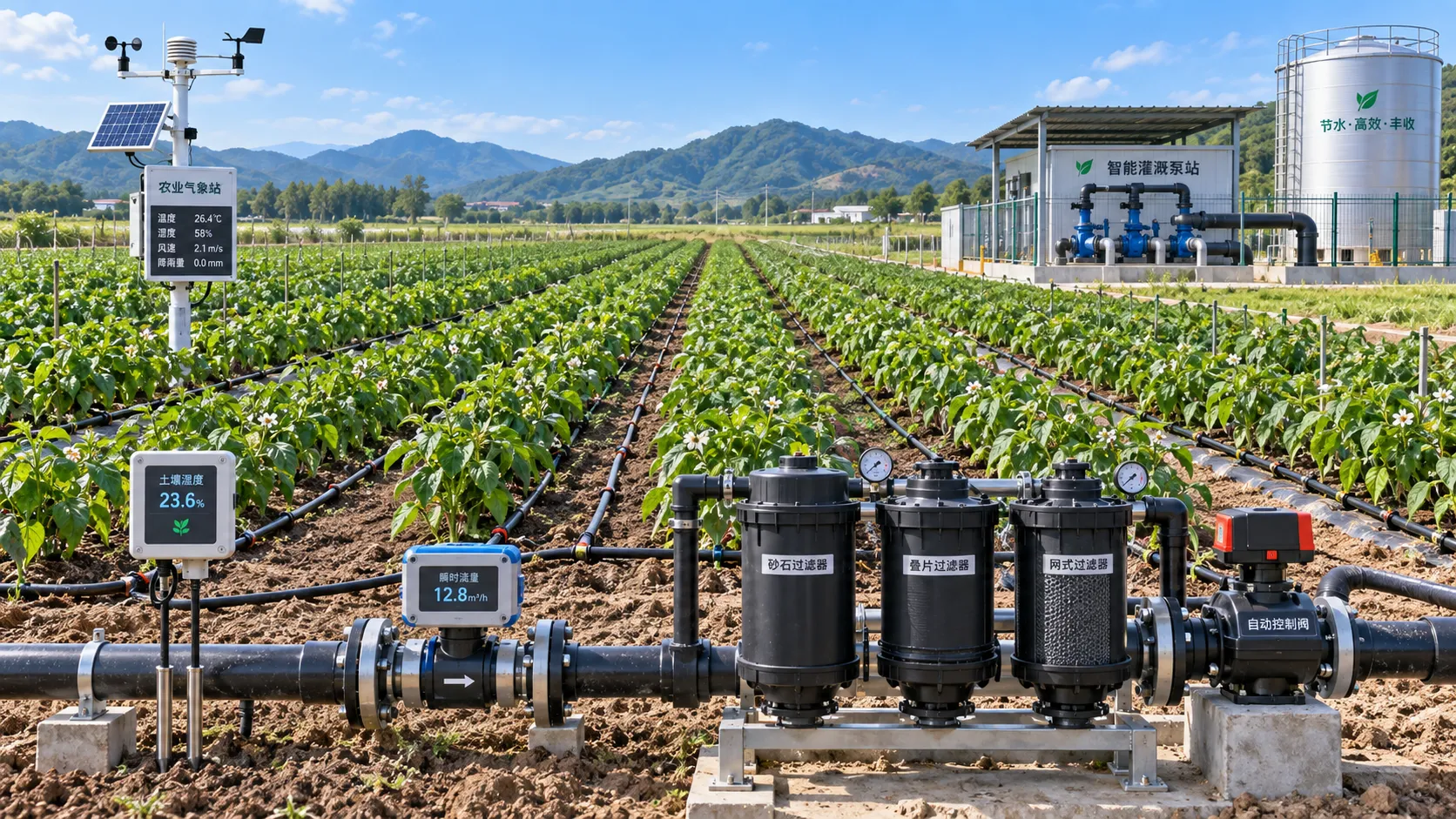
Automated Water-Saving Irrigation: How to Cut Water Use Without Reducing Crop Yields
Automated water-saving irrigation helps farms cut water use, protect crop yields, improve scheduling, and gain reliable control with sensors, flow monitoring, and smart zones.
Selecting Grain Farm Equipment by Acreage, Crop Mix, and Harvest Window
Agricultural equipment selection for grain farming: match machinery to acreage, crop mix, and harvest windows to improve uptime, efficiency, and returns.
Poultry Equipment Selection: Evaluating Durability, Cleaning, and Compatibility
Poultry equipments selection guide: evaluate durability, cleaning access, and system compatibility to improve hygiene, reduce downtime, and support efficient flock management.
How to Select Heavy-Duty Farm Implements for High-Acreage, High-Horsepower Operations
Heavy duty farm implements: learn how to match draft, hydraulics, hitch capacity, frame strength, and field conditions for reliable high-acreage performance.
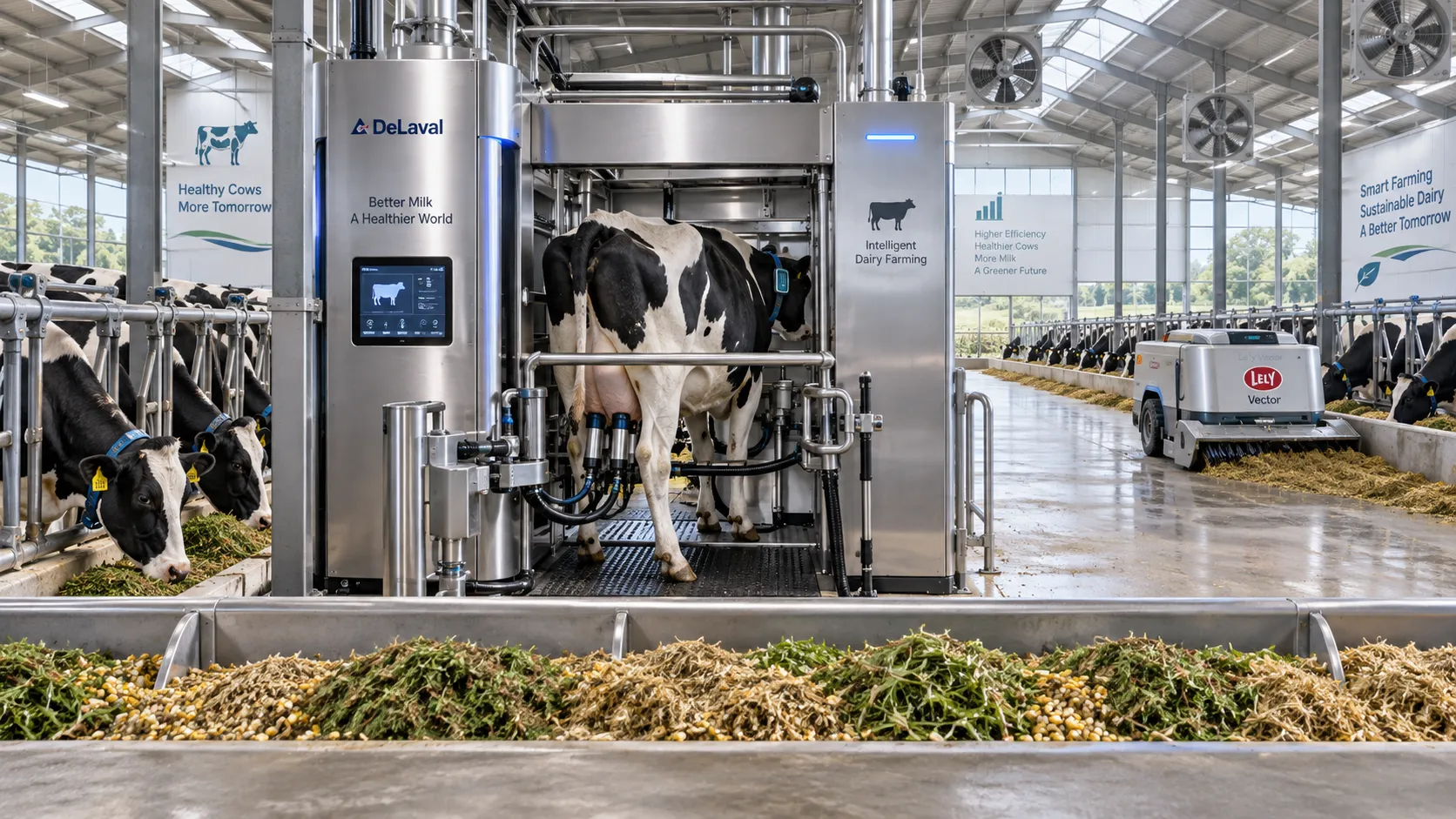
Smart Farming Technology for Dairy Farms: Where Automation Delivers Measurable ROI
Smart farming technology for dairy farms delivers measurable ROI through automation, precision feeding, health monitoring, and data-driven cost control.
Related News
- 00
0000-00
India Opens Duty Relief for Center Pivot Imports - 00
0000-00
What to Check Before Working With a Precision Irrigation Systems Factory - 00
0000-00
Red Sea Shock Tightens CPS Capacity, Rates Jump 37% - 00
0000-00
Red Sea Escalation Tightens Center Pivot Shipping - 00
0000-00
Red Sea Disruption Extends Center Pivot Transit to 42 Days
Popular Tags
Hydrological Resource Strategist
Weekly Insights
Stay ahead with our curated technology reports delivered every Monday.