
Water-Saving Irrigation vs Traditional Methods: Costs, Payback, and Field Use Cases




Water-Saving Irrigation vs Traditional Methods: Costs, Payback, and Field Use Cases
For procurement teams weighing water-saving irrigation against conventional systems, the real question is not only upfront cost but long-term field performance, payback speed, and operational risk.
This article compares investment structures, maintenance demands, and practical use cases across crop and climate conditions, helping buyers make more confident sourcing decisions.
From the AP-Strategy view, the best decision connects agronomic fit, water efficiency, labor realities, and service support into one sourcing framework.
Why the Comparison Matters Now
Water costs are rising in many regions. Energy prices remain volatile. At the same time, growers face tighter pressure on yield stability and sustainability targets.
That makes water-saving irrigation more than a technical upgrade. It becomes a cost-control tool and, in some cases, a risk-management asset.
Traditional irrigation methods still have a place. Surface flooding, furrow irrigation, and basic sprinkler setups often win on lower first cost and simpler operation.
But lower entry cost does not always mean lower total ownership cost. In real procurement decisions, that gap matters more each season.
What Counts as Water-Saving Irrigation
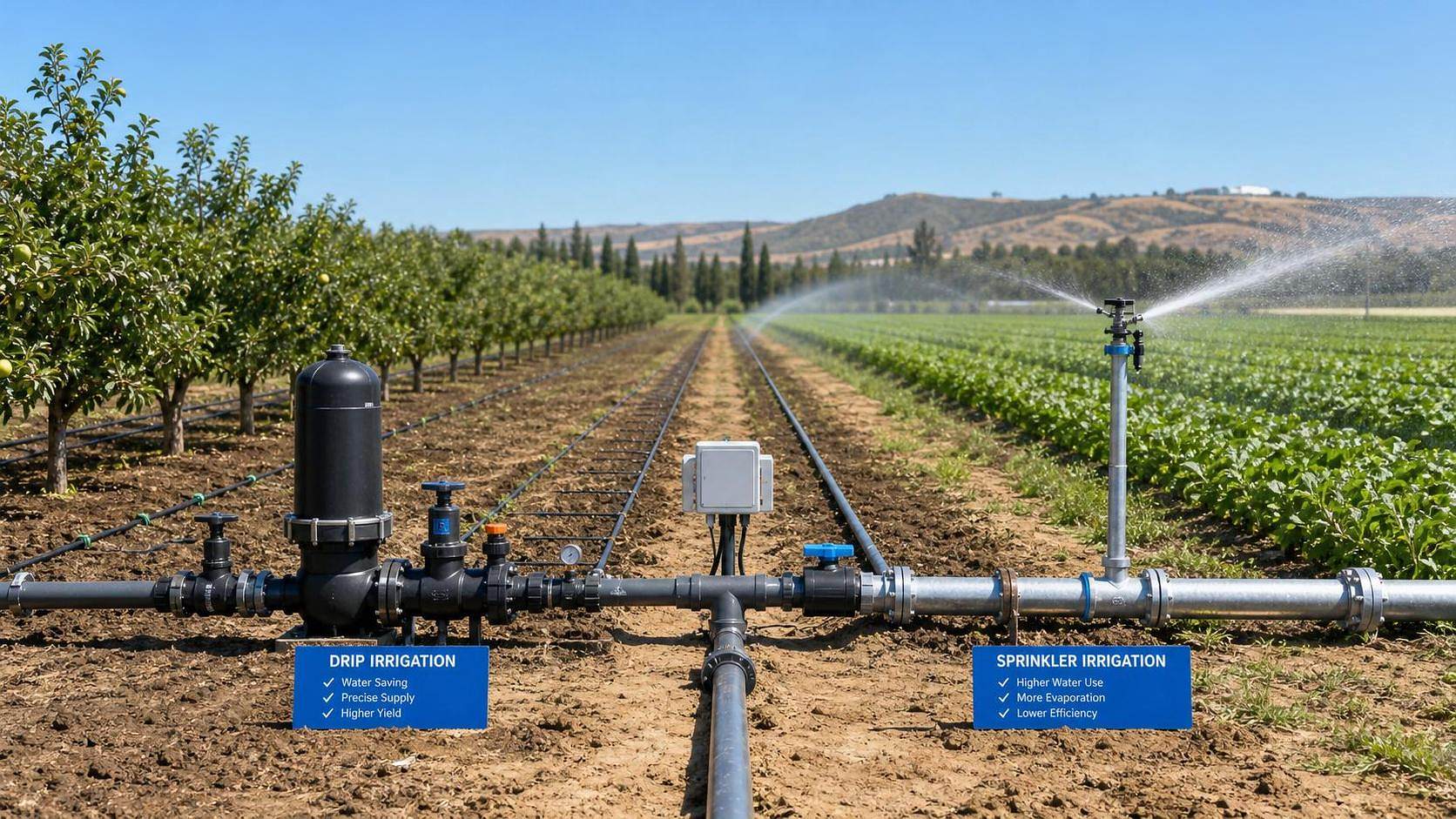
Water-saving irrigation usually includes drip irrigation, subsurface drip systems, low-pressure precision sprinklers, and sensor-guided smart irrigation networks.
These systems aim to place water closer to the root zone. They also reduce runoff, evaporation, and over-application.
Traditional methods normally distribute water across larger areas with less precision. They can work well on suitable land, especially where water is cheap and labor is stable.
The key buying question is simple: which system delivers the best cost per productive hectare under actual field conditions?
Upfront Costs: Where the Money Goes
Upfront cost is usually the first screening factor. Water-saving irrigation often requires more components and tighter design accuracy than traditional methods.
A typical investment structure includes:
- Pumps, filters, and pressure regulation units
- Mainlines, submains, valves, and control hardware
- Drip lines, emitters, or precision sprinkler heads
- Automation, sensors, telemetry, and software
- Installation, commissioning, and operator training
Traditional systems often spend less on controls and filtration. Earthwork or channel maintenance may replace some equipment cost, depending on the layout.
In practice, water-saving irrigation usually asks for a higher initial budget, but it may lower recurring losses that stay hidden in conventional systems.
Operating Costs and Hidden Cost Drivers
This is where sourcing decisions become more interesting. Annual operating cost often shifts the final winner.
Water-saving irrigation can reduce total water consumption significantly. In regions facing water quotas or pumping restrictions, that directly protects production planning.
Energy use may drop with efficient low-pressure designs. However, poorly designed systems can erase that advantage.
Labor demand often changes as well. Traditional irrigation may require more field supervision, land leveling, gate control, and manual scheduling.
Water-saving irrigation usually needs fewer routine field adjustments. Still, it demands better technical discipline in filtration, flushing, and monitoring.
Common hidden cost drivers include:
- Clogging risk from poor water quality
- Emitter replacement and line wear
- Pressure variation across uneven terrain
- Spare parts lead times during peak season
- Software compatibility and control integration
This also means a cheap quote can become expensive later if filtration, service access, or hydraulic design are weak.
Payback: How Fast Does Water-Saving Irrigation Return Value?
Payback depends on four variables: water savings, yield response, labor reduction, and energy performance.
In high-value crops, payback for water-saving irrigation can be relatively fast. Fruit, vegetables, vineyards, and greenhouse-linked operations often justify precision quickly.
In broadacre row crops, the payback period is usually longer. Results depend heavily on local water pricing, soil profile, and subsidy structure.
Where water scarcity is severe, the value case strengthens. Even moderate yield improvement can become secondary to securing reliable production.
Where water is abundant and cheap, traditional methods may still look financially acceptable, especially on lower-margin crops.
A practical payback review should include:
- Installed cost per hectare
- Expected water reduction per season
- Yield or quality uplift by crop
- Maintenance and spare part budget
- Service life of key components
- Financing cost and possible incentives
Without this full model, a procurement decision can overvalue the purchase price and undervalue operational resilience.
Field Use Cases: Where Each Method Fits Best
Orchards and Vineyards
Water-saving irrigation is often the better fit here. Root-zone targeting improves uniformity and supports fertigation control.
Quality-sensitive crops benefit from more stable moisture management. That makes precision worth more than simple water reduction.
Vegetables and High-Value Specialty Crops
This is another strong case for water-saving irrigation. Fast payback is possible when quality premiums and input efficiency are both important.
Precision also helps reduce disease pressure in some conditions by limiting unnecessary leaf wetness.
Row Crops on Large Acreage
The answer is more mixed. Water-saving irrigation can perform well, but scale, crop margin, and field geometry shape the economics.
Traditional pivots or basic sprinkler systems may remain competitive where management simplicity matters more than peak precision.
Arid and Water-Regulated Regions
Here, water-saving irrigation usually becomes a strategic necessity. The value is not just cost savings but production continuity.
That difference becomes even clearer when permits, pumping hours, or sustainability reporting affect market access.
Procurement Checklist Before Requesting Quotes
A strong sourcing process should compare systems on field reality, not brochure claims.
- Confirm water source quality, sediment load, and filtration needs
- Check pressure stability across the full field layout
- Review local dealer coverage and peak-season service response
- Ask for spare part availability and lead-time commitments
- Request crop-specific references in similar climates
- Model payback using conservative yield assumptions
- Compare automation features with existing farm systems
In actual business decisions, the best vendor is often the one with the clearest lifecycle support, not the lowest invoice number.
Final Decision: Cost Alone Is Not the Best Benchmark
Water-saving irrigation often costs more at the start. Yet it can return stronger value through lower water use, steadier crop performance, and better control.
Traditional methods still make sense in selected conditions, especially where capital is tight and water remains inexpensive.
The smart procurement move is to compare total cost, agronomic fit, and service reliability side by side.
For many operations, water-saving irrigation is no longer a premium option. It is becoming a practical standard for resilient production.
A disciplined field-by-field evaluation will show where the payback is immediate, where it is strategic, and where traditional methods still hold their ground.
Related News

When Does Agricultural Machinery Leasing Cost Less Than Owning Equipment?
Agricultural machinery leasing can lower farm costs when use is seasonal or uncertain. Compare utilization, maintenance, cash flow, and risk to make a smarter equipment decision.
How to Evaluate Precision Fertilization System Suppliers for Farm-Scale Deployment
Precision fertilization systems suppliers: learn how to compare accuracy, integration, uptime, service, and total cost for confident farm-scale deployment.
ISOBUS for Smart Agriculture: How It Connects Tractors, Implements, and Farm Data
ISOBUS for smart agriculture connects tractors, implements, terminals, and farm data—helping growers improve precision, documentation, and smarter field decisions.
Automated Water-Saving Irrigation: How to Cut Water Use Without Reducing Crop Yields
Automated water-saving irrigation helps farms cut water use, protect crop yields, improve scheduling, and gain reliable control with sensors, flow monitoring, and smart zones.
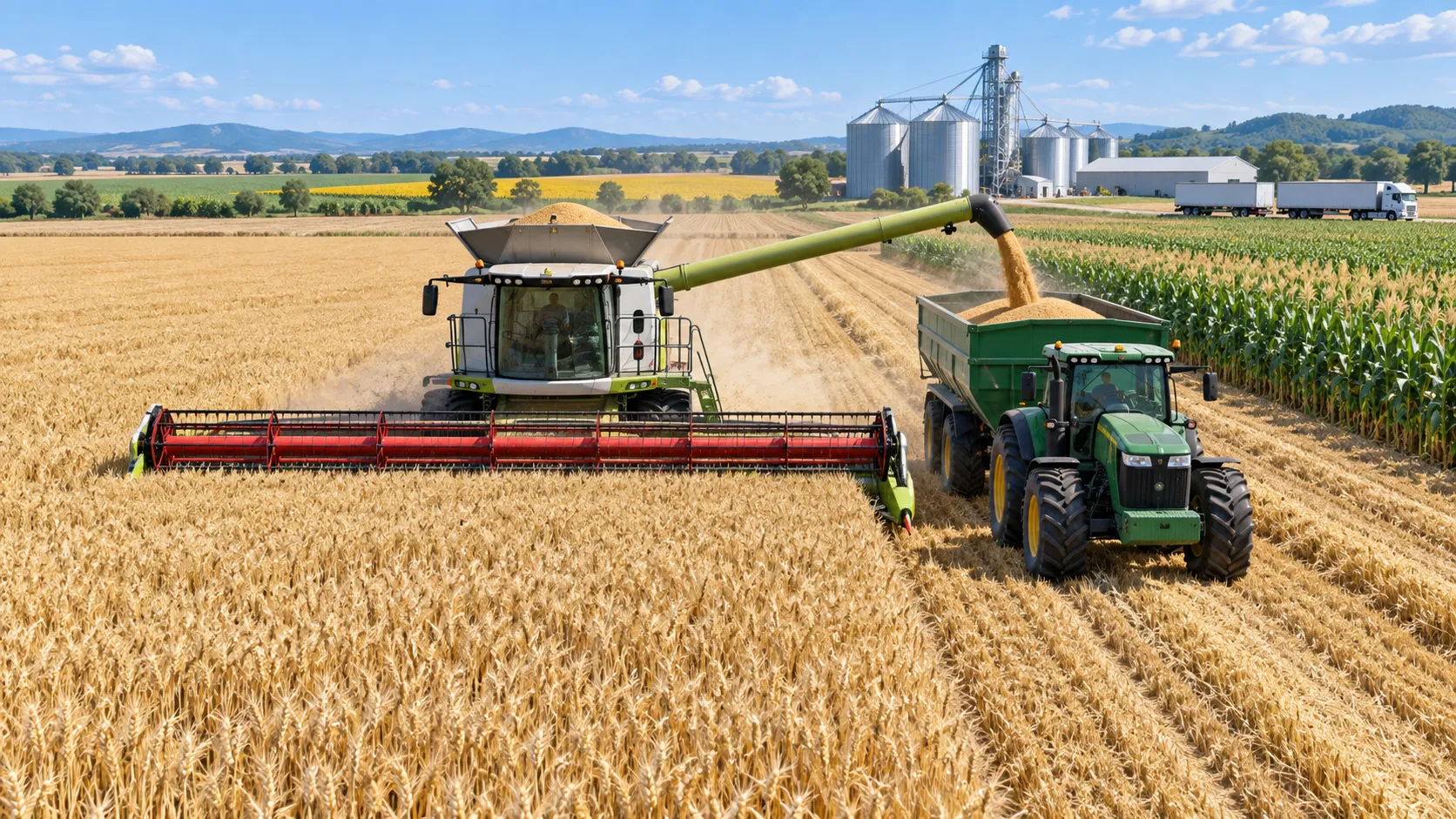
Selecting Grain Farm Equipment by Acreage, Crop Mix, and Harvest Window
Agricultural equipment selection for grain farming: match machinery to acreage, crop mix, and harvest windows to improve uptime, efficiency, and returns.
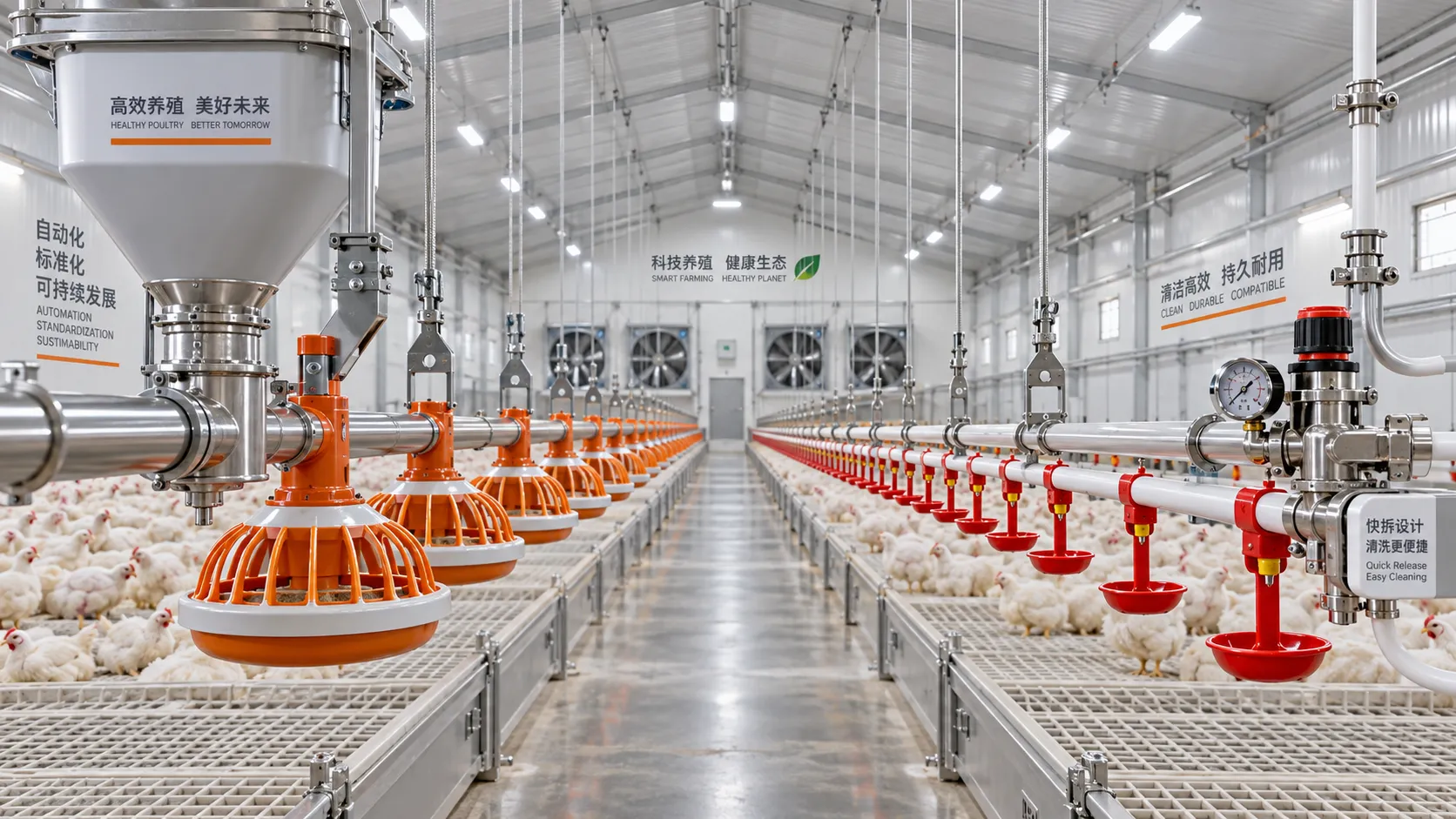
Poultry Equipment Selection: Evaluating Durability, Cleaning, and Compatibility
Poultry equipments selection guide: evaluate durability, cleaning access, and system compatibility to improve hygiene, reduce downtime, and support efficient flock management.
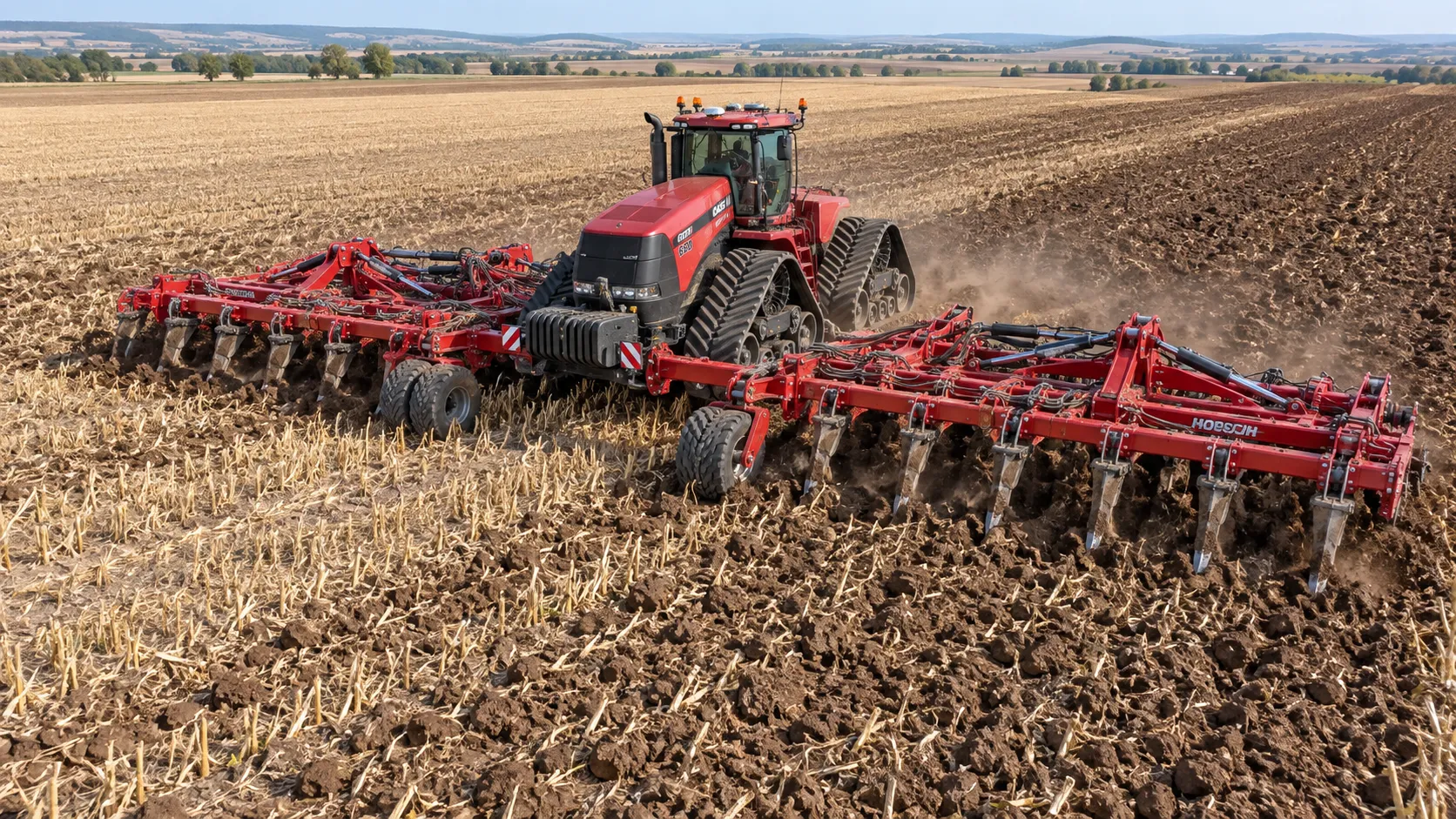
How to Select Heavy-Duty Farm Implements for High-Acreage, High-Horsepower Operations
Heavy duty farm implements: learn how to match draft, hydraulics, hitch capacity, frame strength, and field conditions for reliable high-acreage performance.
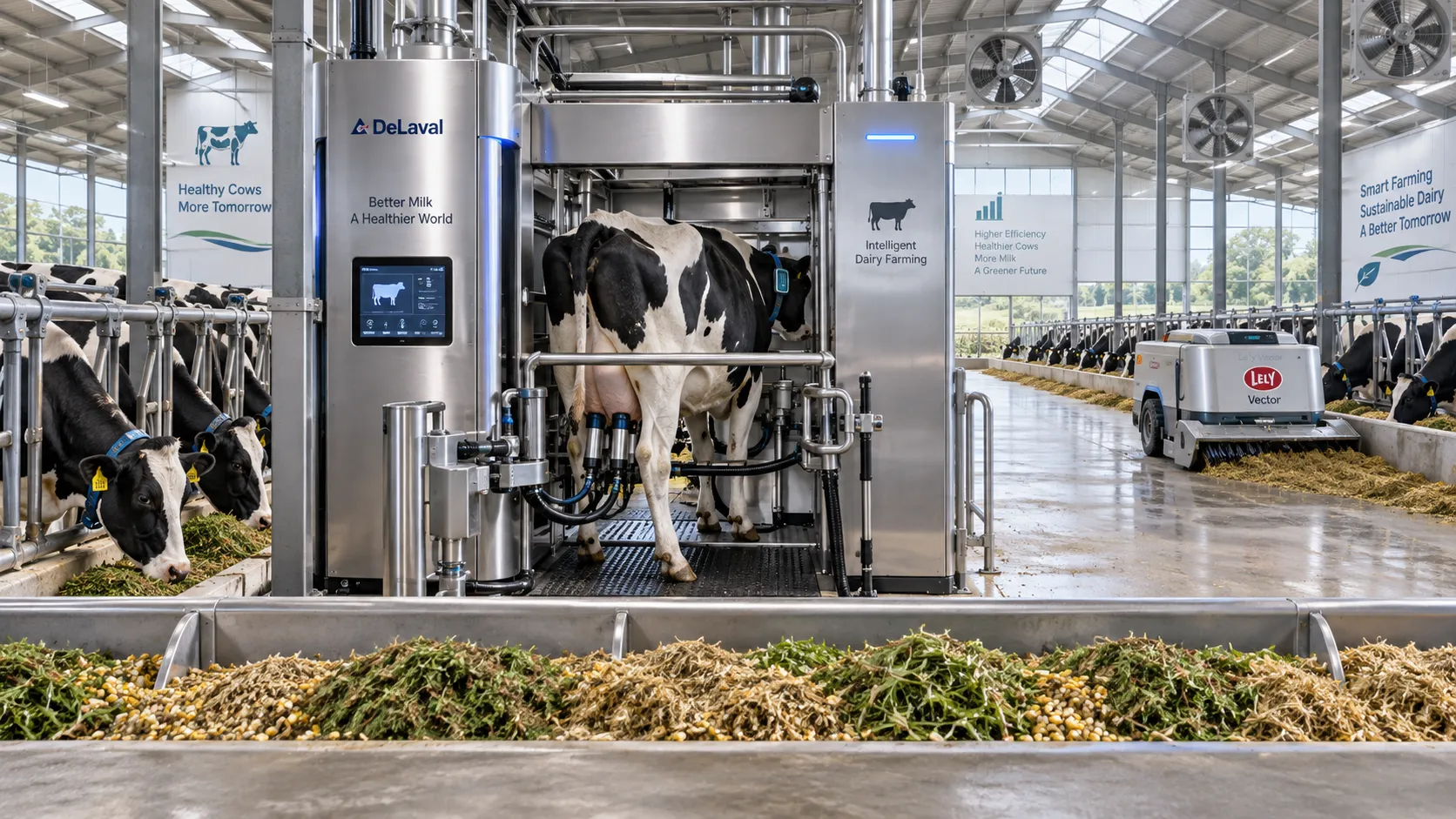
Smart Farming Technology for Dairy Farms: Where Automation Delivers Measurable ROI
Smart farming technology for dairy farms delivers measurable ROI through automation, precision feeding, health monitoring, and data-driven cost control.
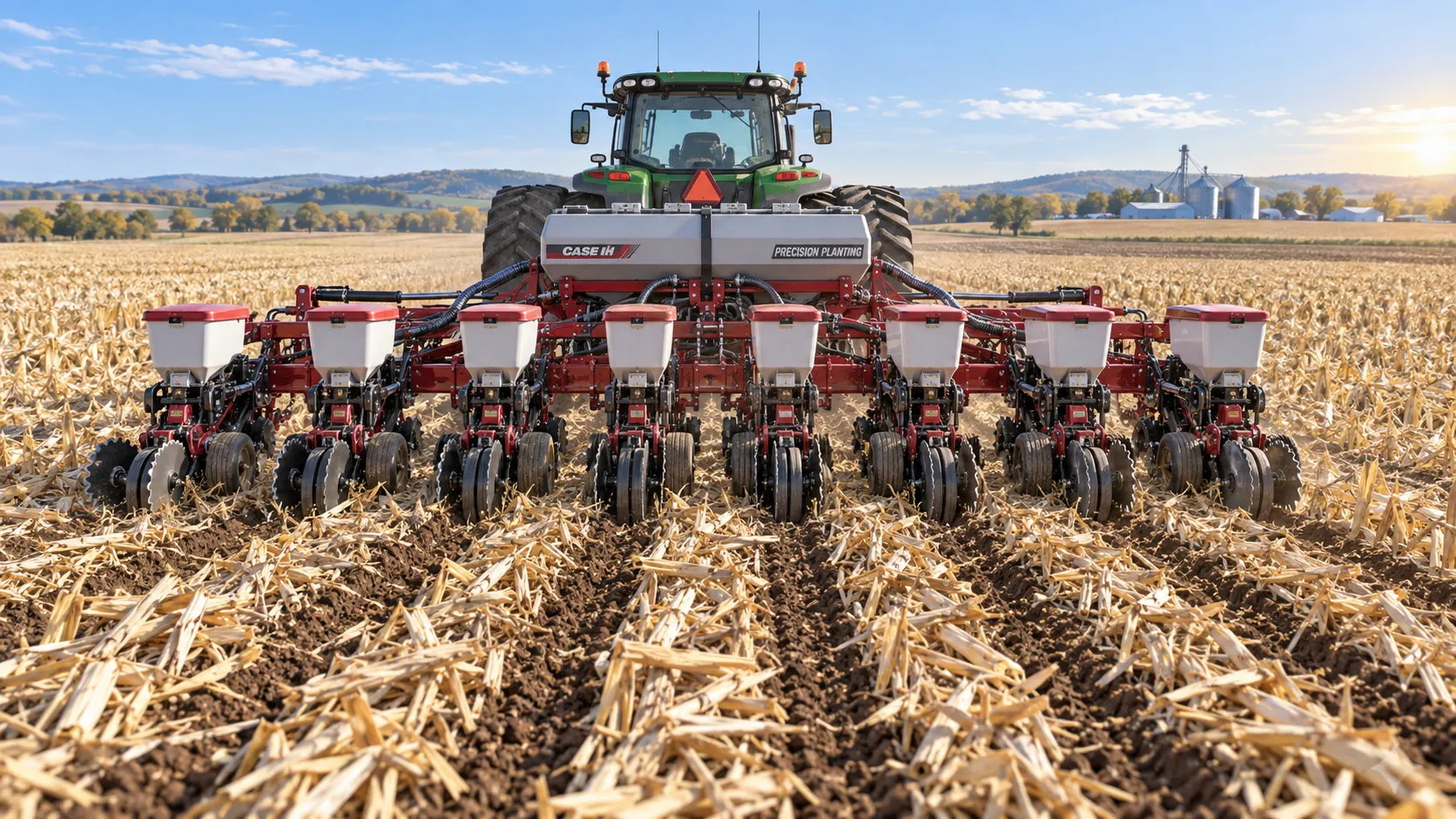
How to Select a Heavy-Duty Seeder for Large Acreage and High-Residue Fields
Heavy duty seeders for large acreage: compare residue handling, depth control, downforce, metering accuracy, and precision features to select the right model.
Related News
- 00
0000-00
India Opens Duty Relief for Center Pivot Imports - 00
0000-00
What to Check Before Working With a Precision Irrigation Systems Factory - 00
0000-00
Red Sea Shock Tightens CPS Capacity, Rates Jump 37% - 00
0000-00
Red Sea Escalation Tightens Center Pivot Shipping - 00
0000-00
Red Sea Disruption Extends Center Pivot Transit to 42 Days
Popular Tags
Hydrological Resource Strategist
Weekly Insights
Stay ahead with our curated technology reports delivered every Monday.