
Customized Export Regulation for Smart Irrigation Equipment Launched





China Customs has initiated a pilot program under its ‘One Product, One Policy’ (OPOP) regulatory reform targeting agricultural and food-related equipment exports, with smart irrigation systems among the first categories included. Though the exact launch date remains unconfirmed, the initiative aligns with the 2026 Cross-Border Trade Facilitation Action Plan. The reform directly affects manufacturers, exporters, and supply chain actors engaged in precision agriculture technologies—particularly those serving time-sensitive irrigation deployment cycles in overseas markets.
Event Overview
In 2026, the Cross-Border Trade Facilitation Action Plan explicitly designates smart irrigation water quality monitoring instruments and center-pivot sprinkler control systems for inclusion in the OPOP regulatory pilot. Under this framework, China Customs develops customized safety supervision plans for each product category. Inspection and quarantine procedures are shifted upstream to the production stage; remote inspection coverage reaches 85%; and average customs clearance time is reduced to within 48 hours.
Industries Affected
Direct trading enterprises: Exporters of smart irrigation equipment face significantly lower risk of order default due to batch-level inspection delays. This is especially critical for firms fulfilling seasonal delivery windows—such as irrigation season commitments in North America, Australia, or the Middle East—where late arrival may trigger contractual penalties or loss of engineering contracts.
Raw material procurement enterprises: Suppliers of key components—including sensors, microcontrollers, and corrosion-resistant piping—may experience revised documentation requirements and traceability expectations. As inspection shifts to production, procurement records must now support full-chain traceability, increasing administrative coordination demands with downstream OEMs.
Manufacturing enterprises: Original equipment manufacturers (OEMs) must adapt internal quality assurance protocols to accommodate pre-shipment verification standards set by Customs. Real-time data sharing (e.g., calibration logs, firmware versioning, environmental test reports) becomes part of the regulatory interface—not merely an internal compliance activity.
Supply chain service enterprises: Logistics providers, third-party inspection agencies, and export compliance consultants face recalibration of service scope. Remote inspection readiness (e.g., camera-enabled factory audits, digital evidence submission portals) is now a baseline capability—not an optional enhancement—for firms supporting OPOP-participating clients.
Key Considerations and Recommended Actions
Align production documentation with OPOP audit triggers
Manufacturers should map their current quality records against the known OPOP inspection checkpoints—especially firmware validation, sensor calibration logs, and electrical safety certifications—and ensure these are digitally accessible, timestamped, and version-controlled prior to production commencement.
Engage early with designated Customs technical liaison units
Since OPOP plans are product-specific and co-developed, firms should proactively contact local Customs technical departments before initiating new model exports—not after certification or shipment planning—to avoid misalignment in scope definition or data format requirements.
Review contractual delivery terms in light of 48-hour clearance window
While Customs clearance is now accelerated, marine transit, inland logistics, and destination-country import formalities remain outside OPOP’s scope. Exporters should avoid over-indexing on the 48-hour metric and instead integrate it into holistic lead-time modeling—including buffer allocation for non-Customs bottlenecks.
Editorial Perspective / Industry Observation
Analysis shows that the OPOP reform represents less a standalone policy shift and more a structural acceleration of China’s broader regulatory digitization agenda—particularly in high-value agri-tech exports. Observably, the emphasis on remote inspection and production-stage intervention signals a move toward outcome-based compliance rather than document-heavy post-hoc verification. From an industry perspective, this favors vertically integrated manufacturers with strong digital QA infrastructure—but may raise entry barriers for SME exporters reliant on fragmented subcontracted production. Current developments are better understood not as a simplification of trade rules, but as a redistribution of compliance responsibility upstream—making traceability, not just certification, the new operational priority.
Conclusion
The launch of OPOP for smart irrigation equipment marks a consequential step in aligning China’s export governance with the temporal and technical specificity of modern agri-tech value chains. It does not eliminate complexity, but reconfigures where and how compliance is enacted. For global buyers and channel partners, the change enhances predictability—not through blanket deregulation, but through anticipatory, product-tailored oversight. A rational reading suggests sustained competitive advantage will accrue to firms treating regulatory readiness as a continuous, embedded function—not a discrete pre-shipment checkpoint.
Source Attribution
Official announcements from China Customs and the General Office of the State Council’s 2026 Cross-Border Trade Facilitation Action Plan. Note: Specific implementation guidelines, regional rollout timelines, and eligibility criteria for individual product models remain pending official publication and are subject to ongoing monitoring.
Related News
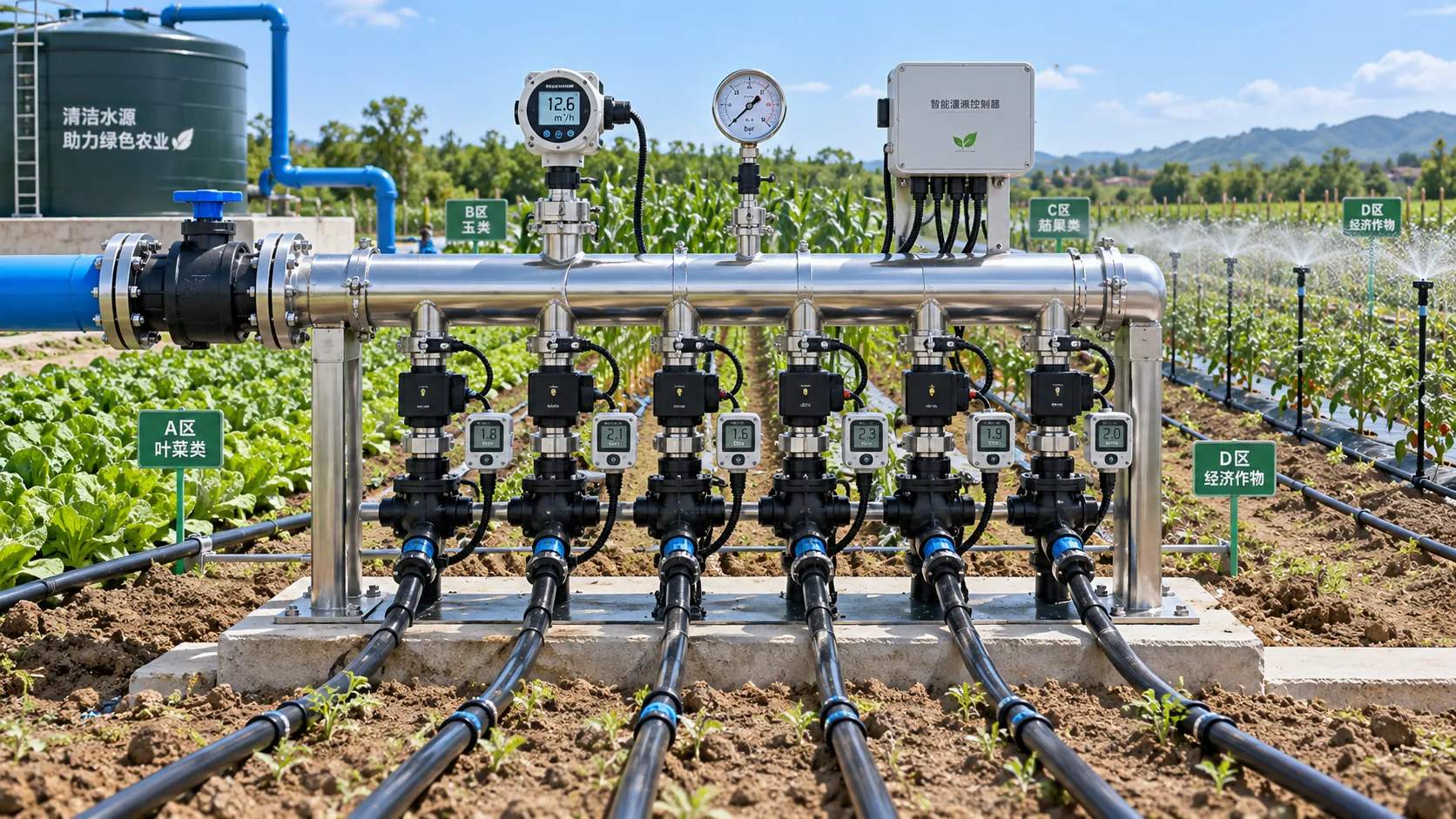
How to Select Smart Irrigation Valves for Multi-Zone Water Management?
Intelligent irrigation systems valves: learn how to match smart valves with multi-zone flow, pressure, control, feedback, and communication needs for reliable water management.
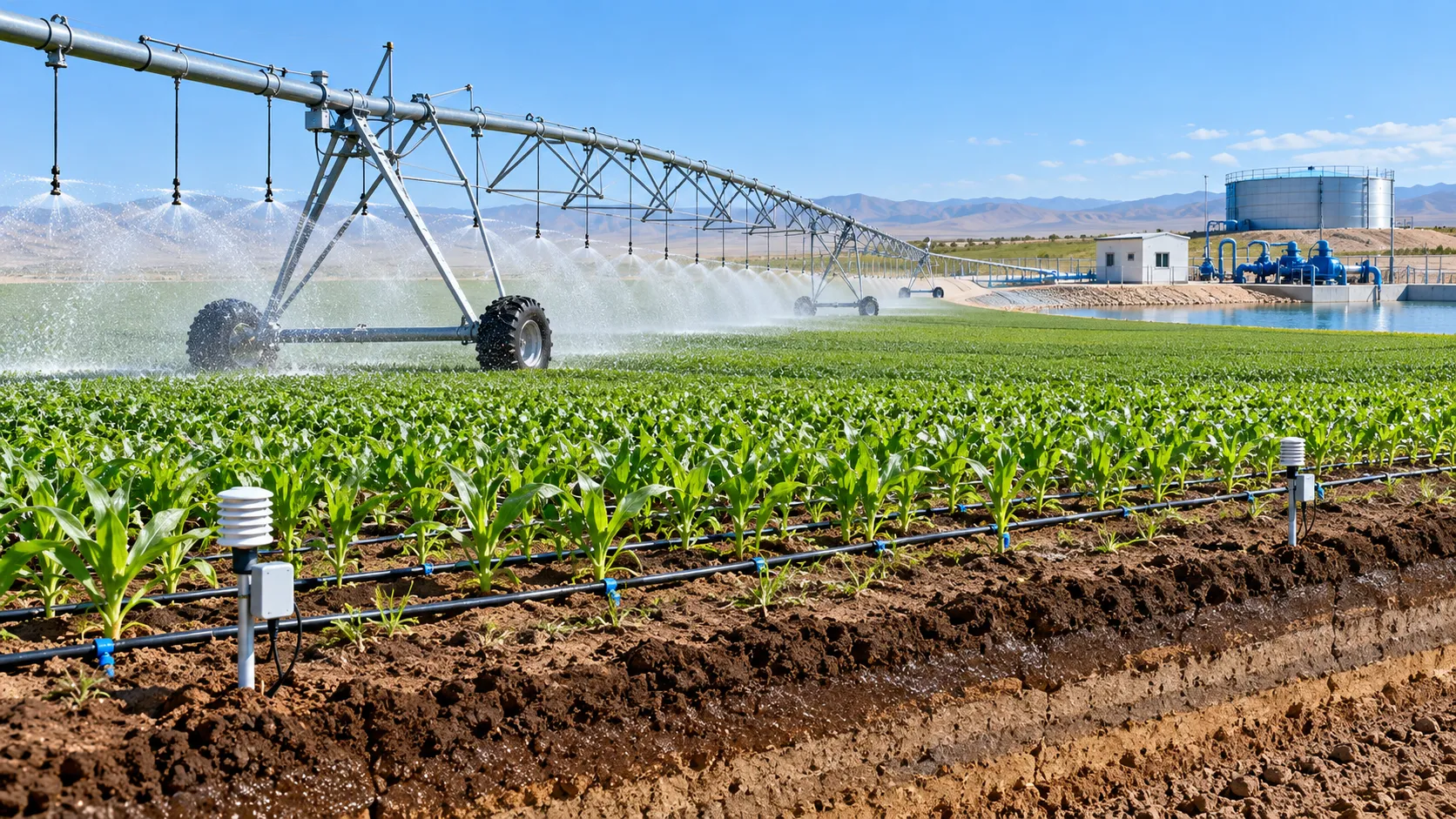
Climate-Smart Farming for Drought: A Practical Plan for Protecting Yields
Climate-smart farming for drought: build smarter water budgets, protect critical crop stages, improve irrigation uniformity, and safeguard yields with practical field-proven strategies.

How Digital Agriculture Platforms Turn Field Data Into Better Input Decisions
Digital agriculture platforms turn field data into smarter fertilizer, water, seed, and equipment decisions—helping farms cut risk, improve margins, and scale sustainability.

GPS-Guided Farm Machinery: Where It Delivers Measurable Field Efficiency Gains
Agri-mechanization GPS guided systems deliver measurable field efficiency gains through reduced overlap, precise planting, smarter inputs, and reliable farm data.

How Sensor Feedback Enables Accurate Variable-Rate Fertilization in Field Conditions
Precision fertilization systems with sensor feedback improve variable-rate accuracy by verifying flow, managing latency, and ensuring reliable field application.

How to Select Precision Crop Protection Equipment for Variable Field Conditions
Precision crop protection equipment selection made simple: compare terrain, canopy, weather, control accuracy, and data workflows for reliable applications.

When Does Agricultural Machinery Leasing Cost Less Than Owning Equipment?
Agricultural machinery leasing can lower farm costs when use is seasonal or uncertain. Compare utilization, maintenance, cash flow, and risk to make a smarter equipment decision.

How to Evaluate Precision Fertilization System Suppliers for Farm-Scale Deployment
Precision fertilization systems suppliers: learn how to compare accuracy, integration, uptime, service, and total cost for confident farm-scale deployment.

ISOBUS for Smart Agriculture: How It Connects Tractors, Implements, and Farm Data
ISOBUS for smart agriculture connects tractors, implements, terminals, and farm data—helping growers improve precision, documentation, and smarter field decisions.
Related News
- 00
0000-00
India Opens Duty Relief for Center Pivot Imports - 00
0000-00
What to Check Before Working With a Precision Irrigation Systems Factory - 00
0000-00
Red Sea Shock Tightens CPS Capacity, Rates Jump 37% - 00
0000-00
Red Sea Escalation Tightens Center Pivot Shipping - 00
0000-00
Red Sea Disruption Extends Center Pivot Transit to 42 Days
Popular Tags
Hydrological Resource Strategist
Weekly Insights
Stay ahead with our curated technology reports delivered every Monday.