
Which equipment for larger fields maintains accuracy at higher speeds?
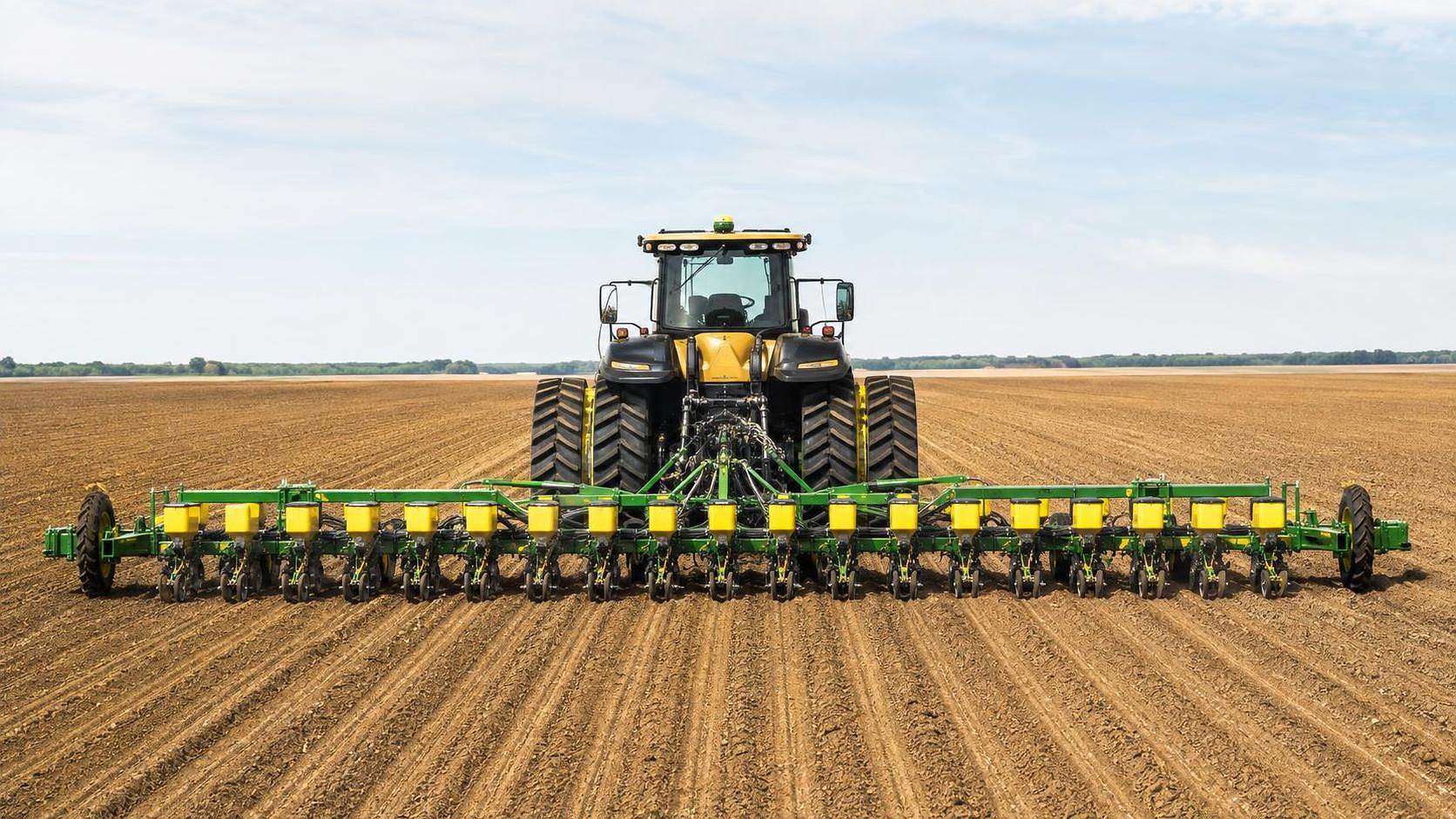




For large-acreage operations, the equipment that maintains accuracy at higher speeds is usually the machine with the best control system around the implement, not simply the highest engine rating. A larger tractor or self-propelled machine can cover ground faster, but speed begins to degrade results when steering, boom stability, seed placement, residue flow, section control, or material metering cannot react fast enough.
For most operators, the practical answer is a matched system: a stable high-horsepower platform, high-quality GNSS guidance, an implement built for its intended working speed, responsive hydraulic and electric controls, and sensors that correct errors while the machine is moving. The right choice depends on whether the operation is planting, spraying, tillage, fertilizing, or harvesting. A machine that holds an accurate pass line at speed may still deliver poor agronomic results if the tool behind it is bouncing, plugging, drifting, or applying unevenly.
Start with the operation that cannot tolerate error
Large fields create pressure to increase field speed because weather windows are short and transport time can consume a substantial part of the day. Yet the acceptable error changes sharply by task. Deep tillage can often tolerate more variation than corn planting. Broad-acre spreading may be workable at speeds that would create unacceptable spray drift or uneven seed depth. Harvesting faster can raise throughput until crop feed, separation, cleaning, or grain loss reaches a limit.
Before comparing equipment for larger fields, define the quality measure that matters most for the job. It may be repeatable row spacing, depth consistency, spray deposition, overlap reduction, application-rate stability, crop loss, soil protection, or operator fatigue over a long shift. That measure should determine the equipment specification.
- Planting: Focus on seed-meter performance, row-unit downforce, closing consistency, trench quality, and the planter's ability to hold section and rate commands at the desired speed.
- Spraying: Prioritize boom stability, nozzle selection, pressure control, turn compensation, terrain response, and section or individual-nozzle control.
- Fertilizer and granular application: Evaluate rate control, distribution pattern, material flow, section management, and whether the spread width remains reliable under field conditions.
- Harvesting: Assess crop intake, header control, crop flow, separation capacity, cleaning performance, and loss monitoring together rather than judging the combine by travel speed alone.
- Tillage and primary fieldwork: Examine draft stability, depth control, frame strength, soil flow, residue handling, and traction before treating working speed as the main productivity lever.
An operator who needs to finish broad-acre cultivation quickly may gain more from a wider, stable implement than from forcing an existing tool beyond its consistent operating range. Conversely, a wide machine that is slow to unfold, difficult to transport, or poorly matched to field entrances can lose much of its theoretical advantage.
Guidance accuracy is necessary, but it does not control the whole job
Satellite guidance is often the first feature considered when scaling up. It matters: reliable positioning helps maintain pass-to-pass consistency, supports controlled traffic, reduces overlap, and keeps an operator on line during long working days. However, a precise display line does not guarantee accurate work at the ground.
At higher speeds, the tractor and implement can respond differently to ruts, slopes, soil texture changes, residue, wheel slip, and steering corrections. A planter may drift sideways on a slope even while the tractor remains centered on its intended path. A trailing sprayer can yaw or bounce behind the tractor. A wide header can follow uneven ground poorly if its sensing and hydraulic response are too slow. These are implement-control problems, not merely positioning problems.
For repeatable work across large fields, look for guidance and steering systems that provide stable corrections without constant manual intervention, along with an implement interface capable of receiving and acting on position data. The system should support the accuracy level required by the crop plan and operate reliably under local correction-signal conditions. Repeatability over multiple passes and seasons may matter more than a highly precise position reading at one moment.
Compatibility also deserves attention. A mixed fleet can work well, but data transfer, task control, section control, and diagnostic access become more complicated when displays, receivers, implements, and controllers use different software environments. An operator should confirm what functions remain available when equipment is connected across brands, rather than assuming every advertised capability will carry over.
The implement sets the realistic speed ceiling
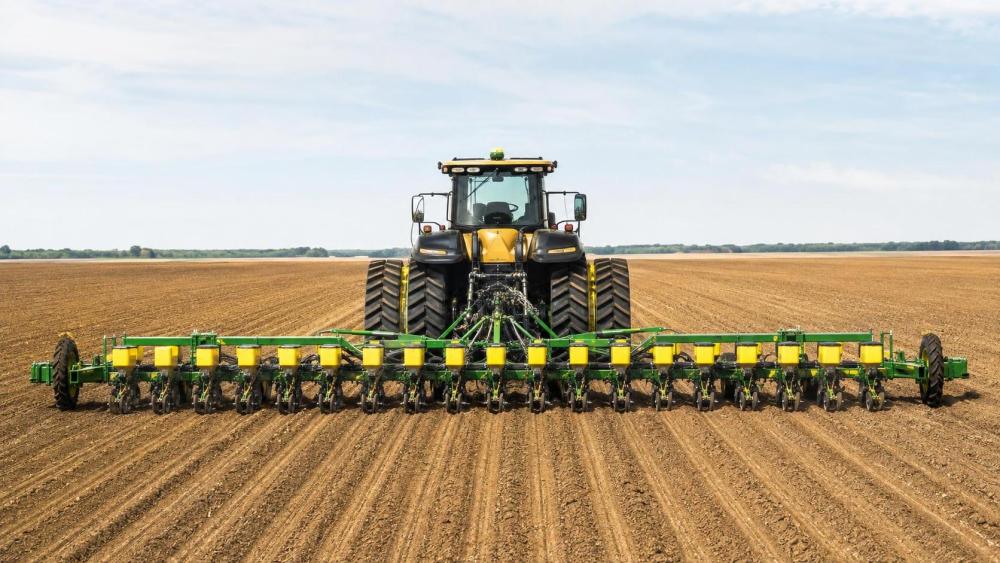
Operators sometimes try to solve a productivity problem by adding tractor power. More power can maintain travel speed on slopes, through heavy soil, or with large hydraulic loads. It cannot make a row unit maintain seed depth if the gauge wheels are losing contact with the soil, and it cannot keep a sprayer pattern uniform when boom movement exceeds the control system's ability to compensate.
The implement should therefore be evaluated at the speed planned for normal use, not only at a low demonstration speed or on smooth ground. A useful question is: what happens when the machine encounters the conditions that occupy the most difficult portion of the field? For planting, that may be variable residue or changing soil firmness. For spraying, it may be rolling terrain, irregular headlands, or wind exposure. For harvesting, it may be green patches, lodged crop, variable crop density, or uneven moisture.
Planters: stability at the row unit matters more than headline speed
A high-speed planting system needs more than a faster seed meter. It requires row units that remain stable vertically and laterally, downforce control that adapts to changing field resistance, and closing systems that produce a consistent seed environment. Seed tubes or delivery systems must place seed accurately at the intended location while meters maintain singulation at increased speed.
Operators should be cautious with broad claims about high-speed planting. Performance can differ by crop, seed treatment, soil texture, residue level, field preparation, and row-unit configuration. The relevant comparison is not whether a planter can move quickly across a clean, level field. It is whether emergence quality remains consistent after operating at the planned speed through representative conditions.
Sprayers: boom control and droplet management determine accuracy
Self-propelled sprayers and trailed sprayers can cover extensive acreage rapidly, but higher speed magnifies boom movement. Each change in boom height affects spray pattern and drift potential. Pressure changes can alter droplet characteristics, while cornering creates uneven application if the system cannot compensate for different speeds across the boom.
A sprayer intended for productive, accurate fieldwork should have an effective boom suspension arrangement, responsive height sensing where terrain makes it valuable, stable rate control, and section control suited to field shape. Individual nozzle control can reduce overlap in irregular fields and improve turn compensation, but it does not eliminate the need for correct nozzle choice and sensible operating conditions. Travel speed must still fit the label, target, canopy, wind conditions, and desired deposition.
Harvesters: throughput only counts when loss stays controlled
Combine capacity is often described in terms of power, grain-tank size, unloading rate, or header width. These are important, but a combine's productive speed is limited by its ability to feed crop evenly and separate and clean it without raising losses or damaging grain. Sensors and loss monitors give the operator useful feedback, yet they are only valuable when their readings are understood and checked against crop conditions.
For a larger operation, the better harvester is often the one that maintains a predictable crop flow through changing conditions and lets the operator make adjustments quickly. Header automation, terrain following, crop-flow monitoring, and accessible adjustment controls can have as much effect on daily output as an additional increment of engine power. Capacity also needs to be matched to grain carts, trucks, labor, drying capacity, and field-to-storage logistics. A combine waiting to unload is not using its field capacity.
Hydraulics, chassis, and tires affect precision more than they first appear
At high working speeds, accuracy depends on how steadily the machine carries and controls the implement. Hydraulic capacity is relevant, but flow volume alone is not enough. The system needs sufficient responsiveness and controllability for functions such as planter downforce, active row control, boom height correction, steering assistance, header control, and variable-rate application.
Chassis behavior also matters. A machine that pitches, rolls, or transfers weight abruptly can create errors that software cannot fully correct. Wheelbase, suspension, axle configuration, ballast strategy, tire selection, track setup, and inflation management all affect traction and ride. Excessive wheel slip reduces positional consistency and can damage soil structure. A rigid setup may appear stable on the road but transmit more shock to the implement in rough field conditions.
Do not size tires or tracks only around flotation. For precision work, consider sidewall behavior, compaction risk, load carrying capacity, turning behavior, road transport requirements, and the implement's draft load. The best configuration is often a compromise between field traction, ride quality, soil protection, and the ability to travel safely between distant fields.
Use automation to reduce fatigue, not to ignore machine limits
Long days on large farms expose a practical accuracy problem: operator fatigue. Guidance, automated headland turns, implement sequencing, section control, machine synchronization, and real-time alerts can reduce repetitive tasks and make results more consistent late in the day. These systems are particularly useful where field boundaries are complex or multiple operations must be completed in a short period.
Automation should be judged by how it handles exceptions. Fields contain washouts, obstacles, residue changes, wet patches, blocked rows, crop transitions, and irregular headlands. A system that performs well only when every condition is ideal may still leave the operator with a demanding workload. During evaluation, check how easily an operator can override controls, change settings, identify alarms, recover from lost signal, and diagnose a sensor issue without long delays.
Training has direct value here. An advanced display with many functions may not improve accuracy if only one person understands its setup. For crews operating several machines, common workflows, clear calibration routines, and accessible support can matter as much as another layer of automation.
A field-speed evaluation should be based on quality, not the speedometer
When comparing machines, ask suppliers or dealers to explain the operating range in terms of work quality and field conditions. Then evaluate the configuration intended for purchase: tractor, tires or tracks, guidance package, controller, implement, sensors, and hydraulic setup. A high specification on one component does not compensate for a weak link elsewhere.
A practical evaluation sequence can keep the decision focused:
- Identify the operation that creates the tightest time window and the error that carries the highest cost.
- Set a target daily output based on realistic field efficiency, including turning, loading, refilling, transport, and adjustment time.
- Choose the working width and capacity needed to meet that output without relying on an aggressive travel speed.
- Verify that guidance, implement control, and data systems are compatible and usable by the operating team.
- Assess performance on representative terrain, soil, residue, crop, and headland conditions.
- Confirm service access, calibration procedures, spare-part availability, and the ability to continue working if a precision component fails.
The last point is often overlooked. Precision systems can improve output and reduce waste, but they introduce receivers, controllers, sensors, wiring, software, and signal dependencies. The decision should include a workable fallback process for busy periods. An operation does not need every feature to remain productive, but it should know which failures stop the job and which can be managed temporarily.
Choose capacity that preserves a margin
The strongest equipment choice for larger fields is rarely the machine that reaches the highest possible ground speed. It is the system that completes the required acres within the weather window while retaining a margin for changing field conditions, refilling, maintenance, and operator decisions.
For planting, that typically favors stable row-unit control and dependable seed delivery. For spraying, it favors boom discipline and application control. For harvesting, it favors controlled crop flow and loss management. Across all operations, accurate guidance, responsive hydraulics, a stable chassis, and an implement designed for the intended speed are what allow added capacity to translate into better field performance rather than faster mistakes.
Related News
Smart Farming Technology for Dairy Farms: Where Automation Delivers Measurable ROI
Smart farming technology for dairy farms delivers measurable ROI through automation, precision feeding, health monitoring, and data-driven cost control.
How to Select a Heavy-Duty Seeder for Large Acreage and High-Residue Fields
Heavy duty seeders for large acreage: compare residue handling, depth control, downforce, metering accuracy, and precision features to select the right model.
How to Select a Precision Fertilization System for Variable Corn Field Conditions
Precision fertilization systems for corn farming: learn how to match data, placement, control accuracy, and ROI to variable field conditions for better results.
Selecting Precision Farming Products by Application: Field Conditions, Crops, and ROI
Application-based product selection for precision farming: match technology to field conditions, crops, machinery, and ROI for smarter, reliable farm investments.
How to Evaluate Agricultural Product Information Sources for Reliable Farm Decisions
Agricultural product information reference guide: evaluate reliable farm data, verify claims, and make smarter machinery, irrigation, and crop decisions.
Farm Machinery Guide: Matching Tractor Horsepower and Implements to Farm Size
Farm machinery guide for tractors: match horsepower, implement width, hydraulics, traction, and fleet capacity to farm size for lower costs and reliable field performance.
How to Evaluate Drip Irrigation System Manufacturers for Large Farm Projects
Drip irrigation systems manufacturer evaluation guide for large farms: compare hydraulic design, filtration, quality control, scalability, delivery, and support.
Specification Planning: A Practical Framework for Defining Equipment Requirements
Application guidance for specification planning: define measurable equipment requirements, prioritize performance, and avoid costly procurement mistakes.

How North American Farms Can Select Crop Monitoring Systems by Acreage and Connectivity
Crop monitoring systems North America: learn how to match acreage, connectivity, sensors, and data workflows for reliable, actionable farm decisions.
Related News
- 00
0000-00
How North American Farms Can Select Crop Monitoring Systems by Acreage and Connectivity - 00
0000-00
How Tractor Intelligence Systems Improve Field Efficiency and Input Accuracy - 00
0000-00
Which equipment for larger fields maintains accuracy at higher speeds? - 00
0000-00
What should a digital ag platform integrate before a farm-wide rollout? - 00
0000-00
China’s Temporary Helium Export Ban Reshapes Irrigation Supply Chains
Popular Tags
Tractor Power Architect
Weekly Insights
Stay ahead with our curated technology reports delivered every Monday.