
What should a digital ag platform integrate before a farm-wide rollout?
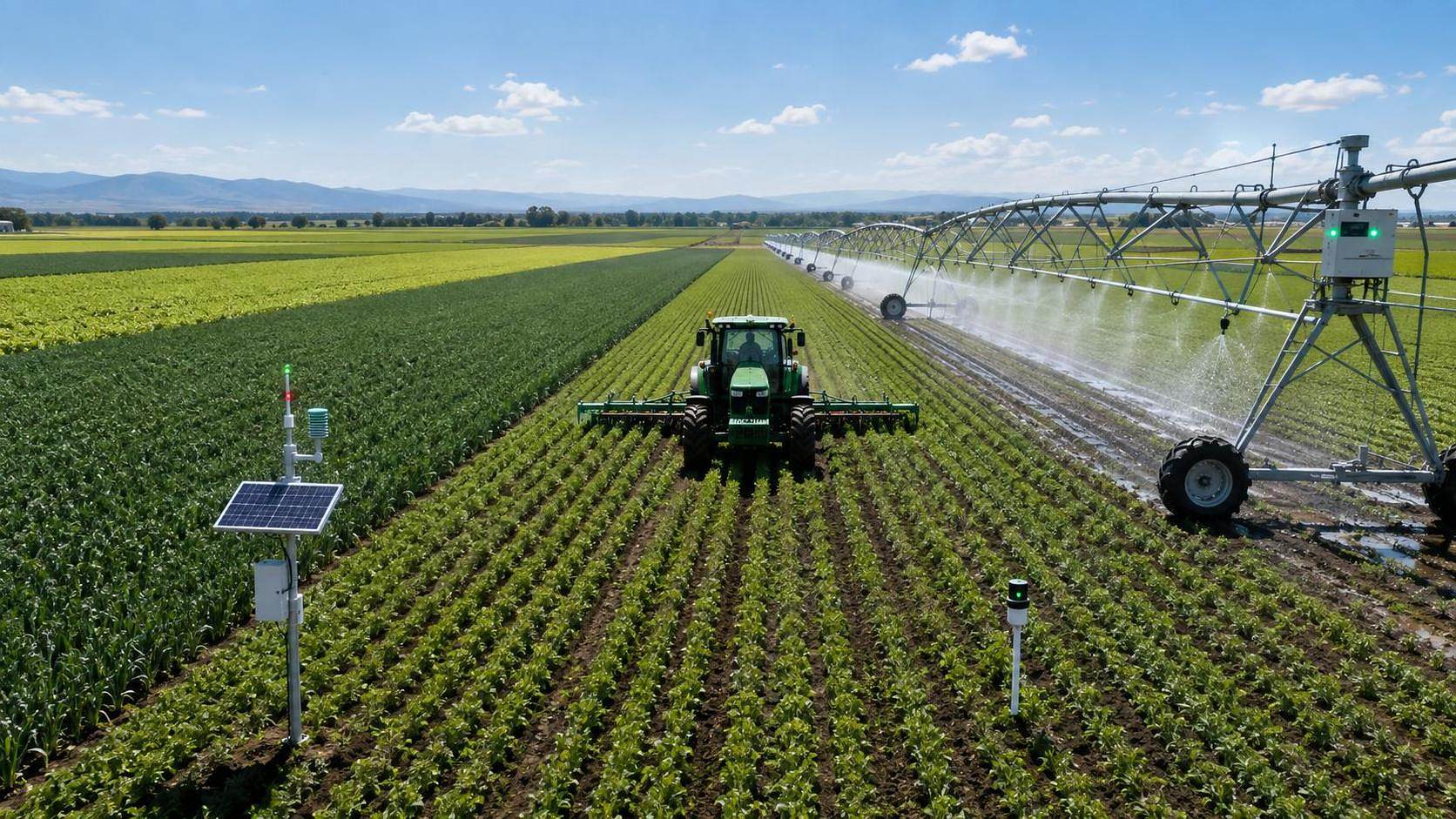




A farm-wide rollout should not begin when a dashboard looks complete. It should begin when the digital ag platform can turn field activity into trusted, actionable records across machinery, agronomy, irrigation, labor, and finance. A platform that only displays machine locations or satellite imagery may be useful, but it is not yet ready to coordinate a whole operation.
The practical question is not “How many tools can the platform connect?” It is whether each connection supports a defined operating decision: when to send equipment, where to apply inputs, how to respond to irrigation exceptions, whether harvest loss is rising, or which field operation needs attention before it becomes expensive.
Before expanding across all farms, blocks, crews, and equipment types, build the integration around the operational system that already exists. The platform should reduce duplicate entry and delayed decisions. It should not force field teams to create a second version of the truth after every shift.
Start with a common field and asset model
The first integration is often less visible than a telematics feed, but it determines whether every later connection works: a shared model for fields, boundaries, crops, tasks, machines, operators, and seasons.
Different systems commonly use different names or identifiers for the same place. One irrigation controller may refer to “North Pivot 3,” an equipment terminal may store “N-03,” and a crop record may only identify the larger field block. Once those records flow into a digital ag platform without reconciliation, reports can appear precise while combining unrelated activity. Water use, input cost, machine hours, and yield results then cannot be compared reliably.
Set a governed master record before connecting data sources. It should define:
- Field boundaries, internal management zones, and a stable field ID;
- Farm, block, and ownership or lease relationships;
- Crop, variety, planting date, and crop-year definitions;
- Machine, implement, sensor, pump, valve, and controller IDs;
- Operator and contractor identities, with clear access rules;
- Units for area, fuel, moisture, flow, application rate, and time.
This does not require every historical record to be perfect. It does require a controlled baseline. Decide who can create or rename a field, who resolves duplicates, and how boundary changes are recorded. A field split after a land agreement changes, for example, should not silently rewrite the prior season’s records.
Integrate equipment data with the work it was meant to perform
Telematics is valuable when it answers an operational question. Location, engine hours, fuel use, fault codes, and machine status are useful signals, but they become farm-management data only when connected to a planned task, field location, implement configuration, and operator workflow.
For large tractors and soil-preparation equipment, the platform should associate pass records with the intended field operation. That makes it possible to distinguish productive work from transport, idle time, rework, or an incomplete task. For sprayers and precision applicators, the integration needs prescription files, applied-rate records, section status, and as-applied maps where available. Without the planned-versus-executed link, the platform can show movement but cannot confirm whether the recommendation was carried out.
Combine harvester integration deserves the same discipline. Yield and moisture data should be connected to calibrated machine records, crop identity, field boundaries, and harvest timing. Cleaning-loss signals or throughput readings can support performance review, but they should not be treated as a standalone verdict on operator or machine quality. Crop conditions, headland activity, terrain, moisture variation, and sensor calibration all affect interpretation.
Ask equipment vendors a direct implementation question: can the platform receive data through documented interfaces, export it in usable formats, and retain the source and timestamp of each record? A connection that depends on manual file handling may be acceptable for a limited pilot. It becomes a recurring operational burden when every machine fleet is included.
Bring irrigation into the same decision loop
Irrigation is often integrated too late because it is managed through a different operational rhythm from planting, spraying, or harvesting. That separation is costly when irrigation scheduling, crop status, energy use, pump capacity, and weather risk are considered independently.
A farm-wide system should connect irrigation assets and agronomic context at the level where a decision is made. Depending on the site, this may include pumps, zones, pivots, valves, flow meters, pressure sensors, soil-moisture sensors, controller states, water allocations, and weather inputs. The platform does not need to absorb every raw sensor reading into a single screen. It needs enough data to identify exceptions and support the next action.
For example, a low-flow alert has a different meaning when a zone is scheduled for a critical growth stage than when it is between irrigation cycles. Likewise, a soil-moisture reading is more useful when tied to crop stage, rooting depth assumptions, recent irrigation events, and the field zone it represents.
Integration should also preserve the distinction between monitoring and control. Reading a controller’s status is less risky than allowing a platform to start pumps, change schedules, or open valves. Remote control may be appropriate where communications, safety interlocks, local operating procedures, and authorization controls are mature. It should not be introduced simply because the platform supports an API.
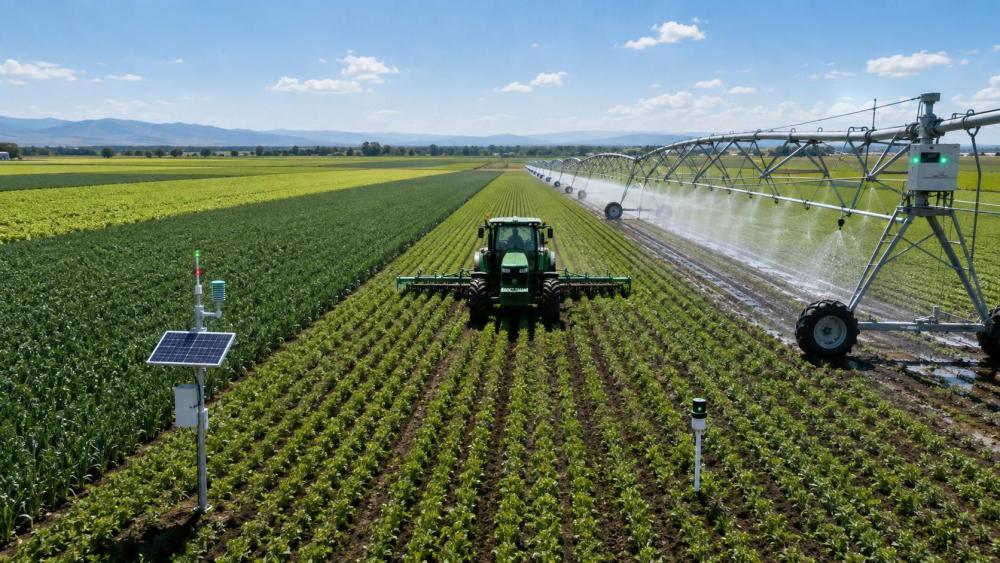
Do not connect data until the workflow has an owner
Many agricultural software projects fail after integration because the system creates alerts that nobody is responsible for closing. A sensor fault, machine exception, overdue task, or irrigation deviation can generate useful information, but only if the workflow defines who reviews it, what response is expected, and how completion is recorded.
Before rollout, map a small number of high-value workflows from trigger to closure. Typical examples include:
- A planned field operation is delayed by weather, machine availability, or labor;
- A machine enters a field without a matching task or prescription;
- An application record falls outside an approved target range;
- An irrigation zone does not achieve the expected flow or pressure condition;
- A harvester produces an unusual yield or moisture pattern that requires review;
- A maintenance alert affects equipment scheduled for a time-sensitive operation.
Each workflow needs a status model. “Alert sent” is not a completed outcome. A workable sequence might be: detected, assigned, investigated, action taken, verified, and closed. The platform should capture the reason for any override or deviation, especially where records affect input reconciliation, traceability, maintenance planning, or later performance analysis.
Keep the first rollout focused. Trying to digitize every farm process at once usually produces too many incomplete task types, exception rules, and reports. Select a handful of workflows that matter during the next production cycle, then expand after users can reliably follow them.
Use integration rules that support trust, not just volume
A digital ag platform will collect data at different speeds and levels of reliability. Machine telemetry may arrive frequently. Lab results arrive occasionally. Field observations can be entered days later. Satellite layers may be affected by cloud cover, while sensors may fail, drift, or lose communications.
The solution is not to reject imperfect data. It is to make data quality visible and prevent uncertain records from being interpreted as confirmed facts. Every important record should retain its source, time, location, unit, and status. A manually entered observation should not look identical to a controller event. A GPS point outside a validated field boundary should be flagged for review rather than automatically included in a cost or application report.
Interoperability is a commercial requirement, not a technical extra
Large farming operations rarely use a single equipment brand, a single controller supplier, or a single agronomic data source. The platform should therefore be evaluated by how it handles a mixed environment, not by how smoothly it works with one preferred ecosystem.
Look beyond a claim that a product is “integrated.” Establish what the connection actually does. Can it import historical data? Is data synchronized in both directions or only exported once? Are task records and field boundaries shared, or only machine positions? Can the farm retrieve its own records in a structured format if a vendor relationship changes? Does the connection require an extra subscription, a gateway, or a manual approval process?
Open interfaces can reduce future constraints, but they do not remove the need for governance. A broad API without field standards, permission rules, and testing can spread inconsistent records faster. The practical goal is a documented integration architecture: which system is authoritative for each data type, how it exchanges information, and what happens when a connection is unavailable.
Build access, security, and continuity into field operations
Farm-wide deployment increases the number of people and devices that can view or influence operations. Seasonal staff, service technicians, agronomists, contractors, and equipment dealers may need different levels of access. A shared account may feel convenient during busy periods, but it removes accountability and makes access difficult to revoke.
Use named accounts and role-based permissions. A person who can view a machinery map does not necessarily need authority to edit prescriptions or control irrigation equipment. Access should reflect the work being performed, and sensitive changes should leave an audit trail.
Connectivity also needs a field-ready plan. Remote blocks may have intermittent mobile coverage, and machine terminals may operate offline for part of a day. Define what users can do without a connection, how records are queued and synchronized, and how conflicts are resolved when two systems update the same task. A rollout is fragile if operations stop whenever the central platform is unavailable.
Measure the rollout against decisions, not dashboards
Return on investment should be linked to a few operational outcomes the farm can actually influence. Examples include fewer duplicate field records, faster confirmation of completed work, less time spent reconciling machine and input data, better maintenance scheduling, or earlier identification of irrigation exceptions. The relevant measure depends on the operation and the workflow selected for rollout.
A useful implementation test is simple: can a supervisor compare the planned work with the work performed, see exceptions that matter, assign a response, and trust the record afterward? If the answer is no, adding more sensor feeds and visual layers will not solve the underlying problem.
Start with a representative pilot that includes mixed equipment, an active irrigation area where relevant, normal connectivity limitations, and the people who will use the process during peak work. Test the integration under real task changes, not only against clean sample data. Then correct identifiers, permissions, task rules, and training materials before extending the model across the farm.
Industry intelligence can help frame those decisions when the rollout touches large machinery, combine performance, precision tools, and water-saving systems. AP-Strategy’s coverage of mechanization, harvesting technology, precision farming, and irrigation can be useful for comparing the operational context behind an integration choice. The platform itself, however, should be selected and configured around the farm’s records, workflows, and decision rights. That is what turns connected technology into a system that can operate at full scale.
Related News
How to Evaluate Agricultural Product Information Sources for Reliable Farm Decisions
Agricultural product information reference guide: evaluate reliable farm data, verify claims, and make smarter machinery, irrigation, and crop decisions.
Farm Machinery Guide: Matching Tractor Horsepower and Implements to Farm Size
Farm machinery guide for tractors: match horsepower, implement width, hydraulics, traction, and fleet capacity to farm size for lower costs and reliable field performance.
How to Evaluate Drip Irrigation System Manufacturers for Large Farm Projects
Drip irrigation systems manufacturer evaluation guide for large farms: compare hydraulic design, filtration, quality control, scalability, delivery, and support.
Specification Planning: A Practical Framework for Defining Equipment Requirements
Application guidance for specification planning: define measurable equipment requirements, prioritize performance, and avoid costly procurement mistakes.

How North American Farms Can Select Crop Monitoring Systems by Acreage and Connectivity
Crop monitoring systems North America: learn how to match acreage, connectivity, sensors, and data workflows for reliable, actionable farm decisions.

Where to Find Reliable Product Information for Comparing Farm Equipment
Product information resources agriculture buyers can trust: compare farm equipment with technical specs, manuals, field data, dealer support, and lifecycle insights.
Selecting Real-Time Soil Moisture Sensors for Irrigation Zone Control
Soil moisture sensors real time: learn how to select reliable probes, optimize zone control, improve irrigation decisions, and scale precision water management.
Tractor Hydraulic Systems Troubleshooting: Diagnosing Weak Lift and Slow Implements
Tractor hydraulic systems troubleshooting made practical: diagnose weak lifts and slow implements with proven pressure, flow, valve, and oil-supply checks.
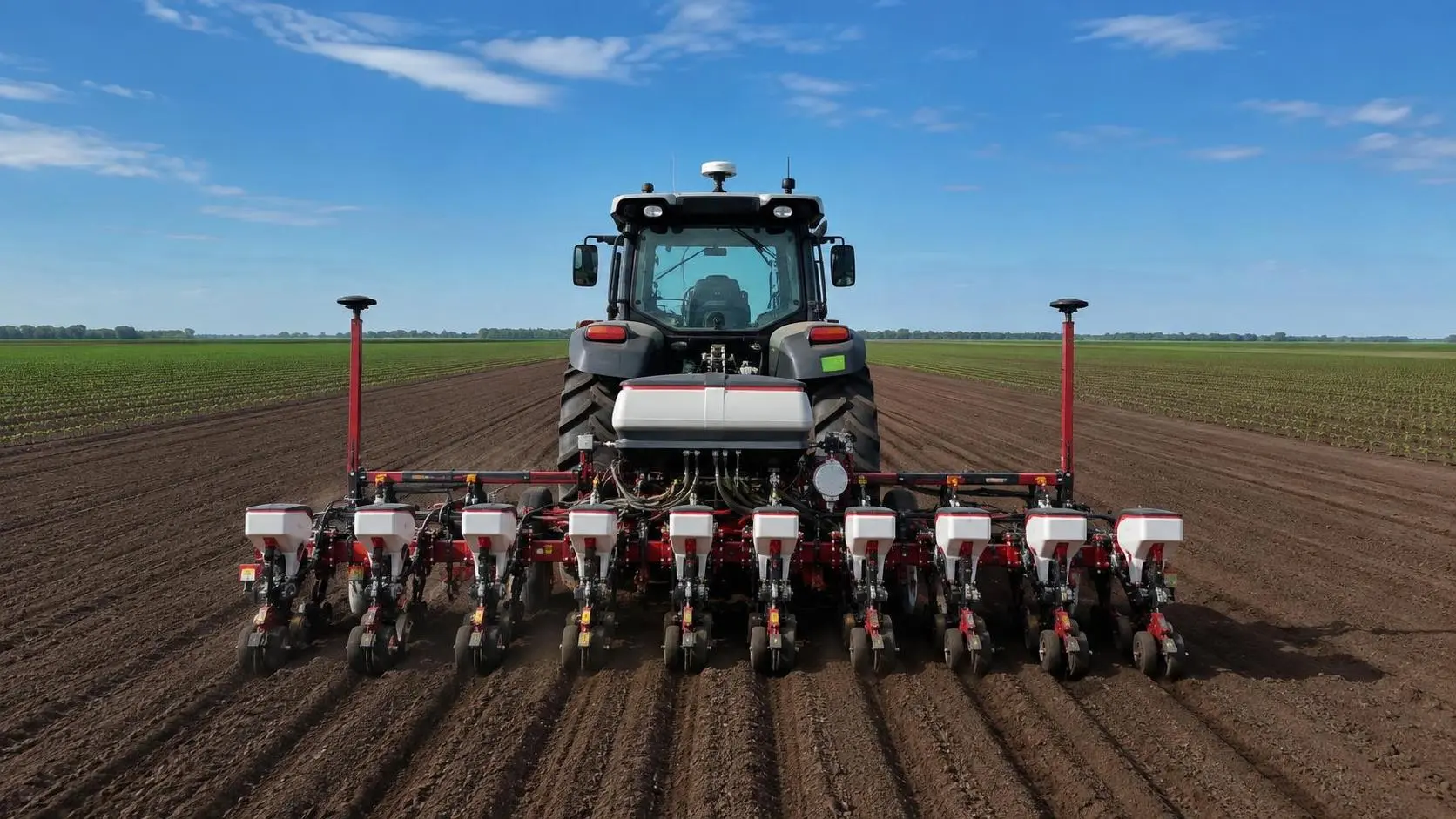
How Tractor Intelligence Systems Improve Field Efficiency and Input Accuracy
Agricultural machinery intelligence for tractors improves field efficiency, input accuracy, data traceability, and implement control. Explore smarter evaluation strategies.
Related News
- 00
0000-00
How North American Farms Can Select Crop Monitoring Systems by Acreage and Connectivity - 00
0000-00
How Tractor Intelligence Systems Improve Field Efficiency and Input Accuracy - 00
0000-00
What should a digital ag platform integrate before a farm-wide rollout? - 00
0000-00
China’s Temporary Helium Export Ban Reshapes Irrigation Supply Chains - 00
0000-00
Tianjin to Host 2026 China Farm Machinery Expo
Popular Tags
Tractor Power Architect
Weekly Insights
Stay ahead with our curated technology reports delivered every Monday.