Soil Preparation Machinery Prices: Costs by Equipment Type and Working Width




A soil preparation machinery price is meaningful only when the quotation identifies the implement type, working width, duty rating, and equipment included. A wider cultivator can cost less than a narrower powered tiller because their frames, drivetrains, and soil-working components perform different jobs. Even within one equipment category, two machines with the same advertised width can carry substantially different specifications.
For procurement teams, the strongest comparison combines delivered purchase cost with the cost of completing the required operation per hectare. Start with machines that can achieve the required depth and soil finish using the available tractor. Then compare working width, field capacity, wear costs, and support. A low purchase price loses its advantage if the implement requires another pass, operates below the planned speed, or forces a tractor upgrade.
How equipment type changes the purchase price
There is no dependable price ladder that places every plough below every disc harrow, cultivator, or rotary tiller. Configuration matters too much. A basic rigid cultivator and a folding cultivator with hydraulic depth adjustment belong to the same broad category, but their purchase costs reflect very different equipment packages.
Separate quotations by the operation they must perform before comparing prices. Primary tillage, shallow residue incorporation, compaction relief, and final seedbed preparation are different purchasing requirements. Comparing machines across these tasks can produce an attractive price comparison without identifying a suitable implement.
Ploughs: compare bodies and protection systems alongside width
For mouldboard ploughs, the number of bodies, working width per body, reversible configuration, and overload protection all affect acquisition cost. A reversible plough adds mechanisms that must support and turn the assembly. Variable-width adjustment and hydraulic functions introduce further differences between quotations.
Width alone therefore provides an incomplete comparison. Ask suppliers to specify the number of bodies, available furrow-width settings, underbeam clearance, and protection system. Shear-bolt and reset arrangements have different purchase and operating implications, particularly where stones or obstructions interrupt work.
Check the tractor’s lifting capability and stability as well as its engine power. A mounted plough may satisfy a nominal horsepower recommendation while creating difficulties with rear linkage loading, front ballast, or headland manoeuvring. Any required tractor changes belong in the acquisition budget.
Disc harrows: diameter, spacing, and frame duty change the comparison
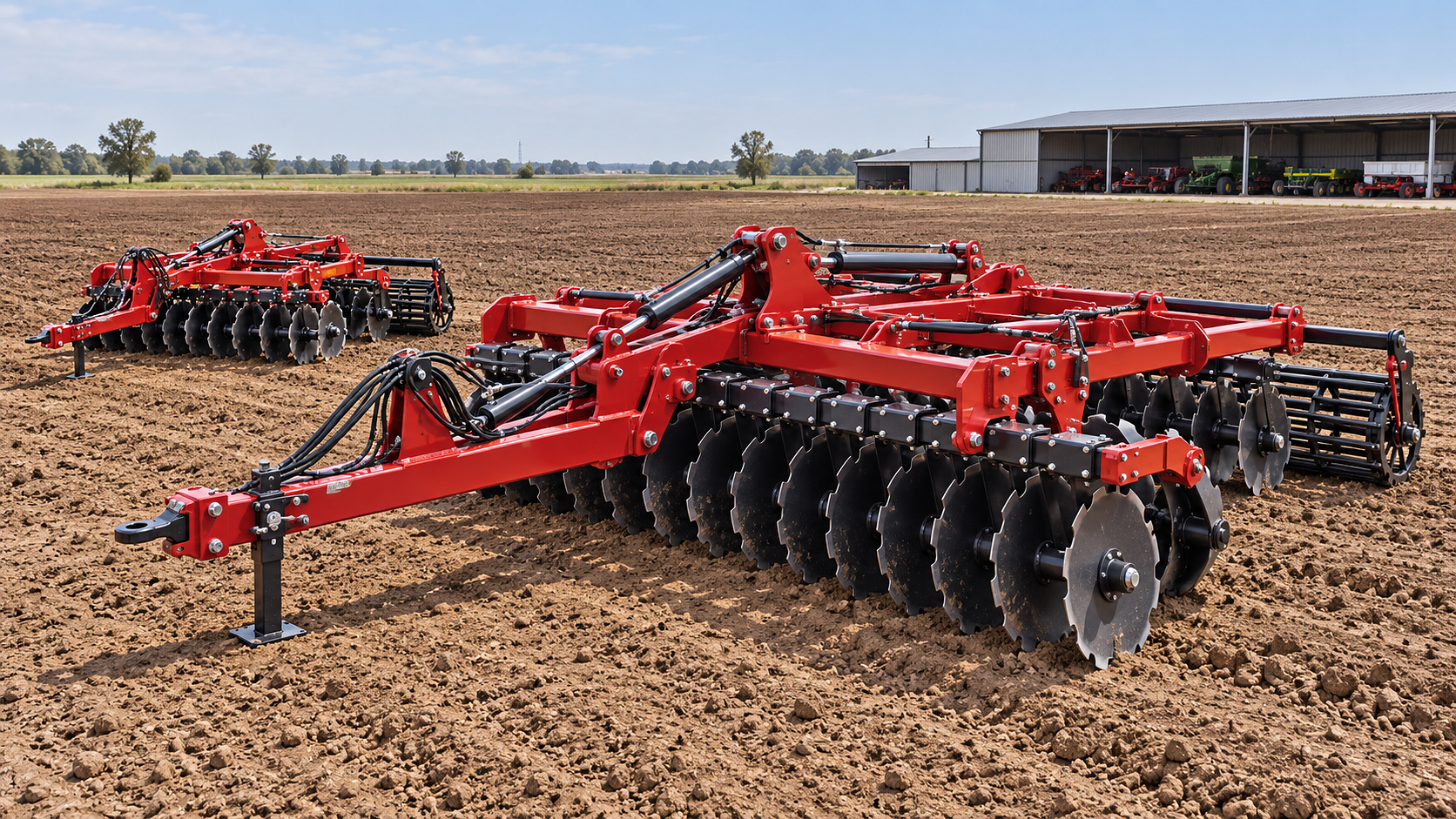
A disc harrow quotation should identify whether the machine uses gangs or individually mounted discs, together with disc diameter, thickness, spacing, bearing arrangement, and rear consolidation equipment. Two implements covering the same width may differ substantially in mass, penetration behaviour, residue handling, and intended operating depth.
A lighter machine intended for shallow cultivation should not be treated as a discounted substitute for equipment expected to work deeper in demanding ground. Equally, paying for heavier construction makes little sense if the task requires shallow, timely cultivation and the tractor cannot use the additional capability effectively.
Rollers deserve particular attention. Their design affects both the purchase price and the soil finish. Confirm whether the quoted price includes the specified roller, its adjustment system, and any scrapers needed for the intended conditions.
Tine cultivators and subsoilers: depth changes the economics
For tine implements, working width must be considered with tine count, spacing, point design, clearance, and operating depth. A shallow seedbed cultivator and a deep cultivator can share an advertised width while placing very different demands on the tractor and frame.
Subsoilers require an especially careful comparison of leg spacing and the soil profile to be treated. Buying additional width has limited value if available traction or power prevents the implement from maintaining the required depth. Soil condition also matters: an operation that produces useful loosening under suitable conditions may create an unsatisfactory result when the soil is too wet.
Price replaceable points, wings, shins, and fastening hardware before ordering. A quotation that looks economical at purchase can become expensive when the selected wearing system has high replacement costs or poor local availability.
Rotary tillers and power harrows: include the drivetrain
Powered implements add gearbox, shaft, bearing, and rotor costs to the frame and soil-working components. Their quotations need closer attention to rated power, PTO requirements, gearbox configuration, overload protection, and the supplied driveline.
Working width is only one part of the specification. Blade or tine arrangement, depth control, rear equipment, and the intended soil finish also affect suitability. A powered implement may justify its purchase cost where it achieves the required seedbed in fewer operations, but that advantage depends on field conditions and the result actually required.
Confirm that guards, the correct PTO shaft, and the appropriate protective coupling are included. An incomplete base price can make a machine appear cheaper while leaving essential components outside the quotation.
What additional working width actually buys
Within a comparable equipment range, increasing width adds soil-working elements and structural demands. The price increase can become more pronounced when the design moves from a rigid frame to folding sections. Hinges, cylinders, hoses, locks, support wheels, and stronger structural members all affect the delivered specification.
For this reason, purchase price per metre is useful mainly within closely matched configurations. Divide the complete implement price by its effective working width, then check whether the compared machines have equivalent depth capability, protection systems, rollers, and controls. Otherwise, the calculation rewards whichever quotation leaves out the most equipment.
Width earns its premium through useful output. A practical capacity estimate is:
Effective field capacity, hectares/hour = working width in metres × operating speed in kilometres/hour × field efficiency ÷ 10.
Field efficiency accounts for time lost to turning, overlap, adjustments, and other interruptions. Use a realistic allowance for field shape and operating practice; theoretical capacity assumes uninterrupted work across the full width.
Consider an illustrative calculation, using assumed operating conditions rather than supplier performance claims. A 3-metre implement travelling at 8 km/h with 75% field efficiency completes approximately 1.8 hectares/hour. At the same speed and efficiency, a 4-metre machine completes 2.4 hectares/hour.
Across 600 hectares for one pass, those assumptions imply approximately 333 operating hours for the narrower machine and 250 hours for the wider one. The potential saving is about 83 hours. If the wider implement forces speed down to 6 km/h, however, its calculated capacity returns to 1.8 hectares/hour. The extra width then provides no field-time saving under those assumptions.
This is why tractor compatibility needs to be settled before valuing a width upgrade. Request power guidance for the specified depth, soil conditions, and speed. Also check traction, hydraulic requirements, linkage capacity, and ballast. A broad horsepower recommendation cannot resolve every operating constraint.
Field access can change the decision as well. Narrow gateways, short headlands, small parcels, and frequent road movements may reduce the benefit of a wider machine. Confirm folded dimensions, transport arrangements, and applicable road requirements before treating extra width as productive capacity.
Turn the quoted price into a cost per hectare
A useful purchasing model has two stages: establish the complete acquisition cost, then estimate annual ownership and operating costs. Keep the assumptions visible so that competing offers can be recalculated on the same basis.
The acquisition figure should include the implement in its required working configuration, freight, assembly, commissioning, and necessary tractor adaptations. Record taxes and import charges according to their actual treatment in the purchasing business. Recoverable tax and a permanent acquisition expense should not be mixed without explanation.
For annual cost, include depreciation, financing or capital cost, insurance where applicable, storage, maintenance, and repairs. Add tractor fuel, operator time, and wear parts associated with the operation. If tractor ownership costs are allocated to the job, use a consistent method across all alternatives and avoid counting the same cost twice.
Cost per treated hectare = annual costs allocated to the operation ÷ annual hectares treated.
Define “hectares treated” carefully. One pass across 600 hectares represents 600 treated hectares; two passes represent 1,200 pass-hectares. When comparing different cultivation systems, also calculate the cost per hectare brought to the required finished condition. Otherwise, a cheap individual pass can conceal an expensive sequence of operations.
A simple hypothetical purchase comparison illustrates the effect of utilisation. Suppose a wider implement costs $12,000 more and is expected to retain $3,000 more resale value after six years. The additional depreciation is $1,500 annually. Across 600 hectares each year, that adds $2.50 per hectare before financing, maintenance, and other differences.
Using the earlier capacity assumptions, the buyer would compare that additional annual ownership cost with the value of approximately 83 hours saved. Include any differences in fuel, wear, and tractor requirements. These figures are calculation inputs, not market price estimates; an actual decision requires written quotations and operating assumptions suited to the farm.
The value of saved time also depends on the work schedule. Where cultivation capacity limits planting within a suitable weather window, extra output may have operational value beyond labour savings. Where the existing machine already finishes comfortably, a width premium needs stronger support from other savings.
Make supplier quotations comparable before negotiating
Request a base specification that every supplier must price, then ask for optional equipment separately. This produces a clearer comparison than collecting headline prices and trying to reconcile them after commercial discussions have begun.
- Working specification: implement type, effective working width, target depth, soil conditions, residue load, and required finish.
- Included equipment: rollers, wheels, protection systems, hydraulic adjustments, controls, lighting, guards, and driveline components where applicable.
- Tractor requirements: power assumptions, hydraulic flow and connections, hitch category, lifting requirements, and ballast considerations.
- Delivered cost: currency, quotation validity, freight, assembly, commissioning, payment terms, and delivery responsibilities.
- Ownership support: wear-part prices, service access, warranty scope, exclusions, and replacement-part lead times.
For used machinery, compare the asking price plus the cost of restoring it to the required working condition. Worn discs, points, blades, bearings, or rollers can materially change the purchase calculation. Inspect frame repairs, pivot wear, hydraulic leaks, and gearbox condition where relevant. A low asking price becomes less persuasive when several major assemblies need immediate attention.
When performance is uncertain, a demonstration in representative conditions can resolve more than another discount discussion. Specify the intended depth and assess the achieved finish, sustainable speed, blockages, adjustment needs, and tractor behaviour. A demonstration on easy ground provides limited evidence for a purchase intended for heavier or more obstructed fields.
The final shortlist should show what each additional expenditure buys: greater usable width, better depth control, suitable protection, fewer passes, or lower support costs. If a price premium cannot be connected to a required outcome under the buyer’s operating conditions, it has a weak procurement case. If the cheapest quotation leaves those outcomes uncertain, the next step is to resolve the specification before negotiating the price.
Related News
Agricultural Automation Still Needs Human Oversight, Study Finds
Agricultural automation still needs human oversight. Discover how AI and smart equipment are reshaping farm jobs, skills, and decisions.
Choosing a Precision Fertilization Equipment Manufacturer: What to Check
Choose a precision fertilization equipment manufacturer with confidence. Compare accuracy, compatibility, service and total ownership costs before you buy.
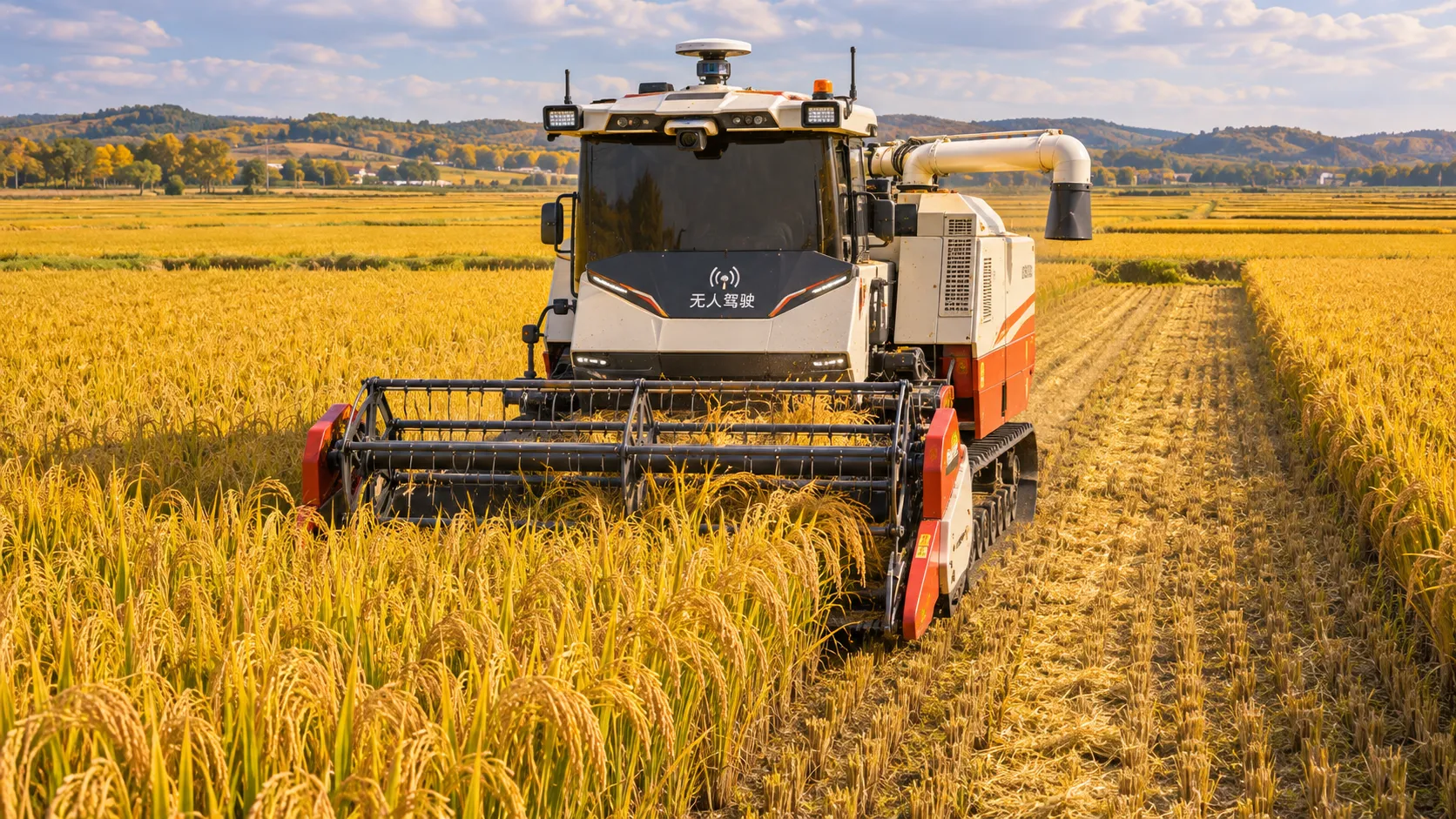
China's Autumn Grain Harvest Highlights Role of Machinery and Precision Farming
China's autumn grain harvest highlights machinery and precision farming. Explore how coordinated practices support harvesting and yield improvement.
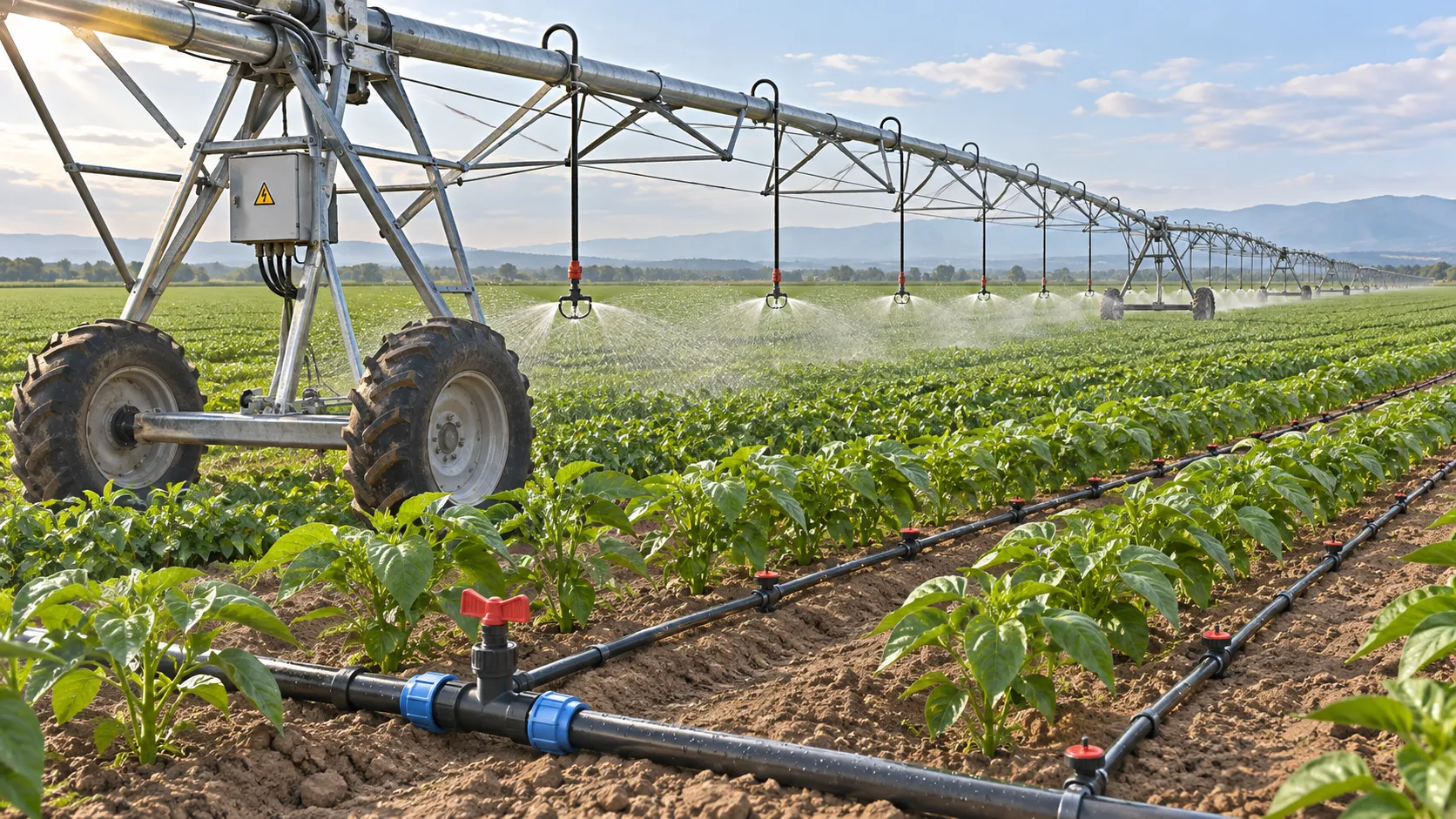
Drip vs. Center Pivot Irrigation: Maintenance Tasks and Costs Compared
Use this irrigation solution comparison by maintenance to weigh drip vs. center pivot tasks, costs and downtime—and choose the best fit for your field.
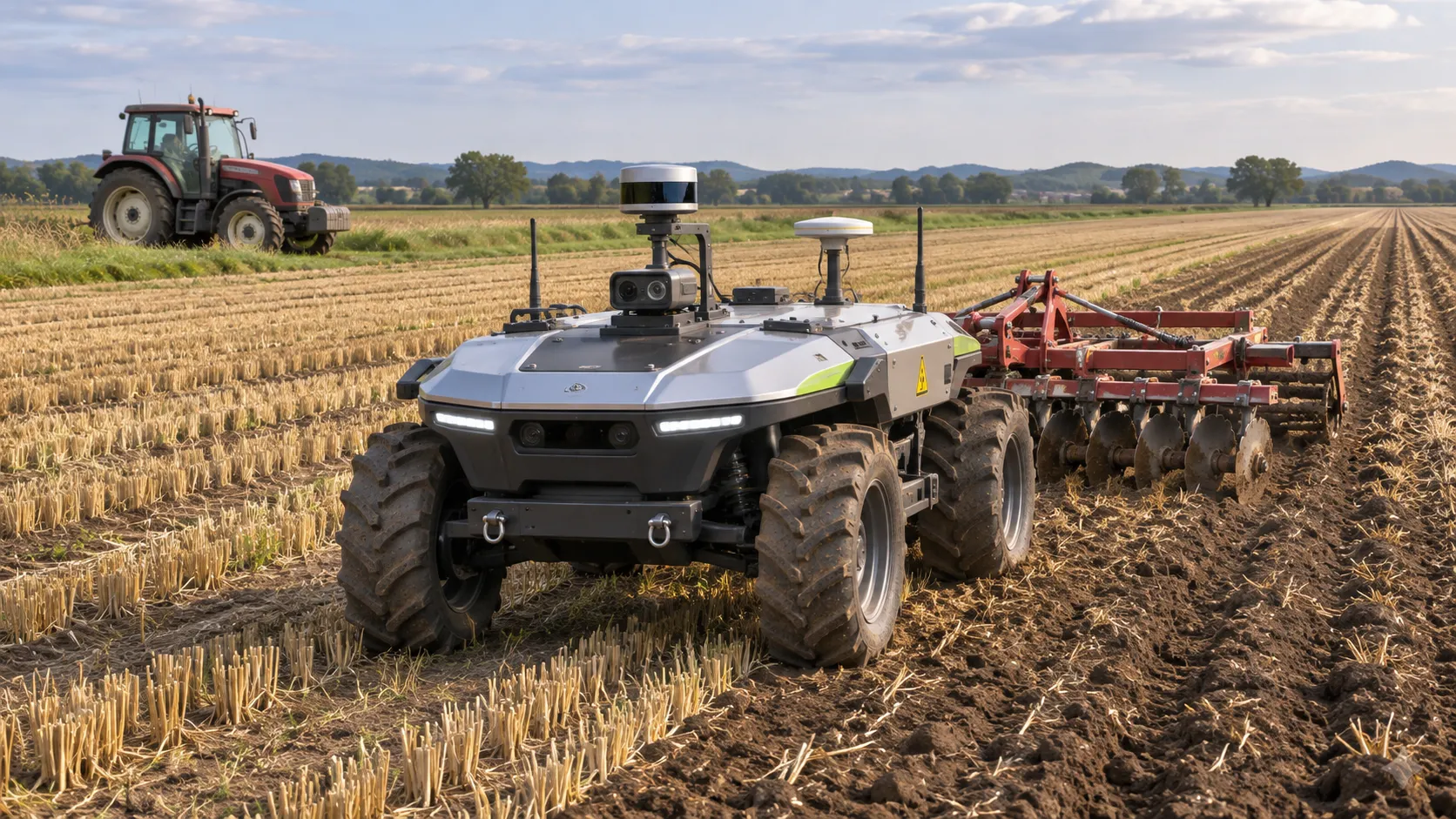
EIMA 2026: Six Tractor of the Year Awards Include Autonomous Robot
Explore the Tractor of the Year awards at EIMA 2026, featuring six winners, including the AgXeed autonomous robot and leading tractor models.
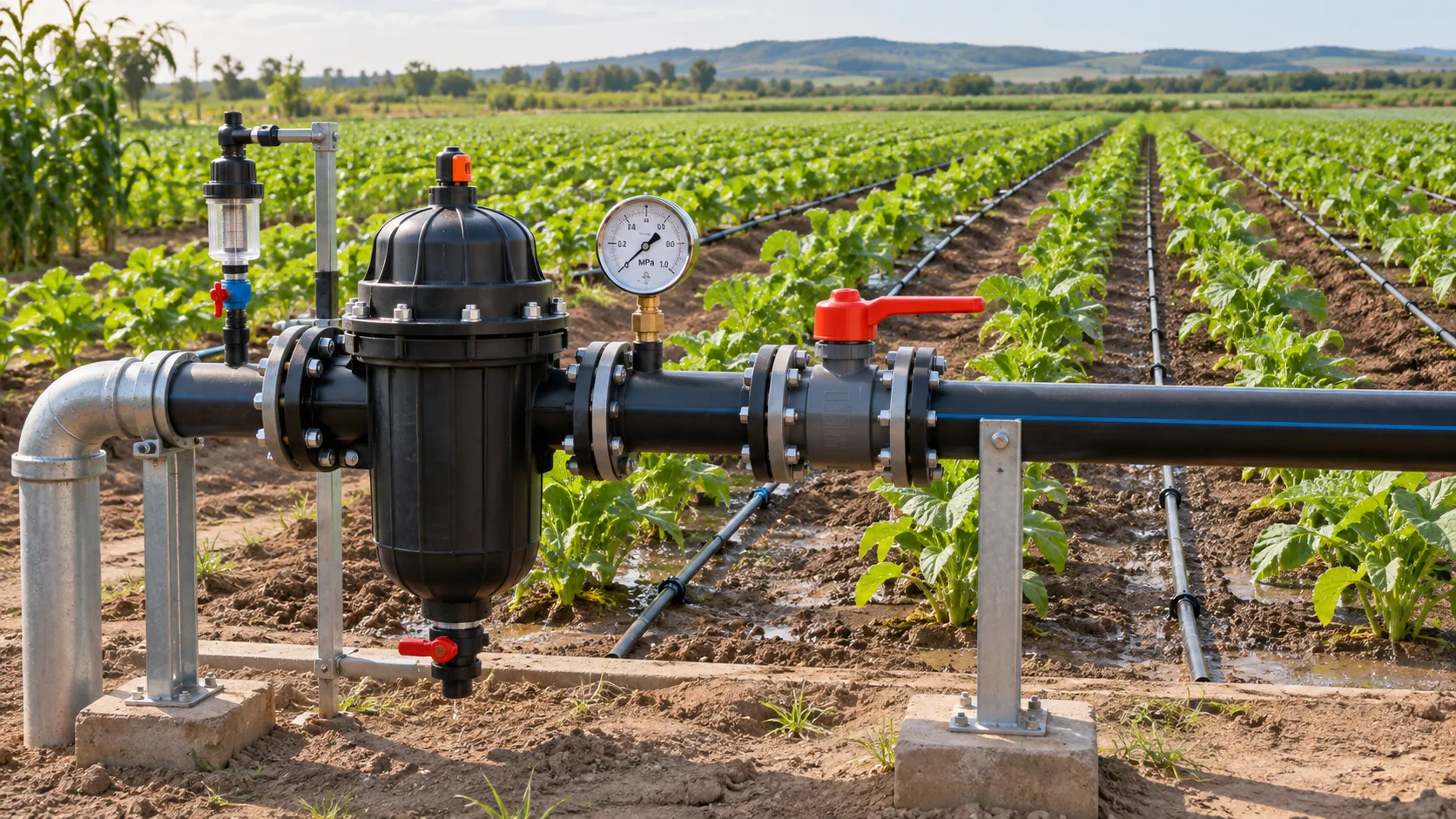
Choosing Irrigation Systems for Government Projects: Water, Cost and Compliance
What factors affect irrigation system selection for government projects? Explore water supply, lifecycle costs and compliance to make a confident, well-informed choice.
Choosing an Agricultural Machinery Platform: Listings, Pricing, and Support
Choosing an agricultural machinery platform? Compare listings, pricing, supplier verification, and support to make a more confident equipment purchase.
Ofwat Launches £8 Million Agri-Water Innovation Challenge
Ofwat’s £8 million Agri-Water Innovation Challenge supports smart irrigation, water reuse and water-saving solutions. Explore the funding and its potential impact.
Choosing a Water-Saving Irrigation Supplier: 5 Key Procurement Criteria
Choose a water-saving irrigation systems supplier with confidence. Explore five procurement criteria to reduce risk and maximize long-term value.
Related News
- 00
0000-00
Nenjiang Showcases High-Horsepower Smart Farm Machinery for Refinement and Wider Use - 00
0000-00
Soil Preparation Machinery Prices: Costs by Equipment Type and Working Width - 00
0000-00
What Tractor Horsepower Is Needed for a Three-Bottom Moldboard Plow? - 00
0000-00
What Is the Difference Between No-Till and Conventional Tillage? - 00
0000-00
Does No-Till Farming Reduce Erosion on Hilly Farmland?
0000-00
Popular Tags
Agri-Mechanization Fellow
Weekly Insights
Stay ahead with our curated technology reports delivered every Monday.