What Is a Cage System for Layers? Feeding, Egg Collection, and Manure Handling
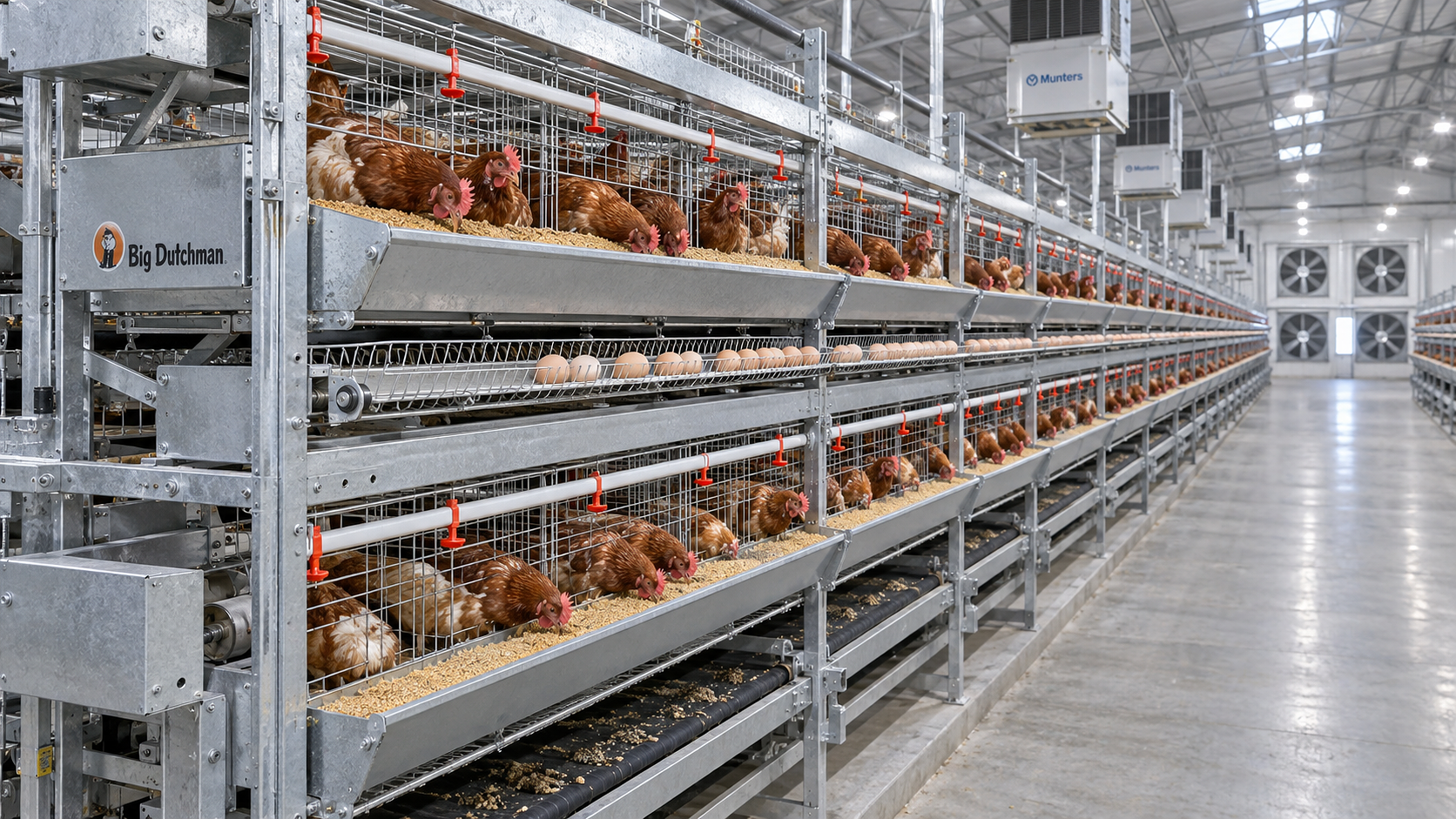




A cage system for layers is a housing and equipment arrangement for hens kept primarily to produce eggs. Birds live in compartments arranged in rows and tiers, with feed and drinking water supplied along the cages. In many designs, gently sloped floors allow eggs to roll toward a collection area, while droppings pass through the floor to a manure-handling space or conveyor below.
The cages are only one part of the installation. Feed delivery, water supply, egg transport, manure removal, ventilation, lighting, and electrical controls must work together. For a farm buyer, the useful question is not simply how many hens the equipment can hold, but whether the complete arrangement can support healthy birds, saleable eggs, and manageable daily work under local conditions.
What the system includes—and what “automatic” means
A typical layer installation combines cage frames and wire panels with feed troughs, drinker lines, egg collection channels, and a method of removing manure. Larger or more mechanized installations may add feed conveyors, egg belts, elevators, manure belts, and centralized controls. The building still provides essential functions, particularly airflow, temperature control, drainage, and protection from weather and pests.
“Automatic” does not describe a consistent equipment package. One quotation may include automated feeding but manual egg collection. Another may include egg belts while leaving manure removal to a separate scraper installation. Buyers need a written scope that identifies each automated operation, the equipment serving it, and the work that remains manual.
Cage housing also comes in different forms. Conventional cages provide comparatively limited opportunities for behaviors such as nesting and perching. Enriched or furnished cages include additional features intended to accommodate some of those needs. Neither should be confused with cage-free floor or aviary housing. Legal requirements and customer purchasing policies can differ between these categories, so housing eligibility should be checked before equipment selection begins.
A-type and H-type layouts: why the arrangement matters
A-type layouts generally have tiers arranged in a stepped profile. H-type layouts generally stack tiers more directly above one another. These names describe geometry, not a guaranteed level of automation, welfare performance, or production efficiency. Manure removal and egg transport arrangements must be confirmed separately.
When reviewing an A-type cage system for layers, buyers should connect the layout drawing to the proposed feeding, egg collection, and manure-handling equipment. A photograph or nominal bird capacity cannot show whether workers can inspect lower tiers easily, whether an egg conveyor fits the packing-room position, or how manure will leave the building.
A stepped layout may require more floor area for a given arrangement, while a vertically stacked layout can place greater demands on tier access and building services. Actual suitability depends on row spacing, tier count, house dimensions, ventilation design, and maintenance access. Increasing housing density without checking these dependencies can leave the farm with difficult inspections or inadequate environmental control.
Feeding: delivering the right ration evenly
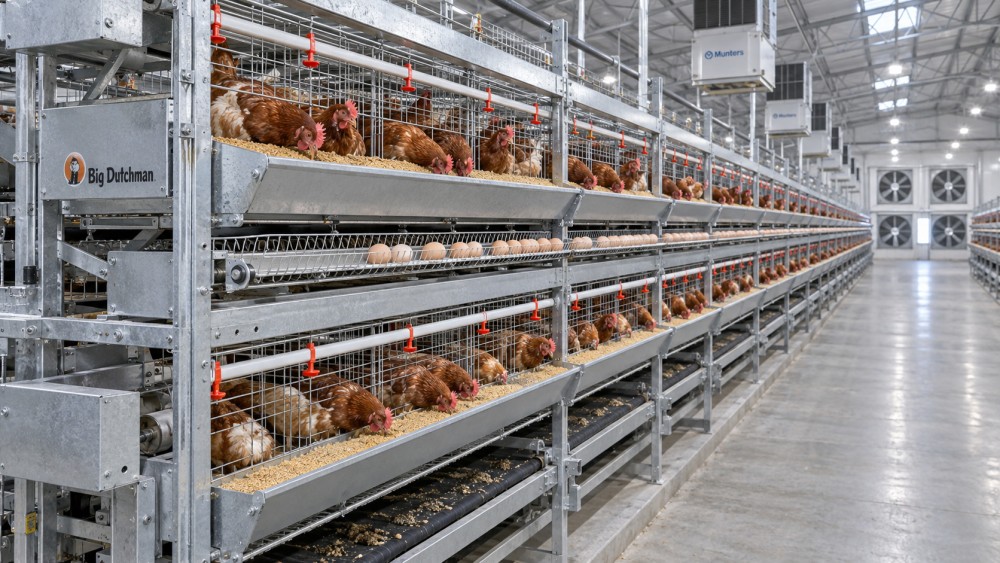
In cage housing, feed is normally presented in troughs outside the compartments, allowing hens to eat through the cage front. Delivery may be manual or use a traveling hopper, chain conveyor, or another distribution mechanism. The purpose is to make suitable feed available across the flock without excessive spillage, uneven distribution, or long periods when some trough sections are empty.
Uniformity matters because feed supply affects body condition, laying performance, and shell quality. A motor running on schedule does not prove that every cage receives adequate feed. Poor adjustment, worn components, bridging in a hopper, or changes in feed texture can create differences between the beginning and end of a row.
Feed form should be considered alongside the delivery mechanism. Mash, pellets, and crumbles behave differently during transport. Fine particles may accumulate, and ingredients can separate under some handling conditions. Buyers should ask whether the proposed equipment is suitable for the intended ration and how distribution will be checked during commissioning.
Useful checks include:
- Trough access: Assess usable feeding space against the planned stocking level and applicable requirements.
- Distribution consistency: Inspect feed delivery at different rows, tiers, and positions along the house.
- Adjustment range: Confirm how delivery quantity and operating frequency can be changed as flock requirements change.
- Cleaning access: Look for places where stale feed can remain, particularly around corners and transfer points.
Automation reduces repetitive distribution work, but observation remains necessary. Comparing feed use with bird condition, egg output, and feed left in troughs helps distinguish a nutrition issue from a mechanical delivery problem.
Water delivery belongs in the same assessment
Most mechanized cage installations use nipple drinkers connected to regulated water lines. Their operation depends on water quality, pressure, drinker positioning, and maintenance. Restricted flow can limit intake; excessive pressure or damaged nipples can cause leaks and wet manure.
Water should be checked at representative locations, including the ends of lines and different tiers. Filters, flushing arrangements, pressure regulators, and any dosing equipment must remain accessible. In hot conditions, interruption of drinking water can become an immediate bird-health risk, so reserve supply and failure response deserve attention before stocking.
Egg collection: protecting eggs through every transfer
Many layer cages use a sloped wire floor that guides eggs toward the front of the compartment. Eggs may remain in a collection channel for manual removal or move onto a belt. In automated installations, belts transport eggs along the rows, with elevators or transfer conveyors taking them toward a collection or packing area.
Floor design involves a practical balance. Eggs need to roll clear of the birds, but the surface must also provide suitable support for hens. Wire spacing, floor rigidity, surface finish, and slope affect both bird contact and egg movement. A floor that deforms under load may cause eggs to stop or gather in unexpected places.
Breakage often occurs where movement changes: at belt junctions, elevator entries, corners, or discharge points. A collection system should therefore be assessed as a continuous route rather than as several independent machines. Belt speed, transfer alignment, egg accumulation, and the receiving equipment all influence the result.
Collection timing matters too. Allowing eggs to accumulate can increase collisions or exposure to dirt. Running equipment unnecessarily may add wear without solving a handling problem. The appropriate schedule depends on laying patterns, flock size, belt capacity, and staffing in the packing area.
For acceptance testing, observe eggs from the cage front through to the receiving table or grader. Record where cracks and contamination appear rather than relying only on a final total. This helps separate cage-floor issues from transport damage and downstream handling problems. Cleaning access, belt tracking, and replacement of worn guides should also be checked.
Manure handling: removal is only the first step
Droppings pass through cage floors, but what happens next varies substantially. Some arrangements use manure belts beneath tiers. Others discharge to channels or pits served by scrapers or suitable handling equipment. The choice affects moisture management, odor, labor, building layout, and the route to storage or treatment.
Manure belts can move droppings out of the house at planned intervals. Some installations use airflow to assist drying. Their effectiveness depends on belt condition, tracking, loading, removal frequency, and the design of any drying arrangement. A belt system still needs a discharge conveyor or other means of carrying manure to its destination.
Scraper and pit arrangements have different requirements. Scrapers need suitable channels, reliable drive components, and clear discharge points. Accumulation areas require careful planning for moisture, gases, flies, and eventual emptying. No configuration should be evaluated solely by the labor required to operate it.
Wet manure can indicate leaking drinkers, poor drying conditions, or flock health problems. Persistent moisture makes handling more difficult and can contribute to ammonia generation. Manure removal supports air-quality management, but it does not replace adequate ventilation.
The farm also needs a lawful and workable destination for manure. Storage capacity, rain protection, transport access, runoff control, and any composting or agricultural use arrangements should be planned with the housing installation. Moving manure outside merely transfers the problem if the receiving area is unsuitable.
The building determines how well the equipment works
Equipment capacity and usable house capacity are not the same. Cage rows alter airflow paths and create obstacles around which ventilation must operate. Conditions can differ between tiers and along the building, particularly when stocking density is high or outside weather is challenging.
Ventilation should be designed for the proposed bird population, building dimensions, climate, and heat and moisture loads. Lighting needs similar attention: uneven illumination can complicate flock management and inspection. Neither requirement is resolved simply by adding more fans or lamps after installation.
Materials deserve scrutiny because poultry houses expose equipment to moisture, manure, cleaning chemicals, and mechanical wear. Corrosion protection, wire joints, fasteners, and sharp edges should be assessed against the intended service conditions. Ask for documented material and coating specifications rather than relying on descriptions such as “heavy duty.”
Daily access is equally practical. Workers need to inspect birds, remove mortalities, reach blocked drinkers, and service drives without unsafe climbing or improvised platforms. Emergency stops, electrical protection, guards, and isolation procedures belong in the installation plan.
Comparing quotations and planning acceptance checks
A meaningful comparison starts with the same operating assumptions for every supplier. State the house dimensions, intended flock capacity, housing category, feed form, climate, electrical supply, and required automation. Specify which building services and downstream equipment are already available.
The quotation should distinguish cage equipment from supporting infrastructure. Installation labor, freight, foundation work, wiring, water treatment, ventilation, controls, and packing-room connections may fall outside the stated equipment price. Missing interfaces can create expense and delay even when the cages themselves arrive as ordered.
Request layout drawings, operating instructions, maintenance schedules, spare-parts information, and a commissioning procedure. Acceptance checks should cover assembly quality, feed distribution, water delivery, egg transfer, manure discharge, and safety functions. Some functions can be checked before birds arrive; performance under flock conditions requires a planned follow-up.
Ownership cost extends beyond the purchase price. Labor still needed for inspection and cleaning, electricity, replacement belts, motors, corrosion-related repairs, and egg losses all affect the comparison. Downtime can be especially disruptive when feed, water, or manure removal depends on equipment with no practical backup.
The sound choice is an installation matched to the farm’s legal market access, building, management capability, and service support. Before approving it, buyers should be able to trace three complete routes: feed to every cage, eggs to the packing area, and manure to an acceptable destination. Any unclear handoff is a problem to resolve before commissioning, not after the house is stocked.
Related News
Agricultural Automation Still Needs Human Oversight, Study Finds
Agricultural automation still needs human oversight. Discover how AI and smart equipment are reshaping farm jobs, skills, and decisions.
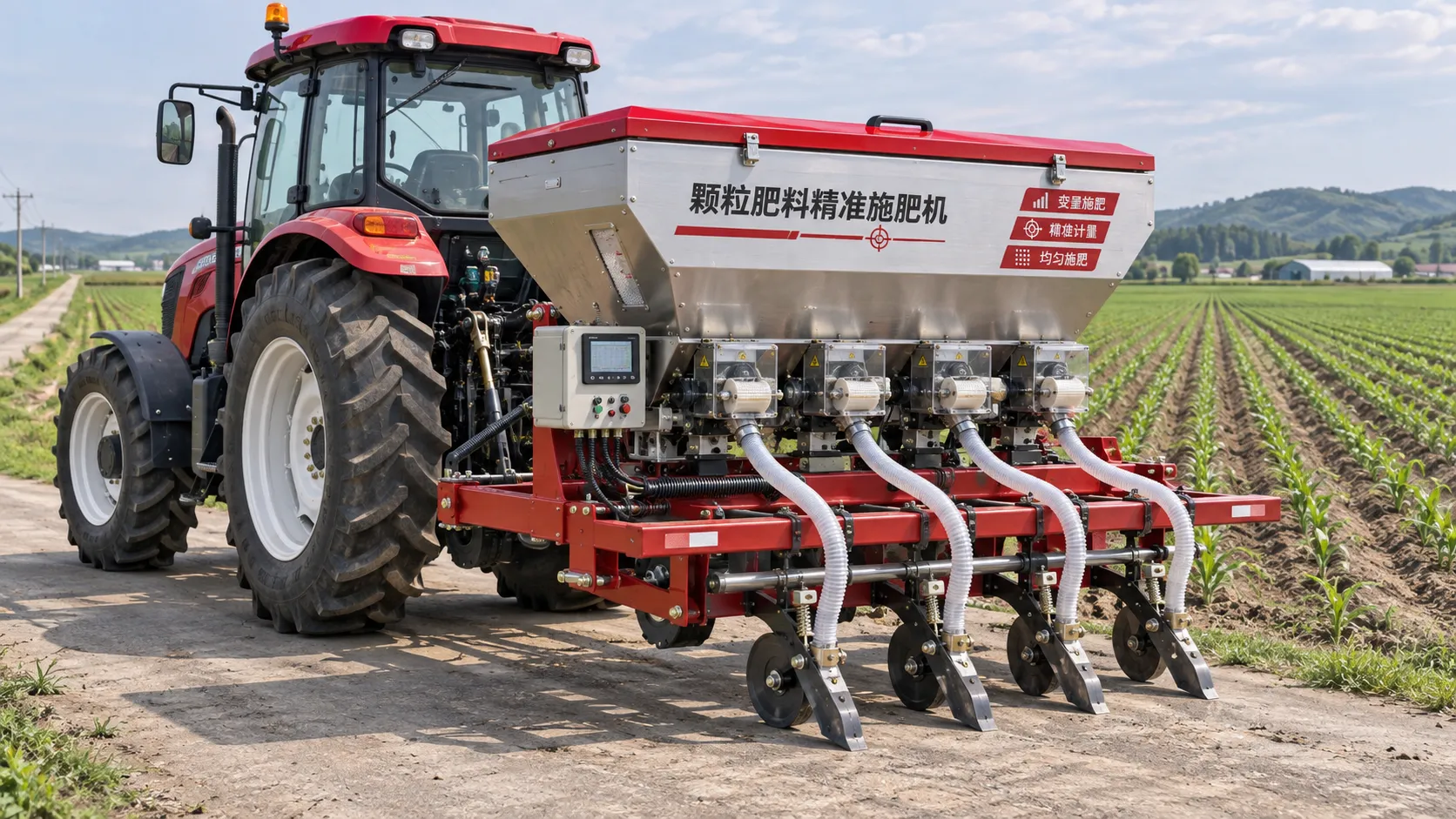
Choosing a Precision Fertilization Equipment Manufacturer: What to Check
Choose a precision fertilization equipment manufacturer with confidence. Compare accuracy, compatibility, service and total ownership costs before you buy.
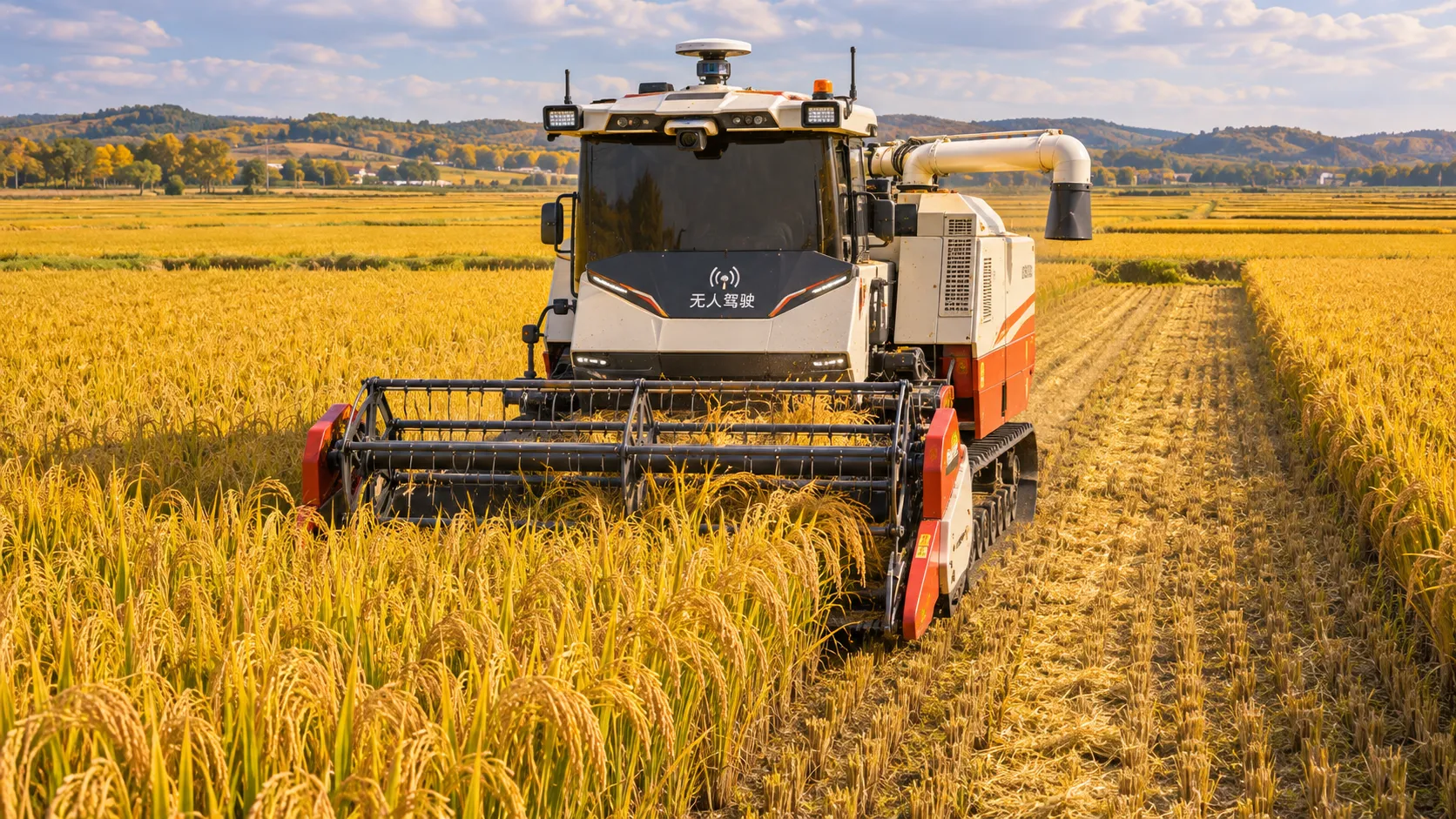
China's Autumn Grain Harvest Highlights Role of Machinery and Precision Farming
China's autumn grain harvest highlights machinery and precision farming. Explore how coordinated practices support harvesting and yield improvement.
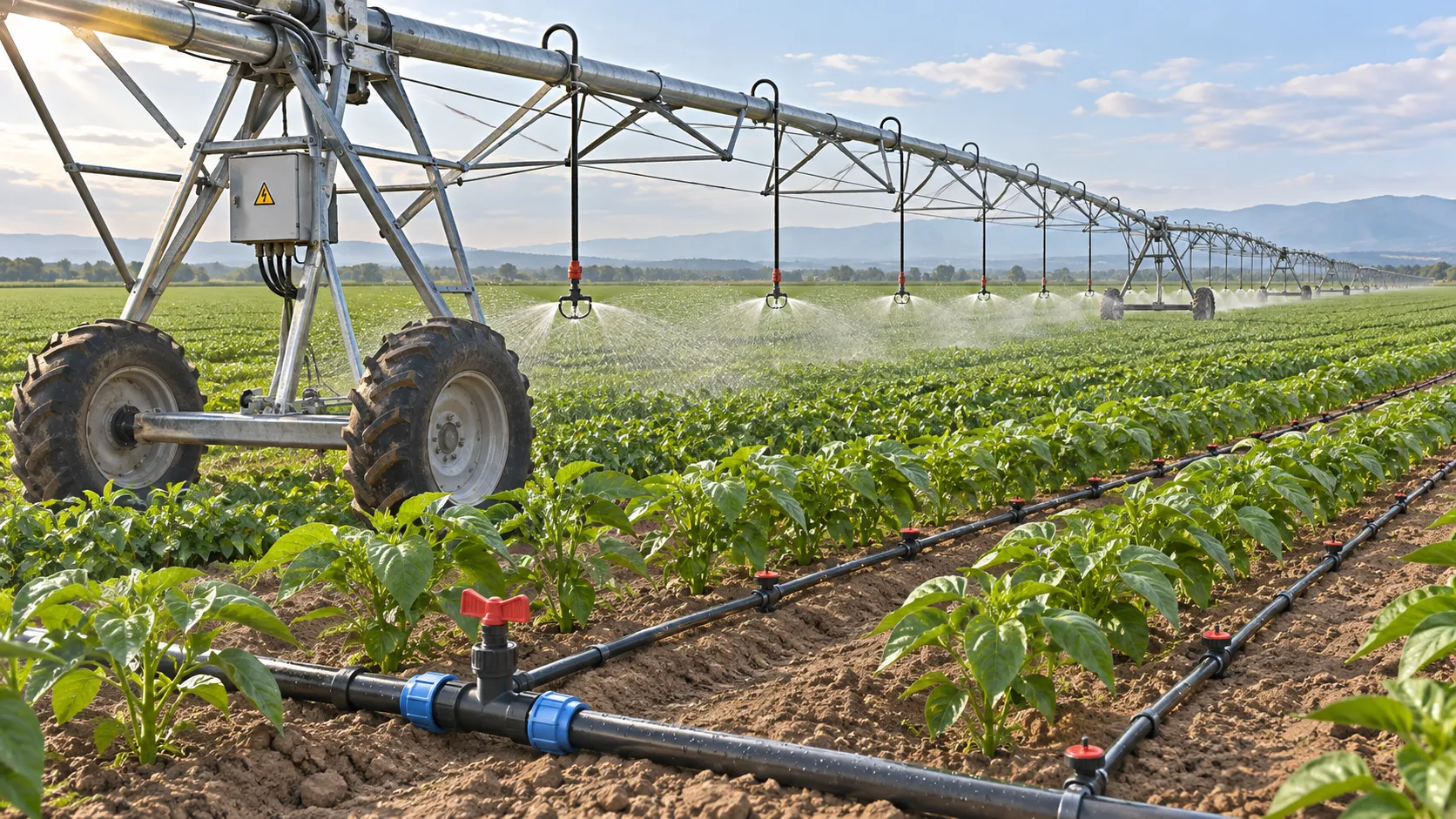
Drip vs. Center Pivot Irrigation: Maintenance Tasks and Costs Compared
Use this irrigation solution comparison by maintenance to weigh drip vs. center pivot tasks, costs and downtime—and choose the best fit for your field.
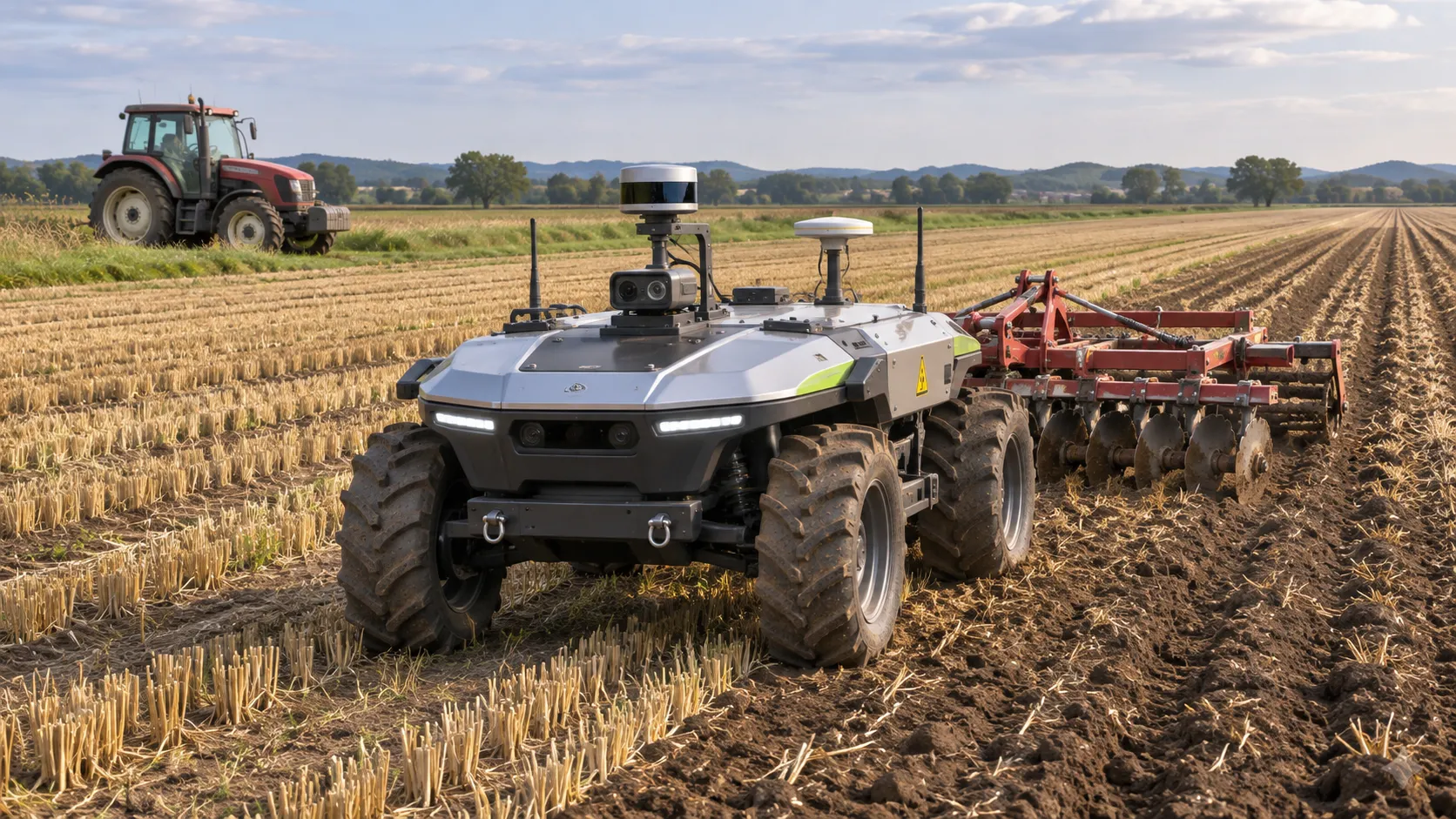
EIMA 2026: Six Tractor of the Year Awards Include Autonomous Robot
Explore the Tractor of the Year awards at EIMA 2026, featuring six winners, including the AgXeed autonomous robot and leading tractor models.
Choosing Irrigation Systems for Government Projects: Water, Cost and Compliance
What factors affect irrigation system selection for government projects? Explore water supply, lifecycle costs and compliance to make a confident, well-informed choice.
Choosing an Agricultural Machinery Platform: Listings, Pricing, and Support
Choosing an agricultural machinery platform? Compare listings, pricing, supplier verification, and support to make a more confident equipment purchase.
Ofwat Launches £8 Million Agri-Water Innovation Challenge
Ofwat’s £8 million Agri-Water Innovation Challenge supports smart irrigation, water reuse and water-saving solutions. Explore the funding and its potential impact.
Choosing a Water-Saving Irrigation Supplier: 5 Key Procurement Criteria
Choose a water-saving irrigation systems supplier with confidence. Explore five procurement criteria to reduce risk and maximize long-term value.
Related News
- 00
0000-00
Choosing Irrigation Systems for Government Projects: Water, Cost and Compliance - 00
0000-00
Choosing an Agricultural Machinery Platform: Listings, Pricing, and Support - 00
0000-00
Choosing a Water-Saving Irrigation Supplier: 5 Key Procurement Criteria - 00
0000-00
304 vs 316 Stainless Steel for Ingredient Processing Equipment - 00
0000-00
Choosing a Large Farm Equipment Exporter: Parts, Shipping and Warranty
0000-00
Popular Tags
Ms. Elena Rodriguez
Weekly Insights
Stay ahead with our curated technology reports delivered every Monday.