
Sustainable Agriculture Equipment Certification: What Buyers Should Verify




Sustainable Agriculture Equipment Certification: What Buyers Should Verify
For procurement teams sourcing farm machinery, sustainable agriculture equipment certification is not a decorative badge. It sits at the intersection of compliance, operating cost, asset lifespan, and reputation risk. That matters even more now, as buyers are asked to justify not only horsepower, throughput, and automation features, but also emissions performance, water use, material safety, and digital control integrity.
The problem is that “certified” can mean very different things. One supplier may present engine emissions approval. Another may point to electrical safety, water-efficiency claims, or factory management systems. A third may bundle all of that into a sustainability narrative that sounds complete but leaves major technical gaps. In practice, buyers need to verify what the certification actually covers, who issued it, whether it applies to the exact configuration being purchased, and whether it holds up in the target market.
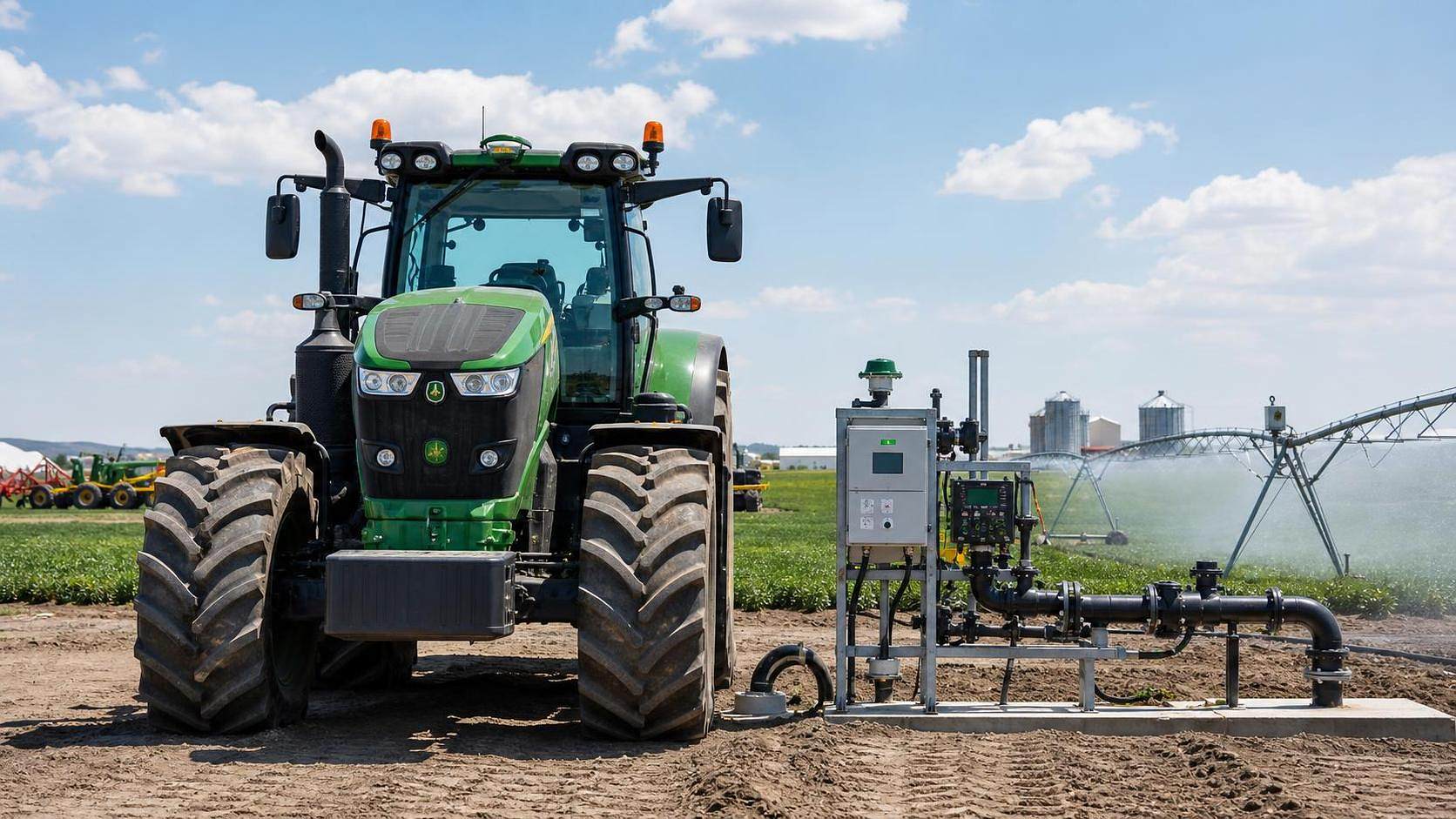
In large-scale agri-equipment, that distinction becomes practical very quickly. A combine harvester, tractor chassis, precision implement, or intelligent irrigation system may all support sustainability goals in different ways, but the proof points are not interchangeable. A water-saving irrigation controller cannot be judged by the same compliance lens as a diesel-powered power unit. A machine with satellite guidance and sensor feedback introduces software, connectivity, and calibration questions that traditional certification alone may not answer.
Start by separating product certification from company-level claims
One of the most common buying mistakes is treating factory certifications and product certifications as if they were the same thing. They are not. A manufacturer may hold a recognized quality or environmental management certification at the company level, but that does not automatically mean the machine itself meets the technical, safety, or environmental requirements of your market.
For buyers, the first check is simple: ask whether the supplier is presenting certification for the enterprise, the production process, the component, or the finished equipment model. Then ask whether the scope covers the exact unit being quoted, including engine variant, powertrain, control system, irrigation module, or smart retrofit package. Sustainability claims often become ambiguous when optional configurations are involved.
This is where disciplined intelligence work matters. AP-Strategy, through its focus on large-scale machinery, combine harvesting technology, tractor chassis, intelligent farm tools, and water-saving irrigation systems, has consistently highlighted that certification review should follow the machine architecture, not the brochure narrative. A sustainable equipment claim only becomes meaningful when tied back to specific subsystems and their governing standards.
Emissions compliance is often the first checkpoint, but not the last one
For self-propelled machinery such as tractors, sprayers, or harvesters, engine emissions approval is usually one of the first items under review. Buyers should confirm which emissions stage or regulatory scheme the equipment meets, whether the approval applies to the engine family installed on the quoted machine, and whether local import or registration rules recognize that approval.
What deserves closer scrutiny is the difference between test compliance and field reliability. Advanced aftertreatment systems can satisfy emissions requirements on paper while creating maintenance sensitivity in dusty, variable-load agricultural conditions. That does not mean the certification is weak. It means procurement should not stop at the certificate. Ask about regeneration conditions, fuel quality sensitivity, service intervals, diagnostic requirements, and how emissions-related components are supported in the destination country.
A machine that complies technically but suffers repeated downtime due to local fuel sulfur content, filter maintenance gaps, or weak dealer diagnostics may undermine both sustainability and return on investment. Buyers evaluating sustainable agriculture equipment certification should therefore link emissions documentation to service capability and operating environment.
Water efficiency claims need measurable verification
In irrigation procurement, sustainability language becomes especially loose. Suppliers may use terms such as “smart,” “water-saving,” or “precision irrigation” without clearly showing what has been tested, what has been modeled, and what depends on site conditions. Certification in this category may involve electrical safety, control accuracy, material suitability, pressure performance, or system-level efficiency claims, but the supporting evidence varies widely.
If the equipment includes pumps, filtration units, emitters, valves, controllers, or sensor-based scheduling tools, buyers should verify how performance is measured and under what conditions. Is water efficiency tied to emitter uniformity, leakage reduction, control logic, or remote sensing inputs? Does the documentation describe laboratory conditions only, or does it address operating tolerances relevant to salinity, sediment, pressure fluctuation, and field topology?
For intelligent irrigation, software and agronomic logic also matter. AP-Strategy’s work around transpiration prediction models and hydrological strategy reflects a useful procurement lesson: hardware certification alone may not tell you whether the system can deliver stable water-saving performance in actual deployment. You may need to review calibration methods, sensor compatibility, data update frequency, and override options for local operators.
Material safety is easy to overlook until it becomes a liability
Sustainability is not limited to fuel burn or water use. Material composition, hydraulic fluids, coatings, plastics, and components in contact with water, fertilizer, or harvested crops can all create compliance exposure. This is particularly relevant for irrigation systems, fertilizer application tools, storage-connected equipment, and machines exported across regions with strict chemical or material restrictions.
Buyers should confirm whether any declarations of conformity or material compliance statements are available for relevant components, especially when equipment is sold into markets with clear restrictions on hazardous substances or specific food-contact and environmental requirements. If a supplier cannot clearly map which materials are used in key assemblies and what supporting documents exist, the sustainability narrative is incomplete.
This does not mean every procurement team must perform a forensic audit on every bolt and polymer. It does mean that high-risk assemblies should be identified early, and document requests should be tailored accordingly.
Safety and intelligent operation now overlap
Agriculture 4.0 equipment increasingly blends mechanics, electronics, automation, and data systems. A certified chassis, powertrain, or implement may still raise unanswered questions once autosteer, machine vision, yield monitoring, remote diagnostics, section control, or prescription-based operations are added.
Procurement teams should ask whether the supplied machine includes functional safety features, operator alerts, fail-safe behavior, software version traceability, and documented limits for automated functions. That matters for combine harvesters using dynamic loss-control logic, for precision tools using GPS-linked actuation, and for irrigation systems controlled remotely across distributed field networks.
Not every intelligent feature falls under a single sustainability certificate. Sometimes the issue is not formal certification but validation, testing protocol, or market-specific approval. Buyers should be wary of assuming that “smart” automatically means resource-efficient. It often does, but only when sensor quality, algorithm tuning, and operator training are good enough to produce consistent field behavior.
A practical verification framework for procurement teams
This kind of framework keeps the review grounded. It also helps procurement teams compare suppliers who may be equally confident in their sustainability positioning but very different in documentation quality and delivery readiness.
Watch for the gray zone between compliance and sustainability storytelling
Some of the hardest procurement calls sit in the gray zone. A supplier may genuinely invest in efficient drivetrains, low-loss harvesting systems, precision metering, or water-saving control networks, yet still present those strengths in a way that outpaces formal verification. That is not always intentional overstatement; sometimes it is a documentation maturity problem, especially in cross-border deals where product adaptation has moved faster than certification packaging.
Still, buyers should keep three questions on the table. What has been officially tested? What has been independently assessed? What is still being claimed based on internal engineering judgment or field expectation? If those categories are blurred, the sustainability case becomes difficult to defend internally.
That is one reason intelligence-led sourcing is becoming more valuable. AP-Strategy’s Strategic Intelligence Center approach—connecting mechanical performance, precision farming algorithms, and global sustainability demands—matches how modern procurement decisions are actually made. Certificates matter, but so do application context, policy drift, dealer capability, and the technical logic behind the machine.
Before awarding the order, verify the delivery-state reality
The last check is often the most neglected: confirm that the certified, quoted, and delivered states of the equipment are the same. In agricultural equipment, final configuration changes are common. Tires, engines, telematics modules, control software, pumps, emitters, booms, hydraulic options, and local adaptation kits may shift late in the process. Any of those changes can affect the relevance of certification documents.
It is sensible to require a final documentation package before shipment or acceptance, including certificates, declarations where applicable, technical datasheets, serial-number mapping if relevant, and any calibration or commissioning records that support sustainability-related claims. For intelligent systems, software version records and update responsibility should also be clear.
Sustainable agriculture equipment certification is most useful when treated as evidence, not reassurance. Buyers do not need to become certification specialists in every jurisdiction, but they do need a method: identify the operating risks, match them to the machine subsystems, verify the applicable documents, and test whether those documents still make sense in the field conditions where the equipment will earn its keep.
If a supplier can explain not just which certifications exist, but how those certifications relate to emissions behavior, water efficiency, safe materials, software-enabled precision, and long-term serviceability, that is usually a better sign than a thick file of undifferentiated paperwork. For procurement teams making long-cycle investments, that distinction is where sustainability stops being a slogan and starts becoming a defensible purchasing standard.
- combine harvesting technology
- Agriculture 4.0
- precision farming algorithms
- global sustainability demands
- tractor chassis
- intelligent farm tools
- water-saving irrigation
- transpiration prediction models
- sustainable agriculture equipment
- combine harvesters
- water-saving irrigation systems
- agricultural equipment
- farm machinery
- sustainable agriculture equipment certification
- Agriculture 4.0 equipment
- combine harvester
- irrigation systems
Related News
Smart Farming Technology for Dairy Farms: Where Automation Delivers Measurable ROI
Smart farming technology for dairy farms delivers measurable ROI through automation, precision feeding, health monitoring, and data-driven cost control.
How to Select a Heavy-Duty Seeder for Large Acreage and High-Residue Fields
Heavy duty seeders for large acreage: compare residue handling, depth control, downforce, metering accuracy, and precision features to select the right model.
How to Select a Precision Fertilization System for Variable Corn Field Conditions
Precision fertilization systems for corn farming: learn how to match data, placement, control accuracy, and ROI to variable field conditions for better results.
Selecting Precision Farming Products by Application: Field Conditions, Crops, and ROI
Application-based product selection for precision farming: match technology to field conditions, crops, machinery, and ROI for smarter, reliable farm investments.
How to Evaluate Agricultural Product Information Sources for Reliable Farm Decisions
Agricultural product information reference guide: evaluate reliable farm data, verify claims, and make smarter machinery, irrigation, and crop decisions.
Farm Machinery Guide: Matching Tractor Horsepower and Implements to Farm Size
Farm machinery guide for tractors: match horsepower, implement width, hydraulics, traction, and fleet capacity to farm size for lower costs and reliable field performance.
How to Evaluate Drip Irrigation System Manufacturers for Large Farm Projects
Drip irrigation systems manufacturer evaluation guide for large farms: compare hydraulic design, filtration, quality control, scalability, delivery, and support.
Specification Planning: A Practical Framework for Defining Equipment Requirements
Application guidance for specification planning: define measurable equipment requirements, prioritize performance, and avoid costly procurement mistakes.

How North American Farms Can Select Crop Monitoring Systems by Acreage and Connectivity
Crop monitoring systems North America: learn how to match acreage, connectivity, sensors, and data workflows for reliable, actionable farm decisions.
Related News
- 00
0000-00
Smart Farming Technology for Dairy Farms: Where Automation Delivers Measurable ROI - 00
0000-00
Selecting Precision Farming Products by Application: Field Conditions, Crops, and ROI - 00
0000-00
How to Evaluate Agricultural Product Information Sources for Reliable Farm Decisions - 00
0000-00
Farm Machinery Guide: Matching Tractor Horsepower and Implements to Farm Size - 00
0000-00
Specification Planning: A Practical Framework for Defining Equipment Requirements
Popular Tags
Ms. Elena Rodriguez
Weekly Insights
Stay ahead with our curated technology reports delivered every Monday.