Choosing Farm Equipment by Farm Size: Match Capacity to Fieldwork Needs
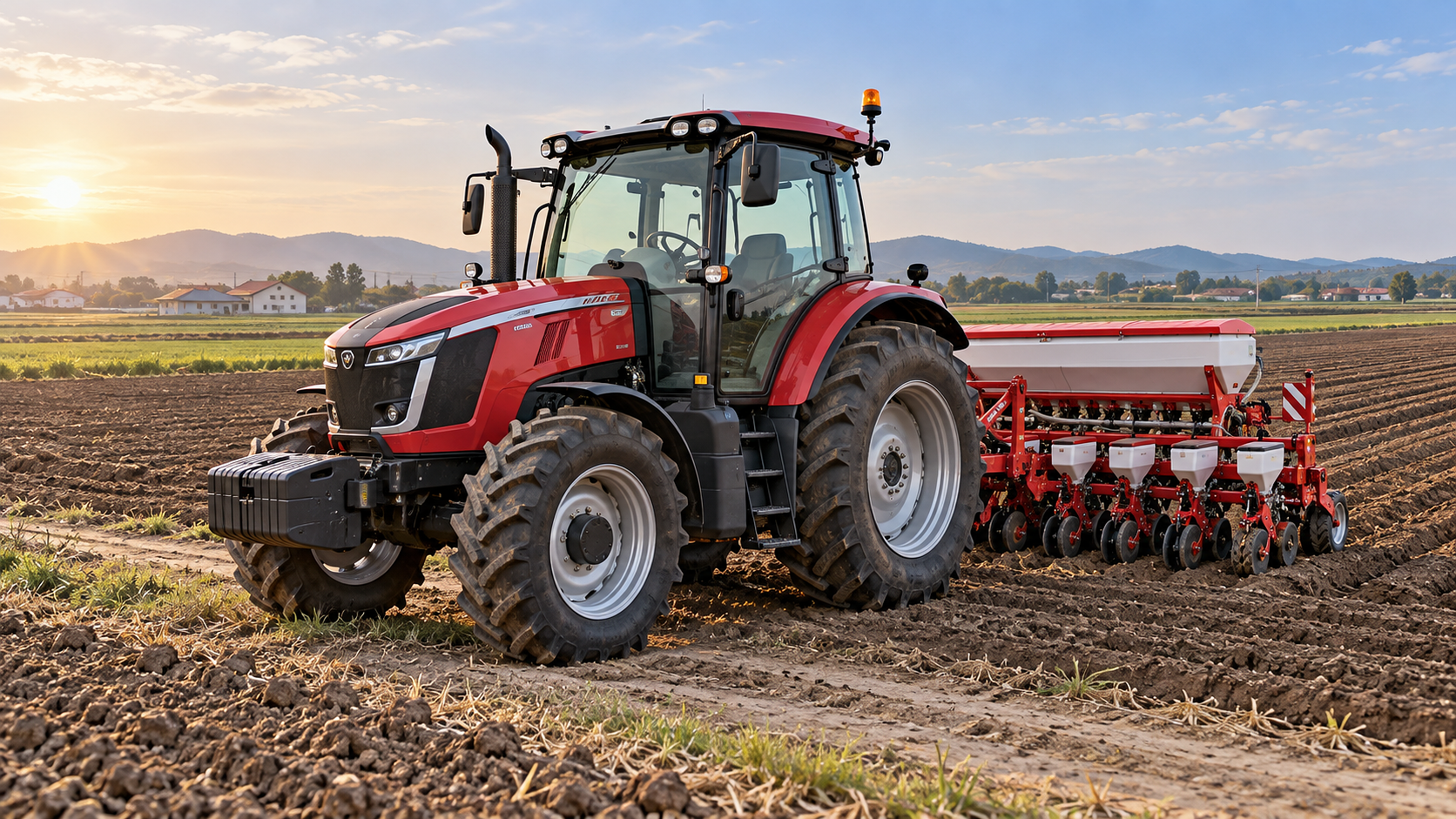




The right farm equipment is the equipment that completes each critical operation within the available fieldwork window, at an acceptable cost and without overloading the rest of the operation. Acreage provides a starting point, but crop mix, field layout, soil conditions, labor, and weather determine how much capacity a farm needs.
A useful farm equipment application guide by farm size must connect those conditions to machinery choices. A compact operation growing several time-sensitive crops may need more scheduling flexibility than a larger farm with one crop and a longer working window. The aim is to buy enough usable capacity to protect planting, crop care, and harvest while keeping ownership costs proportionate to the work.
Start with the fieldwork window, then calculate capacity
Before comparing tractors or combines, identify the operation most likely to delay production. It may be seedbed preparation, planting, spraying, harvesting, or moving grain away from the combine. Size the equipment system around that constraint.
For each operation, record the area to cover, the number of workable days, and the productive hours available per day. Workable days should reflect local soil and weather conditions. Productive hours should account for staffing, maintenance, travel, refilling, and other interruptions.
Required effective field capacity = area to complete ÷ productive hours available.
Keep the calculation specific to each task. Total farm acreage does not automatically equal the area handled by every machine: some fields may receive several passes, while others need none. Repeated applications can also create overlapping demands for the same tractor or operator.
To assess whether an implement can meet that requirement, distinguish theoretical capacity from effective capacity. Theoretical capacity comes from working width and travel speed. Effective capacity allows for turns, overlap, and interruptions.
Using metric units:
Effective field capacity in hectares per hour = working width in meters × speed in kilometers per hour × field efficiency ÷ 10.
Enter field efficiency as a decimal and base it on realistic operating conditions. If refilling and turning losses are already included in that efficiency estimate, do not deduct them again from available hours. Consistent assumptions matter more than a precise-looking result built on optimistic inputs.
Allow some reserve for disrupted schedules, but connect it to the consequences of delay. A machine used during a narrow planting window needs a different capacity margin from one performing flexible off-season work.
How equipment priorities change with farm size
There is no universal acreage boundary between small, midsize, and large farms. Field crops, orchards, livestock enterprises, and irrigated vegetable operations place different demands on machinery. The categories below describe operating patterns rather than fixed acreage bands.
Small farms: prioritize useful hours and field access
On a smaller farm, versatility often contributes more value than maximum output. A tractor that handles mowing, material handling, cultivation, and planting can justify ownership across several seasons. However, attachment compatibility needs examination: hydraulic flow, lift capacity, PTO requirements, hitch geometry, and stability can rule out an apparently suitable combination.
Narrow gates, short headlands, slopes, and small storage buildings may determine the practical machine size. A wider implement offers little benefit if folding, maneuvering, and road travel consume the time it saves in the field.
Contracting an infrequent specialist task can reduce capital tied up in machinery. That choice works when service is available within the required window. Where contractor delays would threaten crop quality or establishment, owning a lower-capacity machine may provide valuable control over timing.
Midsize farms: resolve competition between jobs
As acreage grows, the pressure often appears in scheduling before it appears in horsepower. One tractor may have enough power for every implement yet still be unable to prepare land, plant, and move materials when those jobs overlap.
Map simultaneous demands before replacing the main tractor with a larger model. A complementary utility tractor, faster implement changeovers, or contracted support may remove more delay than additional engine power. Conversely, where one field operation consistently misses its window, a wider implement and a properly matched tractor may be justified.
Large farms: evaluate the whole production system
Large operations need sustained performance across long working periods. Fuel supply, operator changes, maintenance access, parts availability, and transport all influence how much of a machine’s capacity becomes completed work.
Field dispersion can favor several machines over one very large unit. Separate crews can work in different locations, and a breakdown leaves some capacity operating. One larger machine can reduce staffing requirements, but it concentrates downtime risk. Compare both arrangements against actual field locations and available operators.
Match tractor power to the implement and soil
Engine horsepower alone is an incomplete buying criterion. The tractor must deliver power through the system the task uses: drawbar pull for draft work, PTO power for driven equipment, and hydraulic capacity for functions such as fans, pumps, and actuators.
For tillage, assess implement width, working depth, soil resistance, traction, and operating speed together. A tractor that handles an implement in light soil may struggle at greater depth or in heavier ground. Excessive wheel slip wastes energy and reduces output; adding engine power does not automatically resolve poor traction.
Planters and drills require equal attention to hydraulic flow, available remotes, electrical supply, and control compatibility. Establish whether quoted hydraulic performance is available under the operating conditions required, including simultaneous functions. Lift capacity must also suit the attachment at its actual load position.
Transmission choice affects how easily the operator can maintain the speed and engine conditions needed by the task. Low-speed work, frequent direction changes, and sustained draft work create different requirements. Compare control quality and service support alongside purchase price.
Include machine weight, ballast, tires, and ground pressure in the assessment. A heavier tractor may improve traction but create problems on vulnerable soils. Equipment that meets a power requirement while delaying field entry can undermine the timeliness it was purchased to provide.
Size the combine around crop flow and harvest logistics
Combine selection requires more than matching header width to acreage. Crop yield, moisture, straw volume, terrain, and acceptable losses influence sustainable harvesting speed. The relevant measure is output while maintaining grain quality and acceptable field losses.
A wider header can increase crop intake, but threshing, separation, and cleaning must process that material effectively. Ask for performance evidence under comparable crops and conditions, including how output changes when straw is tough or grain moisture rises. Peak throughput alone gives an incomplete picture.
Then follow the grain beyond the combine. Grain carts, trailers, unloading points, drying, and storage must accommodate the planned harvest rate. If the combine waits for transport or the receiving system cannot keep up, additional harvesting capacity will remain unused.
For smaller acreages, compare ownership with custom harvesting or machinery sharing. For larger acreages, compare one high-capacity combine with multiple units. Include operator availability, field separation, service response, and the impact of losing one machine during the harvest window.
Choose precision technology and irrigation for a defined job
Precision farming features earn their place when they address a measurable operating problem. Guidance can reduce overlap and operator workload. Section control can reduce repeated application in irregular fields. Variable-rate equipment becomes useful when reliable field information supports different application rates and the machine can deliver them accurately.
Check the complete compatibility chain: positioning signal, display, implement controller, correction service, software, and data export. Include recurring fees and operator training in the comparison. A feature that requires cumbersome setup may see little use during a busy season.
Farm size affects how widely technology costs can be spread, but field shape and input intensity also matter. A smaller operation with irregular boundaries may have a strong case for section control. A larger farm may gain more initially from consistent guidance, connected work records, and fewer setup errors across machines.
Irrigation needs its own capacity assessment. Acreage alone cannot establish pump size or system suitability. Water availability, crop demand, soil infiltration, elevation, pressure requirements, and distribution uniformity determine the design. The system must deliver the required water within the available irrigation period.
Automation and soil-moisture monitoring can improve scheduling, but they depend on representative sensor placement and sound hydraulic performance. Before adding intelligent controls, assess whether pumps, pipes, filters, and emitters can distribute water as intended.
Compare ownership cost per completed job
A lower purchase price does not necessarily mean lower operating cost. Compare depreciation, financing, insurance, storage, maintenance, repairs, fuel, labor, and technology subscriptions. Divide annual costs by realistic annual use, then consider the cost of delays and supporting equipment.
Use the same workload and operating assumptions for every option. Comparing one machine at ideal output with another at conservative output distorts the result. Include attachment changes, travel, servicing, and seasonal setup where they materially affect labor or availability.
Used machinery can provide economical capacity when condition, maintenance history, and local support are suitable. Inspection should focus on the systems most likely to disrupt the intended work, including transmission, hydraulics, electronics, and wear components. A low purchase price leaves less value if repairs consume the critical working window.
Rental, sharing, and contracting deserve the same scrutiny. Establish who controls scheduling, who supplies operators, how transport is handled, and what happens after a breakdown. Access to a machine has value only when it aligns with the farm’s work requirements.
Make the equipment quotation prove the fit
Prepare a fieldwork brief before requesting final offers. It should describe crop areas, seasonal windows, soil and terrain, field dimensions, travel distances, current implements, available labor, and the bottleneck the purchase must remove.
Ask each supplier to explain:
- The expected effective capacity under the stated field conditions and the assumptions behind it.
- Compatibility with existing implements, hydraulics, controls, transport, and storage.
- The labor and support equipment needed to sustain the proposed output.
- Maintenance requirements, seasonal service availability, and likely downtime arrangements.
- The full equipment configuration and recurring costs included in the offer.
Where a demonstration is practical, use representative working conditions and record completed area, interruptions, work quality, and operator demands. For harvesting, include losses and grain quality; for planting or application, examine placement and distribution.
Approve the configuration that resolves the documented constraint at a defensible cost. If the proposal adds capacity while leaving transport delays, labor shortages, or implement limitations unresolved, revise the system before committing to the machine.
Related News
Agricultural Automation Still Needs Human Oversight, Study Finds
Agricultural automation still needs human oversight. Discover how AI and smart equipment are reshaping farm jobs, skills, and decisions.
Choosing a Precision Fertilization Equipment Manufacturer: What to Check
Choose a precision fertilization equipment manufacturer with confidence. Compare accuracy, compatibility, service and total ownership costs before you buy.
China's Autumn Grain Harvest Highlights Role of Machinery and Precision Farming
China's autumn grain harvest highlights machinery and precision farming. Explore how coordinated practices support harvesting and yield improvement.
Drip vs. Center Pivot Irrigation: Maintenance Tasks and Costs Compared
Use this irrigation solution comparison by maintenance to weigh drip vs. center pivot tasks, costs and downtime—and choose the best fit for your field.
EIMA 2026: Six Tractor of the Year Awards Include Autonomous Robot
Explore the Tractor of the Year awards at EIMA 2026, featuring six winners, including the AgXeed autonomous robot and leading tractor models.
Choosing Irrigation Systems for Government Projects: Water, Cost and Compliance
What factors affect irrigation system selection for government projects? Explore water supply, lifecycle costs and compliance to make a confident, well-informed choice.
Choosing an Agricultural Machinery Platform: Listings, Pricing, and Support
Choosing an agricultural machinery platform? Compare listings, pricing, supplier verification, and support to make a more confident equipment purchase.
Ofwat Launches £8 Million Agri-Water Innovation Challenge
Ofwat’s £8 million Agri-Water Innovation Challenge supports smart irrigation, water reuse and water-saving solutions. Explore the funding and its potential impact.
Choosing a Water-Saving Irrigation Supplier: 5 Key Procurement Criteria
Choose a water-saving irrigation systems supplier with confidence. Explore five procurement criteria to reduce risk and maximize long-term value.
Related News
- 00
0000-00
Choosing Irrigation Systems for Government Projects: Water, Cost and Compliance - 00
0000-00
Choosing an Agricultural Machinery Platform: Listings, Pricing, and Support - 00
0000-00
Choosing a Water-Saving Irrigation Supplier: 5 Key Procurement Criteria - 00
0000-00
304 vs 316 Stainless Steel for Ingredient Processing Equipment - 00
0000-00
Choosing a Large Farm Equipment Exporter: Parts, Shipping and Warranty
0000-00
Popular Tags
Ms. Elena Rodriguez
Weekly Insights
Stay ahead with our curated technology reports delivered every Monday.