Agri-Mechanization Solutions: Should Small Farms Buy, Rent, or Share Equipment?
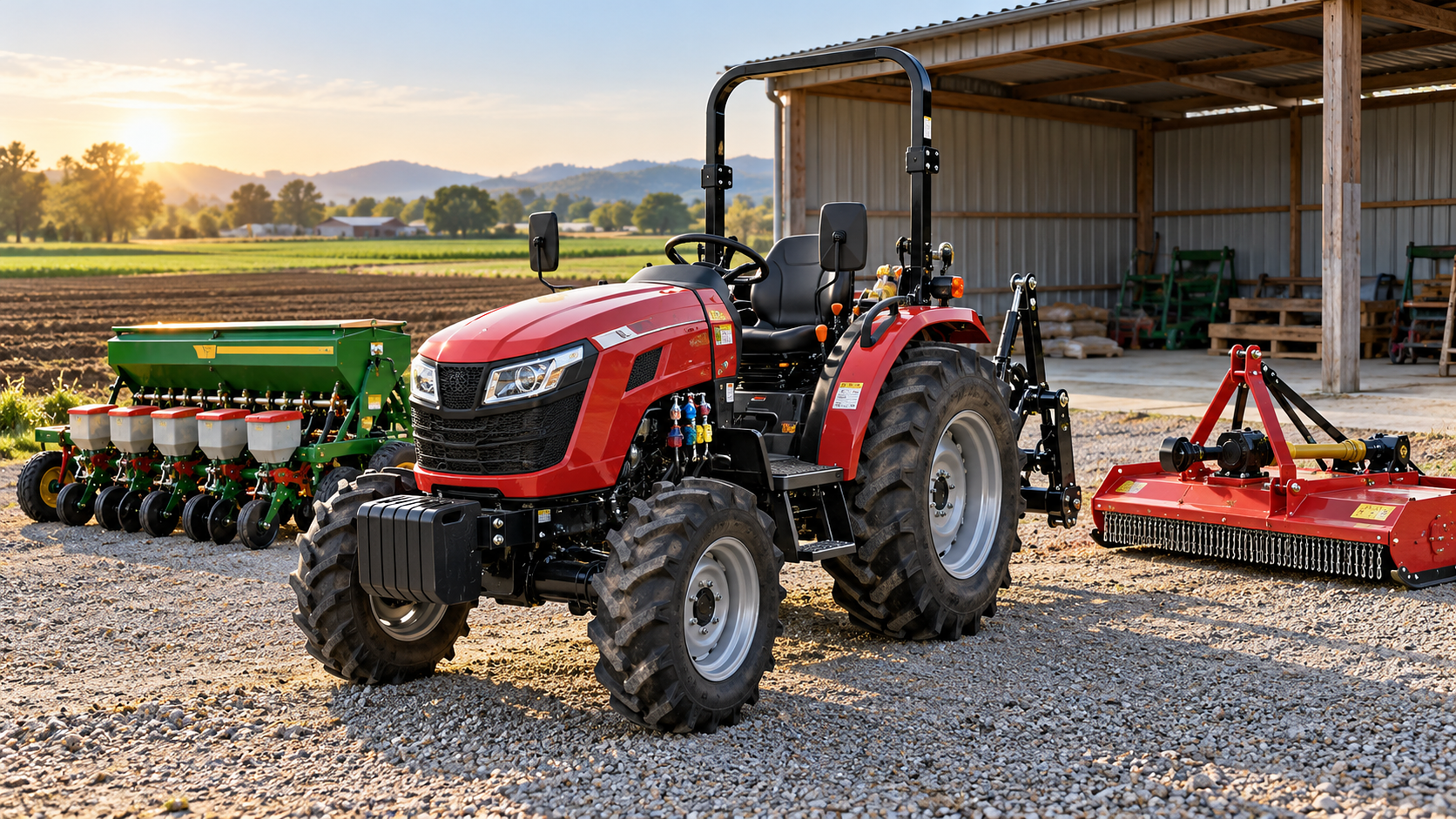




Small farms should buy equipment when dependable access and regular use justify the full ownership cost, rent when demand is occasional and availability is reliable, and share when compatible farms can agree on scheduling and responsibility. The strongest choice is often a combination: own the equipment used throughout the season, rent specialized implements, and share expensive machinery where workloads fit together.
Choosing among these agri-mechanization solutions starts with two questions: what does each completed field operation really cost, and what happens if the machine is unavailable when needed? A low rental rate offers little value if planting is delayed. Equally, owning a machine that spends most of the year parked can restrict the cash needed for seed, labor, irrigation, and repairs.
Start with the work calendar, not the equipment catalog
Acreage alone is a weak basis for deciding whether to buy machinery. Farms of similar size can have very different equipment needs because of crop mix, soil conditions, field layout, transport distances, and available labor.
List each operation, its workable window, and the capacity required to finish it. Include travel, loading, implement changes, refilling, cleaning, and routine adjustments. A machine’s advertised field capacity does not represent the amount of work it will complete across scattered plots.
Then separate tasks that can move by several days from tasks with little flexibility. Transporting materials may allow scheduling freedom. Planting into suitable soil moisture or harvesting a crop approaching a weather event may not. Equipment serving these narrow windows deserves closer attention to access guarantees and backup arrangements.
Labor can change the answer completely. Renting a larger tractor does not create an experienced operator. Buying a combine does not provide the people needed to move grain and maintain harvest flow. Where staffing is the main constraint, a contractor supplying both equipment and an operator may be more practical than any arrangement that provides machinery alone.
How buying, renting, and sharing compare
The comparison should be made for each machine or operation. There is little reason to apply the same ownership model to a loader used every week and a specialized implement needed briefly each season.
Compare the cost of completed work
Purchase price, daily rental rate, and a neighbor’s proposed contribution are different measures. Put them on the same basis: cost per acre completed, per productive machine hour, or per finished operation.
For ownership, include depreciation, financing interest or the opportunity cost of invested cash, insurance, storage, applicable fees, maintenance, repairs, fuel, wear parts, and labor. Depreciation represents the value consumed while holding the machine. Loan principal repayments belong in the cash-flow forecast; adding them to depreciation in an economic cost calculation would count the purchase cost twice.
Rental costs can include delivery, collection, attachments, insurance or damage charges, cleaning, fuel, and excess hours. Check when billing begins and ends, whether unused days remain chargeable during bad weather, and how breakdown time is treated. These terms can materially change the cost of a short job.
Sharing requires more than dividing the purchase price. Include storage, insurance, servicing, transport between farms, administration, and a repair reserve. Different tasks may create different levels of wear, so equal ownership shares do not necessarily justify equal operating charges.
A useful starting calculation is:
Ownership cost per productive hour = annual fixed ownership costs ÷ annual productive hours + variable operating cost per hour.
To estimate a financial break-even point against rental, divide annual fixed ownership costs by the difference between the comparable rental cost per hour and ownership’s variable cost per hour. This only helps when both options cover equivalent equipment and services, and the rental alternative has the higher variable cost. Hour limits, delivery fees, and minimum rental periods may require comparing complete seasonal budgets instead.
Run the budget against lower-than-planned utilization, a significant repair, and a weather-disrupted season. Keep uncertain delay losses separate from known charges, but assess them explicitly. An apparently cheaper option may be commercially weak if one missed operating window threatens crop value.
When buying earns its place
Ownership becomes more attractive when equipment has recurring work, supports several operations, or needs to be available at short notice. A suitably sized tractor with compatible implements may accumulate useful hours across cultivation, mowing, handling, and transport. That flexibility can make it a stronger purchase than a highly specialized machine.
Control also has value where rental supply is thin or service providers regularly face overlapping demand. However, ownership only provides dependable access when the farm can supply operators, maintenance, and repairs. A machine awaiting an unavailable part provides little scheduling advantage.
Match the complete machine to the job. Engine horsepower alone does not establish whether a tractor can safely and effectively operate an implement. PTO output, hydraulic flow, lift capacity, traction, ballast, and hitch compatibility can all affect suitability. An oversized tractor can add cost and complicate maneuvering without improving the operation.
Used equipment can reduce the initial commitment, but its condition and support deserve more attention than its purchase price alone. Examine service records, wear points, tires, hydraulics, transmission behavior, and parts availability. For electronically controlled equipment, establish what diagnostic access and software support are available.
Before financing a purchase, map repayments against seasonal cash receipts and retain room for operating expenses. A machine may have an acceptable long-term cost while still creating a difficult cash shortage before harvest income arrives.
Renting works best when the whole job can be planned
Rental suits equipment needed infrequently, temporary increases in acreage, and tasks requiring a capability the existing fleet lacks. It can also provide a practical trial before purchase, revealing whether a machine fits field entrances, soil conditions, implement requirements, and operator skills.
The strongest rental arrangements start with a realistic work plan. Estimate productive hours and transport time, prepare fields and inputs beforehand, and reserve a machine with enough capacity to complete the task within the available window. Renting too little capacity can extend the hire and expose the crop to delay.
Ask what the reservation actually secures: a particular machine, an equivalent replacement, or access subject to availability. Establish the procedure for breakdowns, repair authorization, replacement equipment, and weather extensions. Peak-season availability matters more than the size of a supplier’s general fleet.
For combine harvesting or other complex operations, compare rental with custom hiring. A contractor may provide operating skill, setup, and supporting logistics that a rental agreement excludes. Compare the same scope of work, including crop handling responsibilities and how work quality will be assessed.
Sharing depends on compatible schedules and clear rules
Sharing can distribute ownership costs across more productive use, but nearby farms often need the same equipment at the same time. Similar crops and weather conditions can create strong scheduling conflicts. Geographic proximity helps transport; it does not automatically make a machinery partnership workable.
Better arrangements combine farms whose crop calendars, varieties, or operating sequences create some flexibility. Distance must still be considered because repeated moves consume working time and require suitable transport.
Agree on the operating rules before purchasing:
- Scheduling: Set booking procedures, seasonal priorities, weather adjustments, and a way to resolve competing requests.
- Charges: Separate ownership contributions from usage charges and define how fuel, transport, and wear are allocated.
- Machine care: Assign inspections, servicing, cleaning, recordkeeping, and responsibility for damage.
- Breakdowns: Establish repair authority, emergency spending limits, and responsibility for replacement hire.
- Exit: Define valuation, sale procedures, and what happens when a member leaves or cannot meet payments.
Cleaning between farms deserves explicit attention where machinery can carry weed seeds, soil, pests, or crop residues. Include that work in the schedule and cost allocation.
Joint ownership is also different from paying to use a neighbor’s machine. The latter may be simpler, but access, insurance, operator responsibility, and damage liability still need a clear agreement. Shared equity adds longer-term decisions about debt, replacement, and disposal.
Precision equipment and irrigation need a different lens
Access to guidance, variable-rate application, or yield monitoring can make rental and sharing attractive. Yet the technology only adds value when it works with the farm’s implements, correction services, displays, and data systems. Establish who supplies subscriptions, performs calibration, and exports field records before booking equipment.
A short rental period leaves limited time for setup and learning. If compatibility problems consume the operating window, advanced features can become an additional cost. Select the capability needed for the task and allow time to configure it.
Irrigation requires a separate distinction between fixed infrastructure and movable equipment. Buried pipework, filtration, and installed control systems are tied to the site, making casual seasonal sharing less practical. Portable pumps and some monitoring equipment may offer more flexibility, provided water quality, pressure, power, and connection requirements align.
For water-saving systems, procurement should therefore consider installation, maintenance, energy use, and continued access throughout the irrigation season. A temporary equipment arrangement must still support the crop’s ongoing water requirements.
Build the equipment plan one operation at a time
Start with the tasks where delay would cause the greatest disruption. Decide how to secure dependable capacity for those operations, then compare access models for the remaining work. This prevents an attractive machine offer from shaping the entire machinery budget.
A practical mixed strategy might involve owning a frequently used tractor, renting an occasional specialist implement, and contracting harvest. Another farm may share planting equipment while owning machinery needed for daily livestock work. The right combination follows actual utilization, labor availability, and local supply.
Before committing, obtain comparable proposals for the same task and capacity. Put delivery, operating hours, maintenance, attachments, insurance, operator provision, and backup access alongside the headline price. For a purchase, add a seasonal cash-flow forecast; for sharing, add the proposed operating agreement.
The decision is ready when the farm can explain what each operation will cost, who will complete it, when equipment will be available, and how work will continue after a breakdown. Those answers provide a firmer basis for investment than acreage, horsepower, or purchase price alone.
Related News
Agricultural Automation Still Needs Human Oversight, Study Finds
Agricultural automation still needs human oversight. Discover how AI and smart equipment are reshaping farm jobs, skills, and decisions.
Choosing a Precision Fertilization Equipment Manufacturer: What to Check
Choose a precision fertilization equipment manufacturer with confidence. Compare accuracy, compatibility, service and total ownership costs before you buy.
China's Autumn Grain Harvest Highlights Role of Machinery and Precision Farming
China's autumn grain harvest highlights machinery and precision farming. Explore how coordinated practices support harvesting and yield improvement.
Drip vs. Center Pivot Irrigation: Maintenance Tasks and Costs Compared
Use this irrigation solution comparison by maintenance to weigh drip vs. center pivot tasks, costs and downtime—and choose the best fit for your field.
EIMA 2026: Six Tractor of the Year Awards Include Autonomous Robot
Explore the Tractor of the Year awards at EIMA 2026, featuring six winners, including the AgXeed autonomous robot and leading tractor models.
Choosing Irrigation Systems for Government Projects: Water, Cost and Compliance
What factors affect irrigation system selection for government projects? Explore water supply, lifecycle costs and compliance to make a confident, well-informed choice.
Choosing an Agricultural Machinery Platform: Listings, Pricing, and Support
Choosing an agricultural machinery platform? Compare listings, pricing, supplier verification, and support to make a more confident equipment purchase.
Ofwat Launches £8 Million Agri-Water Innovation Challenge
Ofwat’s £8 million Agri-Water Innovation Challenge supports smart irrigation, water reuse and water-saving solutions. Explore the funding and its potential impact.
Choosing a Water-Saving Irrigation Supplier: 5 Key Procurement Criteria
Choose a water-saving irrigation systems supplier with confidence. Explore five procurement criteria to reduce risk and maximize long-term value.
Related News
- 00
0000-00
Choosing Irrigation Systems for Government Projects: Water, Cost and Compliance - 00
0000-00
Choosing an Agricultural Machinery Platform: Listings, Pricing, and Support - 00
0000-00
Choosing a Water-Saving Irrigation Supplier: 5 Key Procurement Criteria - 00
0000-00
304 vs 316 Stainless Steel for Ingredient Processing Equipment - 00
0000-00
Choosing a Large Farm Equipment Exporter: Parts, Shipping and Warranty
0000-00
Popular Tags
Ms. Elena Rodriguez
Weekly Insights
Stay ahead with our curated technology reports delivered every Monday.