
EN 17892-3:2026 Enters Force on 17 May 2026
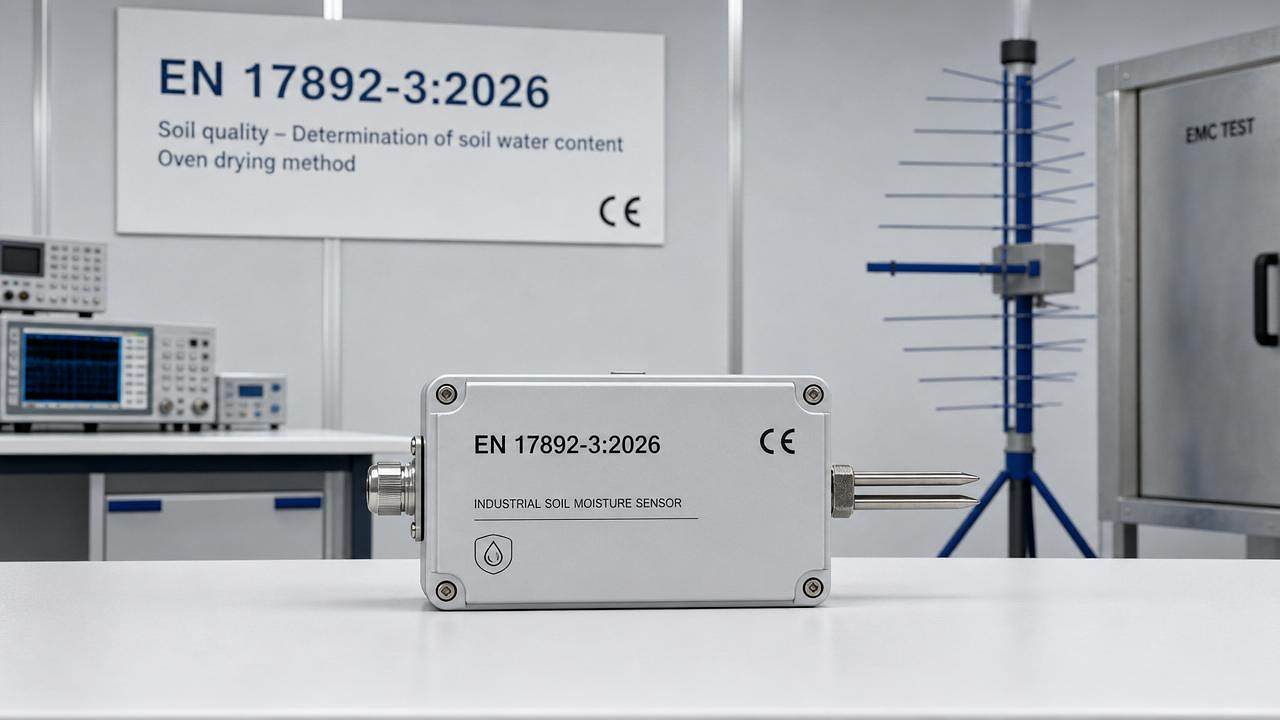




EN 17892-3:2026 — a new European standard governing electromagnetic compatibility (EMC) immunity requirements for soil moisture sensors — entered into mandatory application across the EU on 17 May 2026. This development directly affects manufacturers, exporters, and supply chain actors involved in the production and trade of soil moisture sensors destined for the European market, as compliance is now a prerequisite for customs clearance.
Event Overview
EN 17892-3:2026 officially became mandatory on 17 May 2026. Under this standard, all imported soil moisture sensors must pass full EMC immunity testing and be accompanied by a valid EU Declaration of Conformity. Non-compliant products risk detention or rejection at EU ports. The standard applies specifically to soil moisture sensors and does not extend to other agricultural sensing devices unless explicitly covered under its scope.
Impact on Specific Industry Segments
Export-oriented manufacturing enterprises
Over 230 Chinese manufacturers exporting soil moisture sensors are affected. These firms face immediate compliance obligations — including test validation, technical documentation, and conformity declaration — prior to shipment. Impact manifests as delayed shipments, increased pre-shipment verification costs, and potential loss of market access if certification is not completed before customs submission.
Supply chain and logistics service providers
Firms handling EU-bound consignments of soil moisture sensors must now verify regulatory documentation before cargo release. Customs brokers and freight forwarders may experience higher scrutiny, longer clearance times, and liability exposure if declarations are incomplete or inaccurate. Documentation verification has become a critical operational checkpoint.
Distribution and channel partners in the EU
EU-based importers and distributors are responsible for ensuring that products placed on the market meet EN 17892-3:2026. They bear legal responsibility under the EU’s Market Surveillance Regulation (EU) 2019/1020 and may face enforcement actions if non-conforming devices enter circulation. Their due diligence process now requires formal evidence of EMC immunity testing and traceable conformity assessment.
What Relevant Enterprises or Practitioners Should Focus On — And How to Respond
Confirm current product certification status against EN 17892-3:2026
Manufacturers and exporters should audit existing technical files and test reports to determine whether previous EMC assessments cover all immunity test items specified in EN 17892-3:2026. Legacy reports referencing older standards (e.g., EN 61326-1 or EN 55011) do not automatically satisfy this requirement.
Verify documentation readiness for customs submission
The EU Declaration of Conformity must be signed by the manufacturer or their authorized representative established in the EU. It must explicitly reference EN 17892-3:2026 and list applicable EMC immunity tests (e.g., ESD, radiated RF immunity, surge). Supporting test reports must be dated on or after the standard’s publication date and issued by an accredited laboratory.
Engage with notified bodies or accredited labs early for gap assessment
Given limited lab capacity and lead times for full EMC immunity testing, firms should initiate gap analysis now — especially for sensor models previously certified only to generic EMC standards. Prioritization should focus on high-volume SKUs and those already scheduled for EU shipment in Q2–Q3 2026.
Update internal compliance workflows for future product variants
Design and engineering teams should integrate EN 17892-3:2026 immunity requirements into new product development cycles. This includes PCB layout considerations, shielding strategies, and firmware-level noise resilience — particularly for low-power, battery-operated sensor units where immunity margins are typically tighter.
Editorial Perspective / Industry Observation
Observably, EN 17892-3:2026 reflects a broader trend toward application-specific EMC regulation in environmental monitoring equipment — moving beyond generic industrial standards to address real-world field interference conditions (e.g., variable grounding, proximity to radio transmitters, solar inverter harmonics). Analysis shows this is not merely a procedural update but signals tightening regulatory oversight of agritech hardware entering the EU single market. From an industry perspective, it functions less as an isolated compliance hurdle and more as an indicator of increasing technical accountability across the agri-sensor value chain. Current attention should focus less on whether the standard applies — which is now settled — and more on how consistently and verifiably it is being enforced across member state customs authorities.
Conclusion
This standard marks a definitive shift from voluntary alignment to mandatory technical compliance for soil moisture sensors entering the EU. Its significance lies not in novelty alone, but in the enforceability now embedded in customs control points. It is best understood not as a temporary adjustment, but as a permanent baseline for market access — one that elevates documentation integrity and test traceability to operational essentials. Firms treating it as a ‘one-time certification’ rather than an integrated component of quality and regulatory infrastructure risk recurring non-compliance.
Information Source
Main source: Official publication notice of EN 17892-3:2026 in the Official Journal of the European Union (OJEU), C-series, dated 17 May 2026. Further implementation guidance from national market surveillance authorities remains under observation; no consolidated EU-level enforcement protocol has been published as of the effective date.
Related News
Tractor Chassis Price: What Buyers Should Compare Beyond the Initial Quote
Tractor chassis price is only the start. Compare load capacity, compatibility, durability, and lifecycle costs to choose a reliable, high-value chassis.
How to Select Smart Irrigation Valves for Multi-Zone Water Management?
Intelligent irrigation systems valves: learn how to match smart valves with multi-zone flow, pressure, control, feedback, and communication needs for reliable water management.
Climate-Smart Farming for Drought: A Practical Plan for Protecting Yields
Climate-smart farming for drought: build smarter water budgets, protect critical crop stages, improve irrigation uniformity, and safeguard yields with practical field-proven strategies.

How Digital Agriculture Platforms Turn Field Data Into Better Input Decisions
Digital agriculture platforms turn field data into smarter fertilizer, water, seed, and equipment decisions—helping farms cut risk, improve margins, and scale sustainability.

GPS-Guided Farm Machinery: Where It Delivers Measurable Field Efficiency Gains
Agri-mechanization GPS guided systems deliver measurable field efficiency gains through reduced overlap, precise planting, smarter inputs, and reliable farm data.

How Sensor Feedback Enables Accurate Variable-Rate Fertilization in Field Conditions
Precision fertilization systems with sensor feedback improve variable-rate accuracy by verifying flow, managing latency, and ensuring reliable field application.

How to Select Precision Crop Protection Equipment for Variable Field Conditions
Precision crop protection equipment selection made simple: compare terrain, canopy, weather, control accuracy, and data workflows for reliable applications.

When Does Agricultural Machinery Leasing Cost Less Than Owning Equipment?
Agricultural machinery leasing can lower farm costs when use is seasonal or uncertain. Compare utilization, maintenance, cash flow, and risk to make a smarter equipment decision.
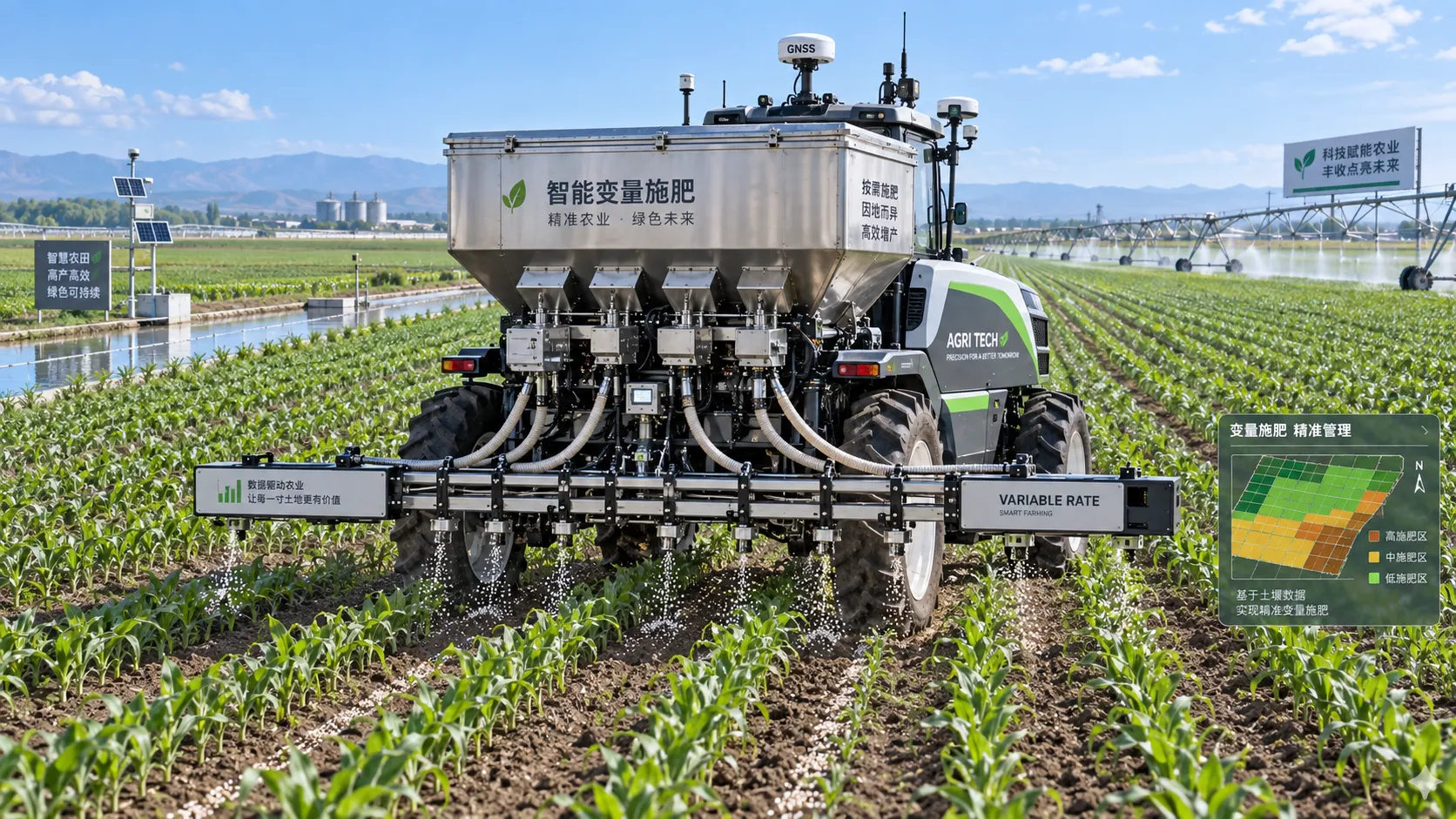
How to Evaluate Precision Fertilization System Suppliers for Farm-Scale Deployment
Precision fertilization systems suppliers: learn how to compare accuracy, integration, uptime, service, and total cost for confident farm-scale deployment.
Related News
- 00
0000-00
Climate-Smart Farming for Drought: A Practical Plan for Protecting Yields - 00
0000-00
Selecting Real-Time Soil Moisture Sensors for Irrigation Zone Control - 00
0000-00
How Does Climate-Smart Farming Reduce Water Use in Semi-Arid Areas? - 00
0000-00
USDA Rule Takes Effect: Dual FCC and NRCS Approval for Soil Moisture Sensors - 00
0000-00
EU Rule Takes Effect: Soil Moisture Sensors Need Revised CE-EMC Certification
Popular Tags
Hydrological Resource Strategist
Weekly Insights
Stay ahead with our curated technology reports delivered every Monday.