
Water-Saving Irrigation Systems for Orchards: Drip vs Micro-Sprinkler by Tree Age
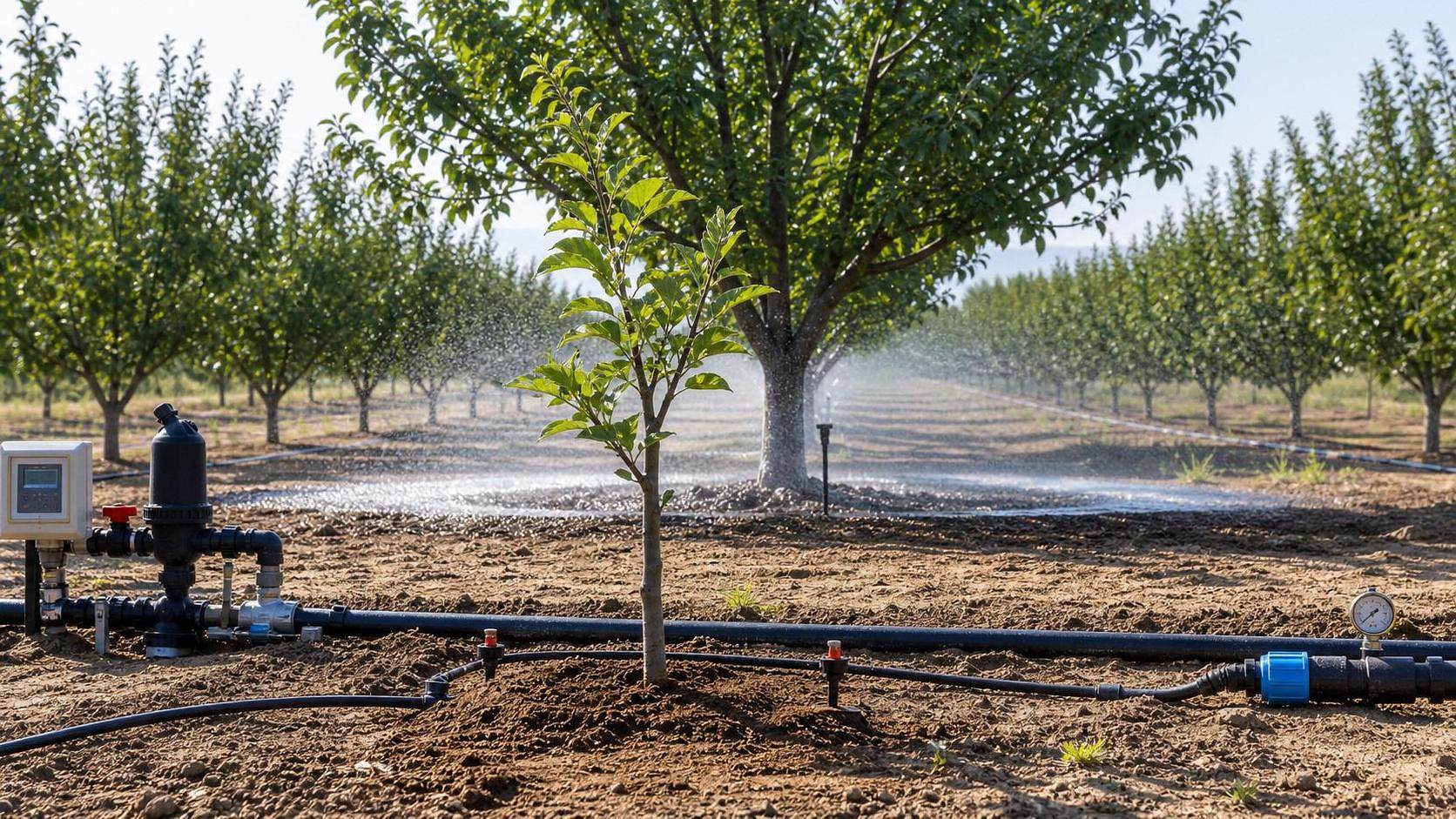




Why tree age changes the irrigation decision
Selecting water-saving irrigation systems for orchards now shapes more than seasonal watering plans. It influences crop consistency, labor routines, energy demand, and multi-year cost recovery.
In orchard operations, drip and micro-sprinkler systems rarely perform the same way across all growth stages. Young trees, maturing blocks, and fully developed canopies create very different wetting targets.
That is why water-saving irrigation systems for orchards should be judged by tree age first, then by soil texture, spacing, salinity pressure, and automation capability.
Across the Agriculture 4.0 transition, AP-Strategy often frames irrigation as part of a larger field system. Water delivery, machinery access, sensor feedback, and sustainability targets increasingly need to work together.
In newly planted orchards, control usually matters more than coverage
For first- and second-year trees, the root zone is compact and shallow. The orchard does not need broad wetted area. It needs accurate placement and low waste.
In this stage, drip often leads among water-saving irrigation systems for orchards. It keeps moisture close to the young root ball and limits evaporation from bare soil.
This is especially useful where water allocation is tight, weed pressure is high, or fertilizer is applied through fertigation. Narrow wetting patterns support cleaner nutrient control.
Micro-sprinklers can still fit young orchards, but only under certain conditions. Sandy soils, very hot surfaces, or early canopy training may justify wider moisture distribution.
A common mistake is oversizing the wetting area too early. That usually raises weed growth, encourages shallow rooting outside the target zone, and wastes pressure energy.
What to watch in juvenile blocks
- Emitter flow should match infiltration rate, not just nursery establishment schedules.
- Line placement must allow trunk growth, training operations, and future mechanized passes.
- Filtration quality matters early, because partial clogging can stress small trees quickly.
- If frost events are relevant, drip alone may not cover broader protection needs.
As canopies expand, the irrigation target becomes less simple
The transition years are often the hardest to manage. Trees are no longer small, but their root systems still vary by row, soil depth, and block history.
At this point, comparing drip vs micro-sprinkler by tree age becomes more practical than asking which system is universally better. The answer usually depends on orchard uniformity.
Drip remains efficient where orchards pursue tight fertigation control and high-value fruit quality targets. It is also easier to segment by block when vigor differs.
Micro-sprinklers gain appeal when the expanding root zone needs wider wetting. They can buffer heat around the soil surface and support more even moisture distribution between trees.
In actual use, the decision often turns on whether the orchard suffers from dry banding. If roots are concentrated under a narrow drip strip, growth can become uneven.
This middle stage is also where hybrid thinking starts to make sense. Some orchards use drip for core irrigation and reserve micro-sprinklers for heat or establishment transitions.
Mature orchards often reward wider wetting, but not automatically
In mature orchards, tree demand rises with canopy volume, fruit load, and root spread. Water-saving irrigation systems for orchards must now support stability across a larger biological system.
Micro-sprinklers often perform well here because they wet a broader soil footprint. That can help maintain active roots beyond a narrow line and reduce localized salt build-up.
They may also support orchard floor temperature moderation in hot climates. In some regions, that matters for both root activity and fruit stress management.
Still, mature trees do not automatically mean micro-sprinklers are superior. On heavy soils, broad wetting can increase saturation risk, disease pressure, or unnecessary pumping hours.
Drip can remain the stronger choice in dense plantings, limited-water districts, or operations built around strict sensor-based irrigation scheduling. Precision remains a valuable advantage at scale.
The stronger judgment is to ask how much of the mature root zone must stay active, and at what energy and maintenance cost.
Where mature blocks commonly differ
High-density orchards often lean toward drip because row spacing and machinery movement leave little room for excess spray radius.
Traditional wider-spaced orchards may benefit more from micro-sprinklers, especially where root systems occupy larger inter-tree zones and salinity management is ongoing.
The real comparison is not water use alone
Many irrigation reviews stop at liters per hour. That is too narrow for orchard planning. Water-saving irrigation systems for orchards should be compared across operating behavior, not only nominal efficiency.
A lower-volume system can still underperform if distribution is too narrow for tree age. A wider-coverage system can also lose value if pressure regulation is weak.
In practice, the better evaluation combines four measures:
- How closely the wetted area matches current root architecture
- How stable the system stays under local water quality conditions
- How well the layout supports fertigation, sensing, and block control
- How much maintenance exposure grows over a full orchard life cycle
That wider lens aligns with AP-Strategy’s view of intelligent irrigation systems. Mechanical design, hydrology, and data-based scheduling should be evaluated as one operating chain.
Where orchard teams often misread the fit
One frequent error is choosing a system based on first-year establishment success and keeping the same layout unchanged for a decade. Tree age makes that logic weak.
Another is copying neighboring orchards without checking soil depth, cultivar vigor, or water salinity. Similar tree spacing does not guarantee similar irrigation behavior.
Cost analysis can also be misleading when it focuses only on initial hardware. Replacement intervals, flushing routines, filtration upgrades, and labor for inspection may change the economics.
There is also a management-side blind spot. Orchards using advanced sensing sometimes install precision controls but keep irrigation layouts that no longer match mature root distribution.
That mismatch limits the value of climate and transpiration models. Good data cannot fully correct a poorly matched wetting pattern.
A practical path for choosing between drip and micro-sprinkler
A workable decision process starts with orchard age mapping. Separate newly planted rows, transitional blocks, and mature zones before comparing equipment options.
Then test the field conditions that actually shift performance:
- Root depth and lateral spread by block
- Soil infiltration speed and crusting behavior
- Water quality, filtration burden, and salt accumulation pattern
- Need for fertigation precision or surface cooling support
- Compatibility with traffic lanes, mowing, and mechanized orchard care
After that, compare the system under seasonal change, not a single irrigation week. Heat waves, peak fruit load, and post-harvest recovery often reveal the better fit.
For many orchard operators, the most reliable next step is not a full replacement decision. It is building a block-by-block adaptation standard tied to tree age and operating constraints.
That approach keeps water-saving irrigation systems for orchards grounded in field reality. It also supports better capital timing, steadier yields, and more resilient orchard performance over time.
Related News
Farm Machinery Sourcing: How to Vet Suppliers, Specs, and Lifecycle Costs
Farm machinery information for sourcing: learn to vet suppliers, compare specifications, control lifecycle costs, and secure reliable uptime for smarter equipment purchases.
How to calculate ROI on precision agriculture equipment before buying
Calculating ROI on precision agriculture equipment: learn to assess total ownership costs, savings, payback, NPV, risks, and farm-scale value before you buy.
Tractor Specification Sheets: Matching PTO, Hydraulics, and Weight to Farm Tasks
Specification-oriented articles for tractors: match PTO, hydraulics, lift capacity, ballast, and weight to real farm tasks for safer, more efficient equipment choices.
How to Evaluate Dynamic Feedback Algorithm Suppliers for Precision Farming Systems
Dynamic feedback algorithms supplier evaluation guide for precision farming—compare validation, integration, safety, and pilots to choose with confidence.
How to Specify Combine Harvester Systems for High-Moisture Grain and Variable Field Conditions
Combine harvester systems for high-moisture grain: learn how to specify threshing, cleaning, headers, traction, and automation for reliable harvests in variable fields.
How to Compare Agricultural Equipment Platforms for Fleet Management and ROI
Agricultural equipment platform comparison: evaluate fleet data, maintenance, precision workflows, and ROI to choose a system that delivers measurable results.
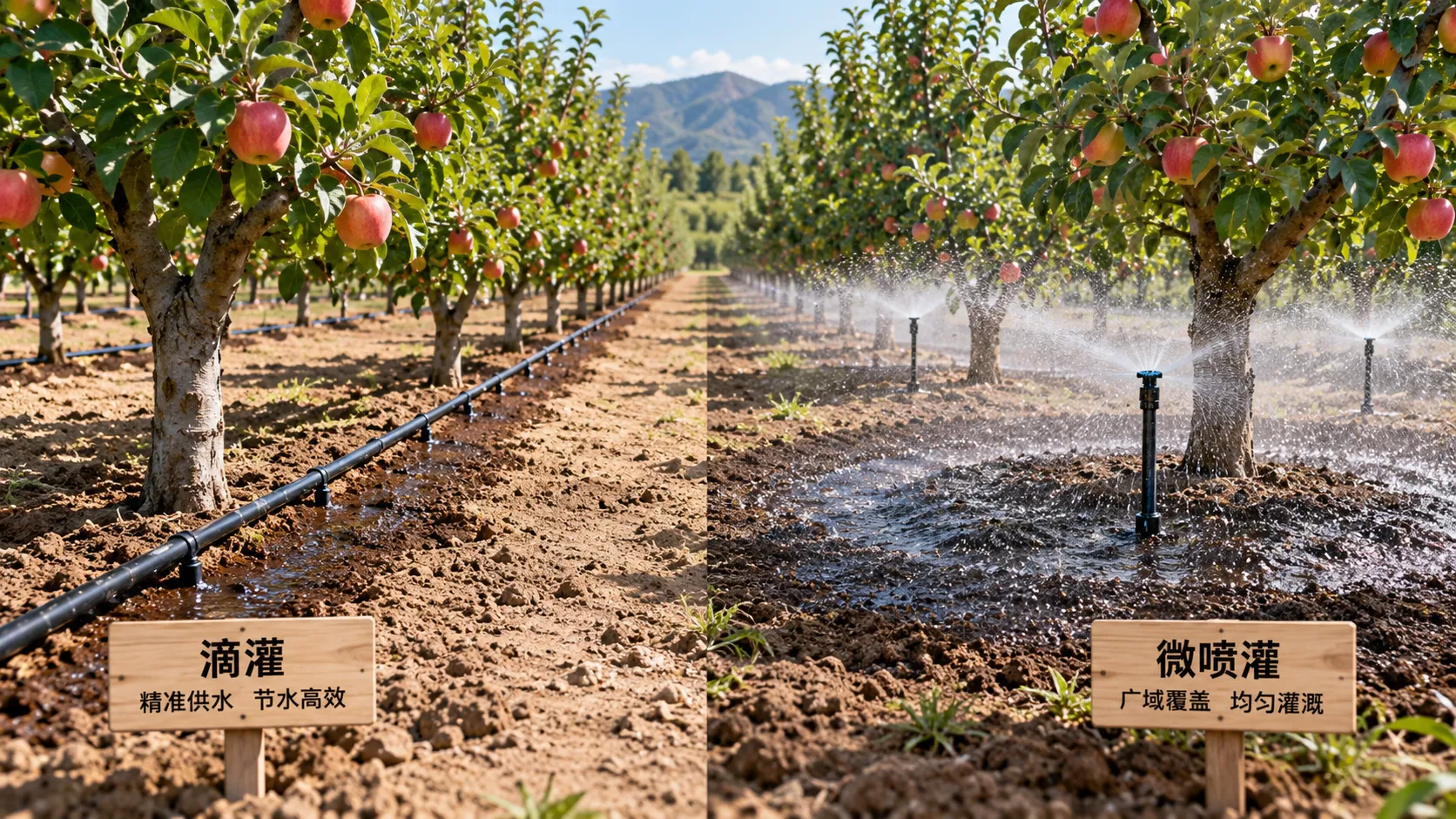
Drip vs. Micro-Sprinkler Irrigation: Which System Fits Your Orchard?
Irrigation solution comparison for orchards: discover whether drip or micro-sprinklers best match your water, soil, roots, fertigation, and frost needs.
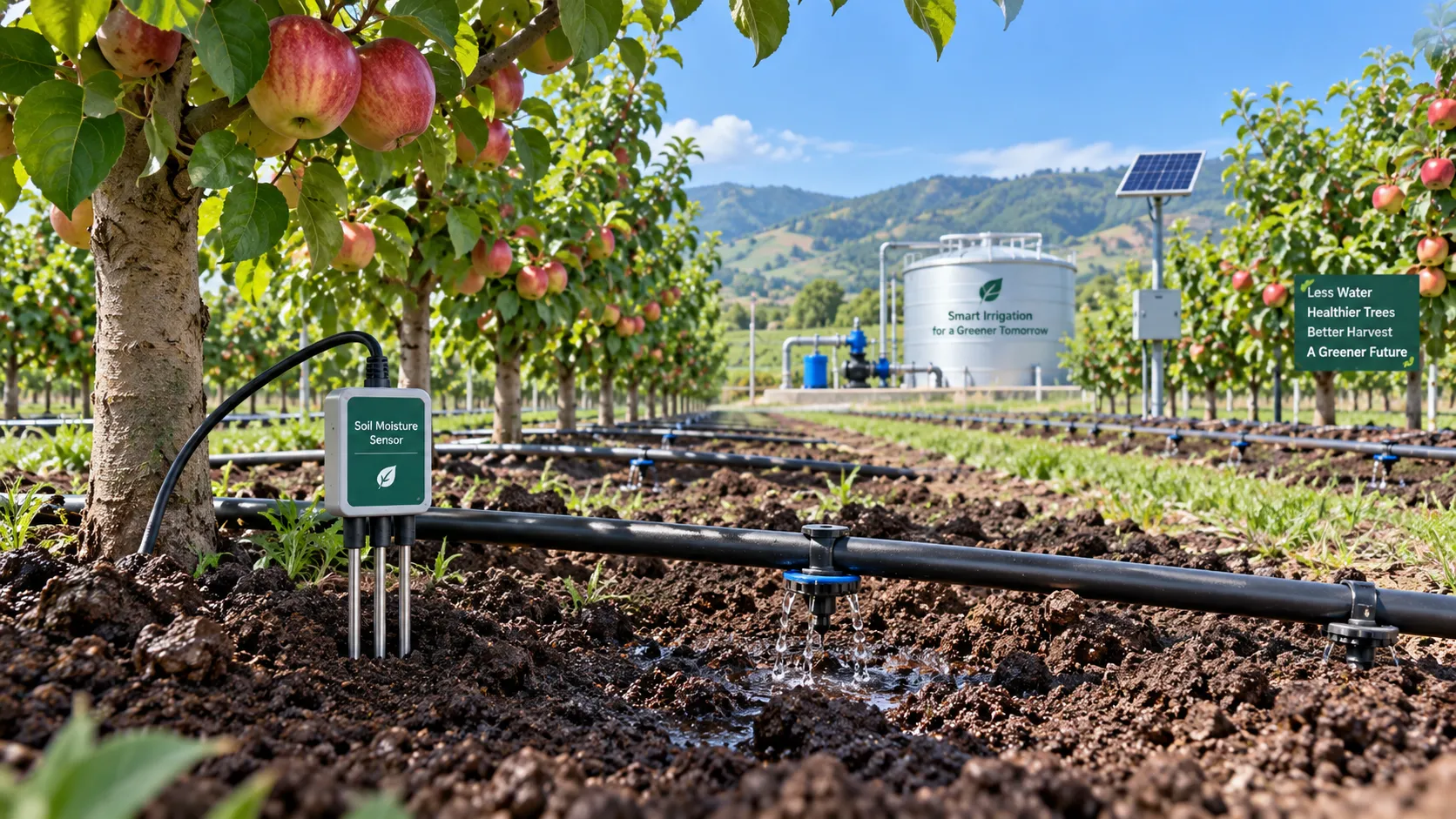
Orchard Water Management: Using Soil Moisture Data to Schedule Irrigation
Agricultural water management for orchards made practical: use soil moisture data to optimize irrigation timing, protect yield, reduce costs, and improve resilience.
Tractor Chassis Price: What Buyers Should Compare Beyond the Initial Quote
Tractor chassis price is only the start. Compare load capacity, compatibility, durability, and lifecycle costs to choose a reliable, high-value chassis.
Related News
- 00
0000-00
Drip vs. Micro-Sprinkler Irrigation: Which System Fits Your Orchard? - 00
0000-00
How to Select Smart Irrigation Valves for Multi-Zone Water Management? - 00
0000-00
Automated Water-Saving Irrigation: How to Cut Water Use Without Reducing Crop Yields - 00
0000-00
How to Evaluate Drip Irrigation System Manufacturers for Large Farm Projects - 00
0000-00
Wireless Agricultural Automation for Remote Irrigation and Field Monitoring
Popular Tags
Hydrological Resource Strategist
Weekly Insights
Stay ahead with our curated technology reports delivered every Monday.