
Red Sea Crisis Escalates: War Risk Premium for Agri-Irrigation Pumps Hits 320%
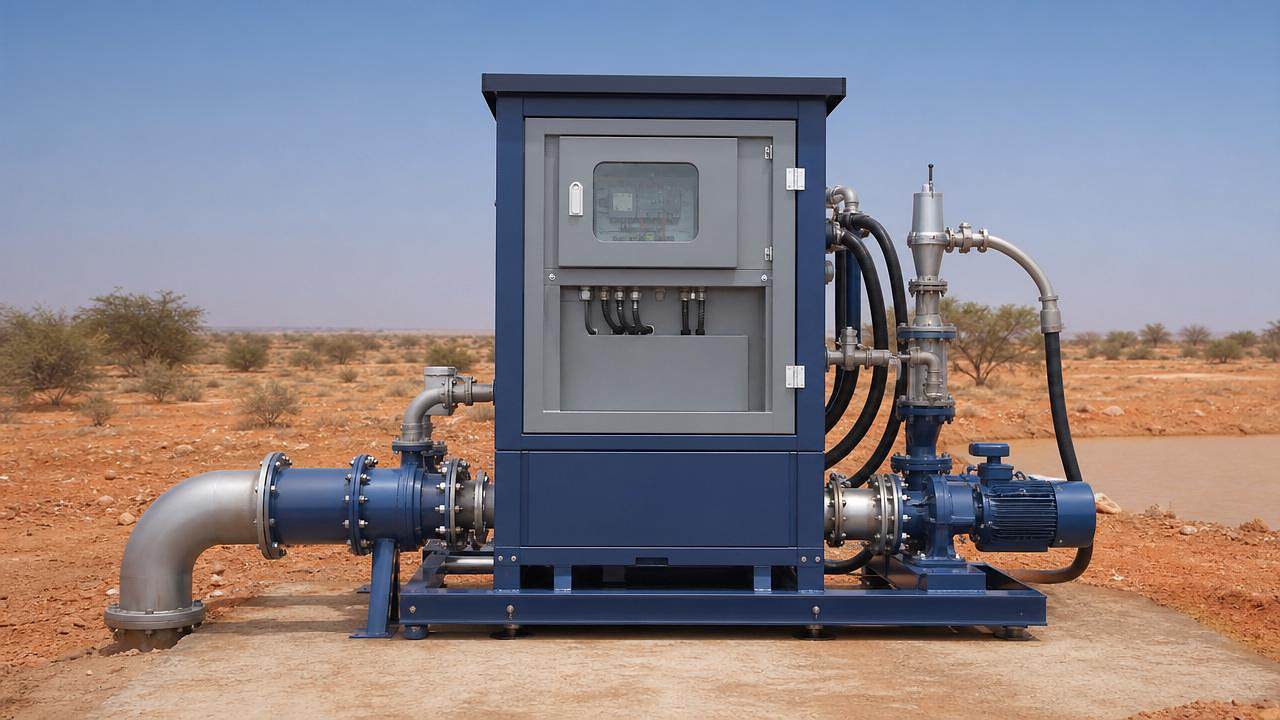




Red Sea Crisis Escalates: War Risk Premium for Agri-Irrigation Pumps Hits 320%
On May 17, 2026, the International Group of P&I Clubs (IGP&I) implemented a sharp upward revision to war risk insurance premiums for agricultural smart irrigation pump stations (HS Code 8413.70) transiting the Gulf of Aden–Red Sea corridor. The new rate—320%—takes immediate effect and directly impacts export cost structures, delivery timelines, and pricing strategies across global agri-tech supply chains serving the Middle East, Eastern Africa, and Southern Europe.
Event Overview
The International Group of P&I Clubs (IGP&I) issued an emergency notice on May 16, 2026, announcing the increase of war risk insurance premium rates for maritime transport of agricultural smart irrigation pump stations (HS Code 8413.70) along the Gulf of Aden–Red Sea route from 185% to 320%. The adjustment became effective at 00:00 local time on May 17, 2026. No further conditions, exemptions, or phased implementation were specified in the notice.
Impact on Key Industry Segments
Direct Export Trading Firms: These firms face immediate pressure on landed cost calculations and contract profitability. Since war risk premiums are typically borne by the seller under CIF or C&F terms—and commonly passed through in quotations—the 135-percentage-point surge forces rapid repricing for pending orders and renegotiation of open contracts. Margins on high-value, low-volume shipments (e.g., containerized pump station skids) are especially vulnerable.
Raw Material Procurement Entities: While not directly liable for marine insurance, procurement teams must now factor in longer lead times and higher buffer costs. Suppliers with exposure to Red Sea transit—particularly those sourcing castings, motors, or control units from EU or Turkish manufacturers—report extended quotation validity windows and tighter advance payment requirements, reflecting upstream risk transfer.
Manufacturing & Assembly Enterprises: For OEMs integrating imported components into final pump station systems, the premium hike compounds existing logistics volatility. Production planning cycles are disrupted when sea freight cost uncertainty exceeds ±15% week-on-week. Some manufacturers report delaying final assembly until alternative routing (e.g., Cape of Good Hope or air-freight partials) is confirmed—a move that adds 8–12 days to order-to-delivery timelines.
Supply Chain Service Providers: Freight forwarders, customs brokers, and trade finance institutions are adjusting service parameters. Forwarders now require explicit war risk allocation clauses in booking confirmations; banks have tightened LC issuance criteria for shipments flagged as Red Sea-bound; and third-party inspection agencies note increased demand for pre-shipment verification—especially for HS 8413.70 consignments destined to Yemen, Somalia, or Djibouti.
Key Considerations and Recommended Actions
Review Incoterms and Contractual Liability Clauses
Exporters should audit all active sales contracts to identify where war risk liability resides—particularly for deliveries scheduled between May 17 and August 2026. Where CIF or C&F terms apply, sellers may need to invoke force majeure or renegotiate premium-sharing arrangements, provided contractual language permits.
Evaluate Alternative Routing and Multimodal Options
Although Cape of Good Hope rerouting adds ~10 days and ~18% in base freight, early data from liner operators suggest this path remains viable for non-time-critical shipments. A hybrid approach—sea freight to Piraeus or Trieste, followed by rail to Jordan or Egypt—is gaining traction among EU-based distributors, though it requires updated customs classification support for intra-EU/EEA transit.
Strengthen Real-Time Insurance Cost Monitoring
Given IGP&I’s precedent of quarterly reassessment (next review expected August 2026), enterprises should integrate live war risk premium feeds—where available—into ERP procurement and quoting modules. Manual updates no longer suffice when rate changes can occur with <24-hour notice.
Editorial Perspective / Industry Observation
Observably, this premium jump reflects more than localized security deterioration: it signals a structural recalibration of risk pricing for dual-use agri-infrastructure in contested maritime zones. Unlike bulk commodities, smart irrigation pump stations carry embedded software, IoT connectivity, and precision hydraulics—attributes increasingly scrutinized under evolving export control frameworks. Analysis shows the 320% figure aligns closely with IGP&I’s 2025 stress-test model for ‘Tier-2 Critical Infrastructure’ cargo—not merely general cargo. This suggests future adjustments may extend beyond geography to include technology classification triggers.
Conclusion
This development underscores how geopolitical friction in strategic waterways is no longer a peripheral logistics concern but a core input in product costing, market segmentation, and R&D roadmaps for agritech exporters. Rather than treating the Red Sea premium as a temporary surcharge, forward-looking firms are beginning to treat it as a persistent cost-of-market-access variable—similar to tariff differentials or carbon border adjustments. A rational conclusion is that resilience will derive less from route diversification alone and more from modular design, regionalized assembly, and dynamic pricing architectures.
Source Attribution
Primary source: International Group of P&I Clubs (IGP&I), Emergency Notice No. IG/2026/05-16, issued May 16, 2026. Available via IGP&I members’ secure portal (access restricted to member clubs and authorized correspondents).
Ongoing monitoring advised for: (1) potential extension of the 320% rate to adjacent HS codes (e.g., 8413.10, 8413.30); (2) national-level responses from China’s Ministry of Commerce or MIIT regarding export credit insurance coverage adjustments; (3) updates from the Joint War Committee (JWC) on formal ‘war risk zone’ boundary revisions post-May 2026.
Related News
GPS-Guided Farm Machinery: Where It Delivers Measurable Field Efficiency Gains
Agri-mechanization GPS guided systems deliver measurable field efficiency gains through reduced overlap, precise planting, smarter inputs, and reliable farm data.

How Sensor Feedback Enables Accurate Variable-Rate Fertilization in Field Conditions
Precision fertilization systems with sensor feedback improve variable-rate accuracy by verifying flow, managing latency, and ensuring reliable field application.
How to Select Precision Crop Protection Equipment for Variable Field Conditions
Precision crop protection equipment selection made simple: compare terrain, canopy, weather, control accuracy, and data workflows for reliable applications.

When Does Agricultural Machinery Leasing Cost Less Than Owning Equipment?
Agricultural machinery leasing can lower farm costs when use is seasonal or uncertain. Compare utilization, maintenance, cash flow, and risk to make a smarter equipment decision.
How to Evaluate Precision Fertilization System Suppliers for Farm-Scale Deployment
Precision fertilization systems suppliers: learn how to compare accuracy, integration, uptime, service, and total cost for confident farm-scale deployment.

ISOBUS for Smart Agriculture: How It Connects Tractors, Implements, and Farm Data
ISOBUS for smart agriculture connects tractors, implements, terminals, and farm data—helping growers improve precision, documentation, and smarter field decisions.
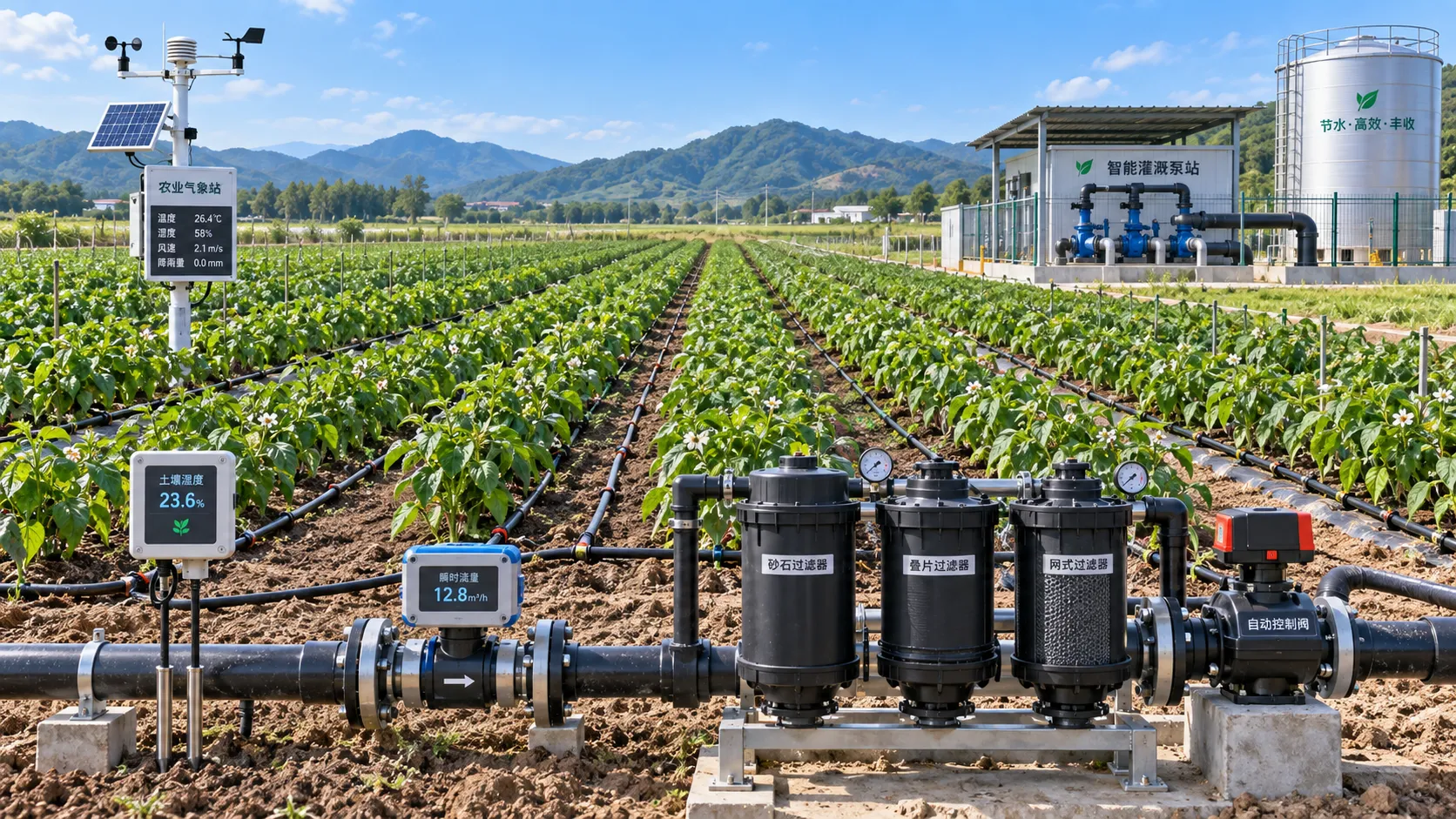
Automated Water-Saving Irrigation: How to Cut Water Use Without Reducing Crop Yields
Automated water-saving irrigation helps farms cut water use, protect crop yields, improve scheduling, and gain reliable control with sensors, flow monitoring, and smart zones.

Selecting Grain Farm Equipment by Acreage, Crop Mix, and Harvest Window
Agricultural equipment selection for grain farming: match machinery to acreage, crop mix, and harvest windows to improve uptime, efficiency, and returns.
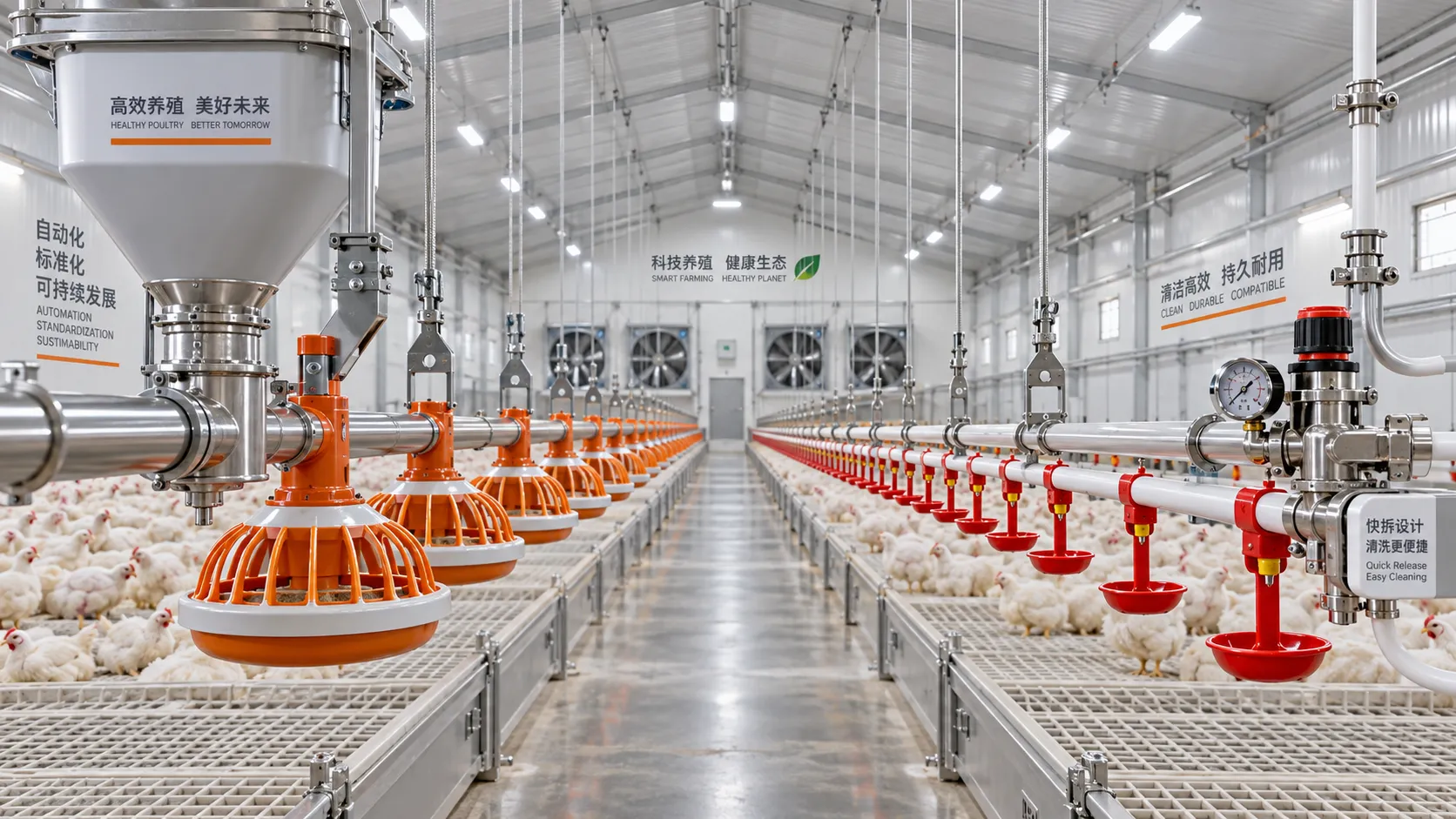
Poultry Equipment Selection: Evaluating Durability, Cleaning, and Compatibility
Poultry equipments selection guide: evaluate durability, cleaning access, and system compatibility to improve hygiene, reduce downtime, and support efficient flock management.
Related News
- 00
0000-00
Automated Water-Saving Irrigation: How to Cut Water Use Without Reducing Crop Yields - 00
0000-00
How to Evaluate Drip Irrigation System Manufacturers for Large Farm Projects - 00
0000-00
Wireless Agricultural Automation for Remote Irrigation and Field Monitoring - 00
0000-00
Designing Water-Saving Drip Irrigation Systems for High-Value Orchards - 00
0000-00
How to Choose Irrigation Solutions for Arid Regions Based on Water Source and Crop Needs
Popular Tags
Hydrological Resource Strategist
Weekly Insights
Stay ahead with our curated technology reports delivered every Monday.