
FDA Sets PFAS Limit for Center Pivot Water Interface
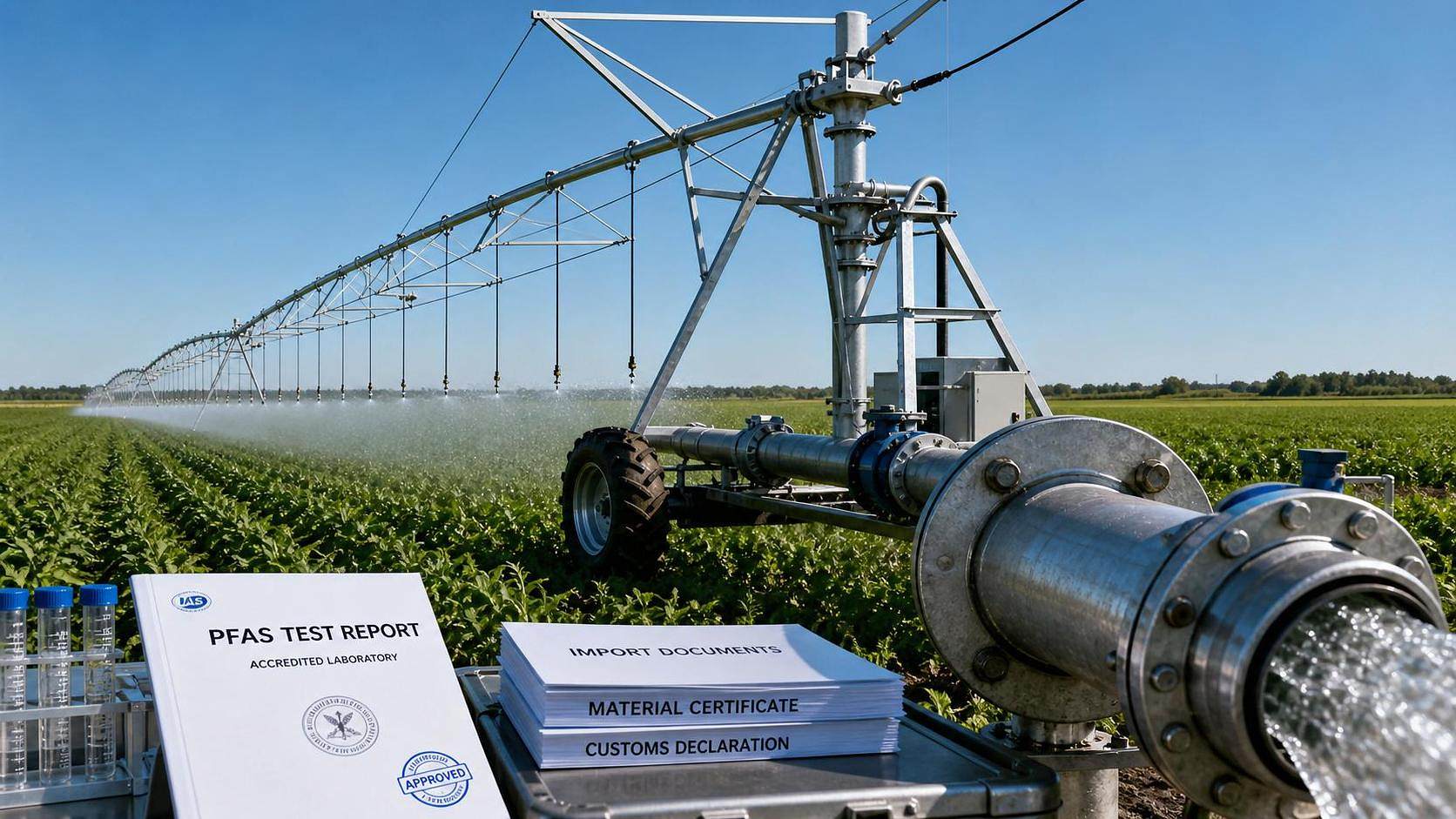




On July 4, 2026, the U.S. Food and Drug Administration (FDA) issued Agricultural Water Safety Bulletin #2026-07, introducing a new compliance point for Center Pivot Systems used in circulating irrigation water. The update brings PFAS migration in that water stream under mandatory monitoring and ties imported equipment to supporting interface test documentation. For manufacturers, import-facing suppliers, buyers, testing providers, and delivery teams, the issue is not only the numerical limit itself but the fact that water-equipment material interaction has now become part of the compliance discussion.
What the bulletin changes in practical terms
According to the information provided, the FDA bulletin was released on July 4, 2026. It sets a PFAS migration limit of 0.05 ng/L for circulating irrigation water in Center Pivot Systems and makes this item subject to mandatory monitoring. The standard is described as not being directed at the equipment itself. However, all imported Center Pivot Systems manufacturers are required to provide PFAS leaching test reports covering the irrigation water and equipment material interface. Without that documentation, the product is regarded as not meeting the Safe Use Statement requirement.
Where the pressure is likely to appear across the chain
Imported equipment programs face a documentation threshold
From an industry perspective, imported Center Pivot Systems programs are the most directly exposed because the stated requirement is linked to imported manufacturers. The likely impact falls on product release files, shipment support documents, and pre-delivery compliance review. What deserves closer attention is whether existing technical files already include interface-level PFAS leaching evidence or whether additional testing packages will be needed before supply can proceed smoothly.
Procurement teams may need to revisit supplier qualification
Analysis shows that buyers and procurement functions may need to shift attention from equipment specifications alone to the supporting compliance package behind those specifications. If the Safe Use Statement depends on interface test reporting, supplier selection, contract review, and bid evaluation may increasingly depend on whether such records can be produced in a usable form. The practical issue is less about redesign assumptions at this stage and more about whether documentation readiness becomes a purchasing condition.
Testing and compliance service providers may see a narrower but more technical role
Observably, laboratories and compliance support firms may be drawn more deeply into the irrigation water-equipment interface question. The relevant business impact would center on test scope definition, report format, and the ability to align evidence with the stated PFAS migration limit. Since the provided information does not include execution detail, it would be premature to assume a settled testing pathway, but the need for interpretable documentation is already visible in the bulletin summary.
Delivery and after-sales teams may need clearer traceability support
For supply-chain coordinators and after-sales service teams, the rule change may affect handover records, product traceability, and responses to customer compliance inquiries. If documentation is missing or inconsistent, delivery timing and acceptance discussions could become more complicated. The key operational concern is whether shipments can be backed by a complete file set tied to the specific water-material interface requirement now referenced by the FDA bulletin.
What companies should watch now
Check whether current files match the new interface requirement
Analysis shows that companies dealing in imported Center Pivot Systems should first review whether their existing technical and compliance files include PFAS leaching reports specifically covering the irrigation water-equipment material interface. The summary provided does not indicate that general product documentation would be sufficient on its own.
Track how the Safe Use Statement is applied in practice
What deserves closer attention is the compliance meaning attached to the Safe Use Statement requirement. The information provided confirms that missing reports lead to a failure against that requirement, but it does not describe the detailed enforcement pathway. Companies should therefore monitor how this wording is reflected in operational review, customer requests, and formal submission expectations.
Prepare for procurement and delivery document updates
Observably, firms may need to update supplier questionnaires, bid documents, purchase specifications, and shipment checklists so that PFAS interface reporting is not handled as an afterthought. This is especially relevant where compliance documents are assembled late in the order cycle, because missing reports could affect acceptance readiness even if equipment production itself is complete.
Keep execution assumptions conservative until more detail appears
From an industry perspective, the current information supports immediate attention but not overstatement. The bulletin establishes a clear monitoring item and a clear reporting expectation for imported manufacturers, yet the provided summary does not include additional detail on implementation format, review timing, or market-wide treatment. Companies should act on document preparedness while keeping room for later clarification.
Why this reads as an execution signal, not just a technical note
Analysis shows that this development is more than a narrow water-quality reference because it connects a quantified PFAS threshold with an import-related documentation obligation. That combination matters to the market because it shifts the issue from broad environmental concern into a file-based compliance checkpoint. At the same time, it is more appropriate to understand this as an execution signal with details still to be watched, rather than as a fully mapped regulatory regime with all downstream procedures already visible.
How to interpret the development at this stage
The most balanced reading is that the FDA bulletin marks a concrete change in compliance expectations around Center Pivot Systems used with circulating irrigation water, especially for imported products. The immediate implication is documentary and procedural: interface PFAS evidence now carries practical weight. Observably, the market should treat this as a real rule-development milestone, while reserving judgment on final execution patterns until further detail, market response, and application practice become clearer.
Source basis and follow-up points
This article is based on the user-provided news title, event date, and event summary. For developments of this kind, relevant source categories commonly include official notices, regulator releases, trade or customs authority information, industry association updates, standards documents, and reporting by established professional media. A specific official source link was not provided in the input, so that point still requires verification. Further observation should focus on any later policy detail, certification or compliance interpretation, tender document changes, industry feedback, and how companies implement the reporting requirement in practice.
Related News

Tractor Chassis Price: What Buyers Should Compare Beyond the Initial Quote
Tractor chassis price is only the start. Compare load capacity, compatibility, durability, and lifecycle costs to choose a reliable, high-value chassis.
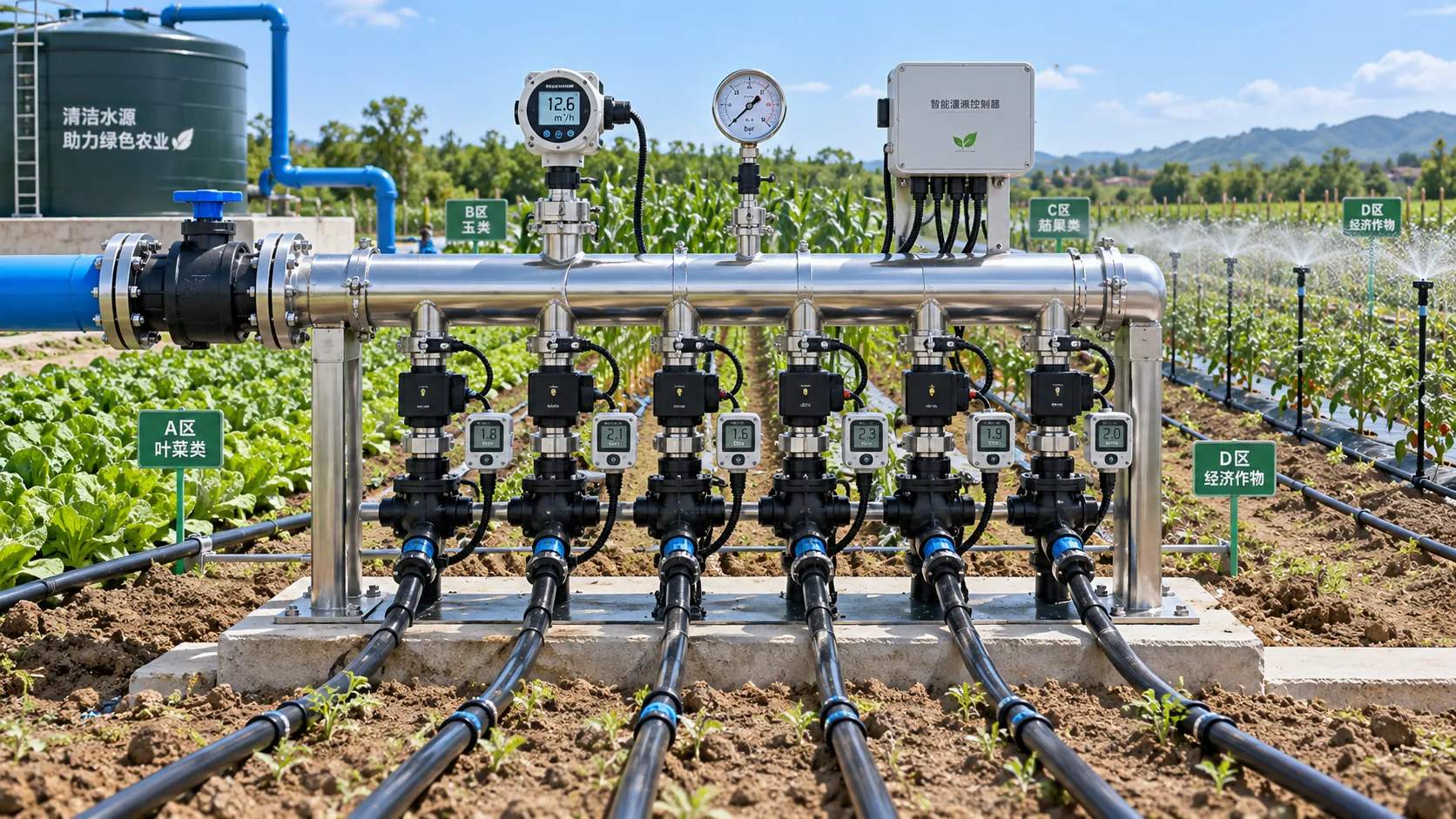
How to Select Smart Irrigation Valves for Multi-Zone Water Management?
Intelligent irrigation systems valves: learn how to match smart valves with multi-zone flow, pressure, control, feedback, and communication needs for reliable water management.
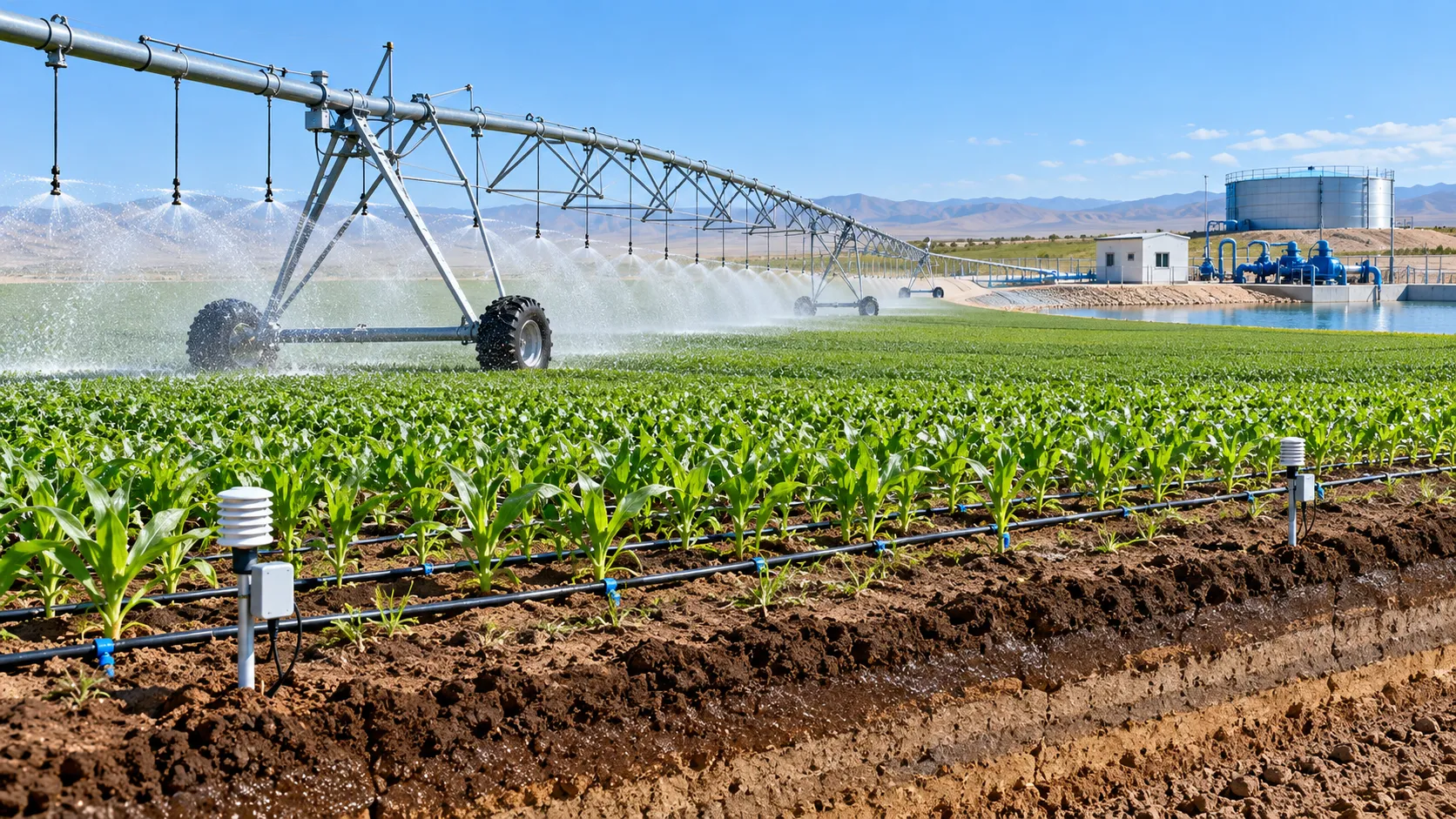
Climate-Smart Farming for Drought: A Practical Plan for Protecting Yields
Climate-smart farming for drought: build smarter water budgets, protect critical crop stages, improve irrigation uniformity, and safeguard yields with practical field-proven strategies.

How Digital Agriculture Platforms Turn Field Data Into Better Input Decisions
Digital agriculture platforms turn field data into smarter fertilizer, water, seed, and equipment decisions—helping farms cut risk, improve margins, and scale sustainability.

GPS-Guided Farm Machinery: Where It Delivers Measurable Field Efficiency Gains
Agri-mechanization GPS guided systems deliver measurable field efficiency gains through reduced overlap, precise planting, smarter inputs, and reliable farm data.

How Sensor Feedback Enables Accurate Variable-Rate Fertilization in Field Conditions
Precision fertilization systems with sensor feedback improve variable-rate accuracy by verifying flow, managing latency, and ensuring reliable field application.

How to Select Precision Crop Protection Equipment for Variable Field Conditions
Precision crop protection equipment selection made simple: compare terrain, canopy, weather, control accuracy, and data workflows for reliable applications.

When Does Agricultural Machinery Leasing Cost Less Than Owning Equipment?
Agricultural machinery leasing can lower farm costs when use is seasonal or uncertain. Compare utilization, maintenance, cash flow, and risk to make a smarter equipment decision.

How to Evaluate Precision Fertilization System Suppliers for Farm-Scale Deployment
Precision fertilization systems suppliers: learn how to compare accuracy, integration, uptime, service, and total cost for confident farm-scale deployment.
Related News
- 00
0000-00
India Opens Duty Relief for Center Pivot Imports - 00
0000-00
What to Check Before Working With a Precision Irrigation Systems Factory - 00
0000-00
Red Sea Shock Tightens CPS Capacity, Rates Jump 37% - 00
0000-00
Red Sea Escalation Tightens Center Pivot Shipping - 00
0000-00
Red Sea Disruption Extends Center Pivot Transit to 42 Days
Popular Tags
Hydrological Resource Strategist
Weekly Insights
Stay ahead with our curated technology reports delivered every Monday.