
EU CE Rule Takes Effect for GPS Guidance Systems
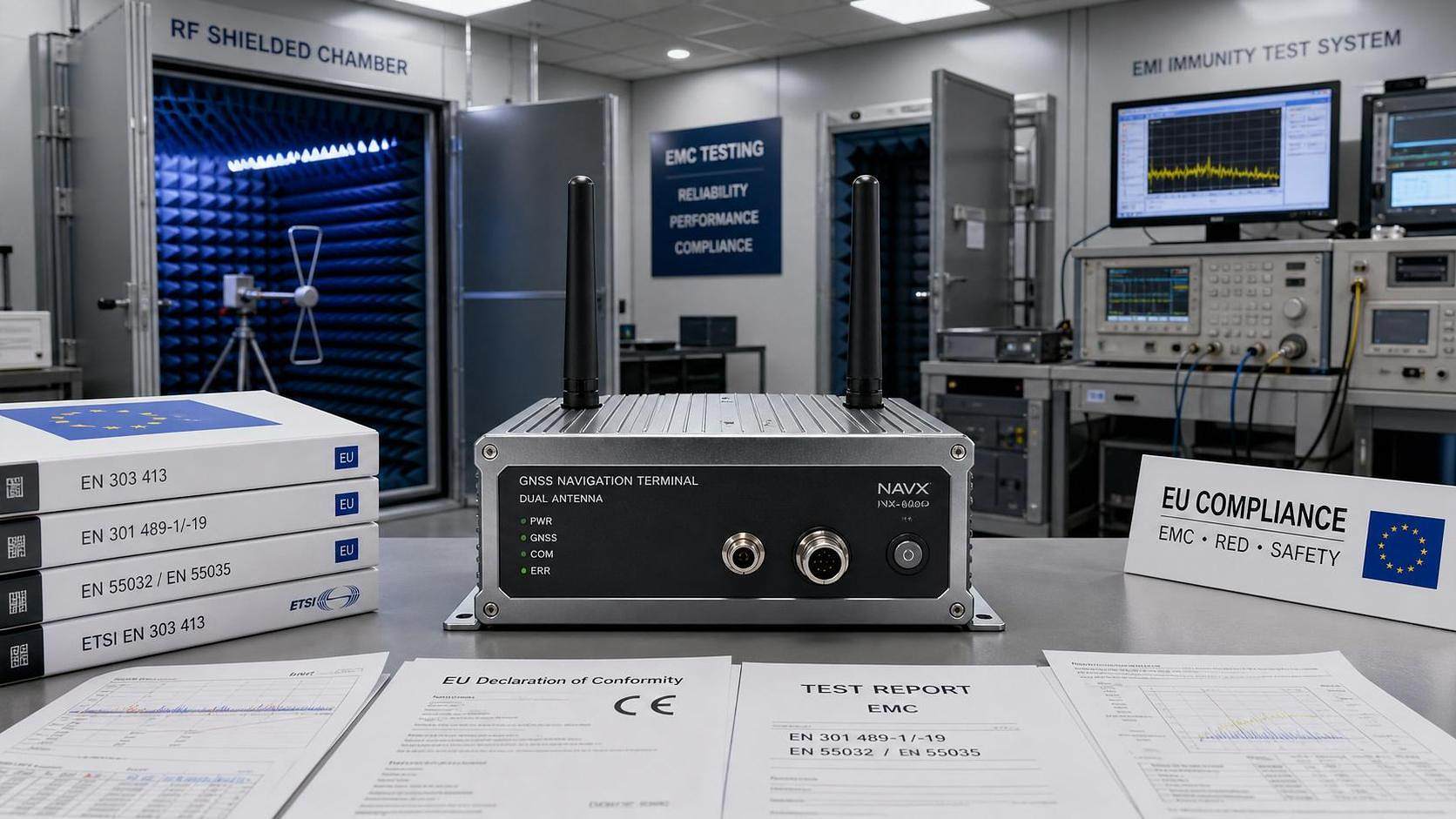




On June 29, 2026, the Official Journal of the European Union published Regulation No. 2026/1183, setting a new CE compliance threshold for GPS Guidance Systems entering the EU market. From January 1, 2027, these products must meet EN 17892:2026, including three newly stated technical requirements covering dual-antenna hot standby switching, radio-frequency shielding effectiveness of at least 99.97%, and EMI transient immunity of at least 4.5kV/m. For manufacturers, exporters, certification participants, and buyers handling EU-bound deliveries, this is worth close attention because it changes not only the technical compliance baseline but also the timing and preparation needed for certification and shipment planning.
What the new EU requirement now confirms
The confirmed facts are limited but clear. The OJEU issued Regulation No. 2026/1183 on June 29, 2026. The rule makes EN 17892:2026 mandatory for all GPS Guidance Systems entering the EU market starting on January 1, 2027. The standard introduces three explicit indicators: dual-antenna hot standby switching, RF shielding effectiveness of at least 99.97%, and EMI transient immunity of at least 4.5kV/m. The input also states that certification bodies in China have opened expedited channels, while the average certification cycle has extended to eight weeks.
Where the pressure is likely to appear first
EU-bound manufacturers and exporters face a narrower compliance window
From an industry perspective, the most direct impact falls on companies shipping GPS Guidance Systems into the EU. The reason is straightforward: market entry after January 1, 2027 is tied to passing EN 17892:2026. That means product compliance, technical documentation, testing preparation, and shipment scheduling become more closely linked. What deserves closer attention is whether current product configurations and existing test evidence can support the new indicators, because a gap here could affect readiness for export and delivery timing.
Certification and testing workflows are becoming a delivery factor
Certification-related businesses and testing service providers are also directly affected because the stated average certification cycle has lengthened to eight weeks even with expedited channels available in China. Analysis shows this turns certification from a documentation step into a scheduling constraint. For companies preparing EU shipments, the practical issue is not only whether testing can be completed, but whether product launch, batch release, and customer delivery commitments can still align with the revised timeline.
Procurement and buyer-side specifications may need earlier review
Buyers, sourcing teams, and channel participants handling EU-market products may also feel the change through qualification and acceptance requirements. Observably, once EN 17892:2026 becomes mandatory, product selection, supplier screening, and tender or technical specification alignment may need to reflect the new standard and its three hard thresholds. The operational impact is likely to appear in pre-shipment checks, supplier evidence requests, and the timing of order placement for products intended for the EU market.
Supply chain coordination may shift from cost timing to compliance timing
For supply chain service providers and delivery coordinators, the issue is less about the rule text itself and more about execution sequencing. Analysis shows that when a mandatory standard adds specific technical thresholds and the certification cycle extends, lead-time planning may need to account for testing readiness, document completion, and certification queue timing before export arrangements are finalized. This can affect handoff points between manufacturing, compliance, and outbound logistics.
What companies should watch in the coming months
Check whether current products map to the three stated thresholds
Companies dealing with EU-bound GPS Guidance Systems should first review whether existing models, configurations, and technical files align with the newly stated requirements for dual-antenna hot standby switching, RF shielding effectiveness, and EMI transient immunity. This is not yet a conclusion about product pass or fail; it is a practical screening step based on the confirmed rule change.
Rework certification schedules around the longer cycle
The opening of expedited channels in China does not remove the fact that the average certification cycle has extended to eight weeks. What deserves closer attention is how this affects production release plans, shipment booking, and contract delivery dates. Where certification timing sits late in the project flow, companies may need to reassess sequence risk in order processing and export preparation.
Review technical documents and buyer-facing compliance materials
For teams involved in sales support, tenders, exports, and after-sales traceability, it is prudent to examine whether technical documentation, testing records, declarations, and customer-submitted compliance materials will need updates tied to EN 17892:2026. The input does not provide detailed document rules, so this should be treated as a compliance watchpoint rather than an established documentation outcome.
Monitor how the rule is reflected in execution practice
Observably, the regulation is already a confirmed rule change, but companies should continue watching how certification practice, procurement requirements, and market-facing technical specifications begin to reflect it. This is especially relevant for businesses whose commercial timelines extend into 2027 and whose deliveries depend on uninterrupted EU market access.
How this development is best understood now
Analysis shows this is better understood as an implemented compliance signal rather than a preliminary policy discussion. The regulation has been published, the effective market-entry date is defined, and the mandatory standard is named together with three explicit technical indicators. At the same time, it is still appropriate to keep part of the market response under observation, particularly how certification timing, commercial specifications, and execution practices settle around the new requirement. In that sense, the rule is already real, while parts of its operational impact still need to be tracked through implementation.
A practical reading for the market
The immediate significance of this development is not simply that a new EU rule exists, but that compliance for GPS Guidance Systems is moving toward a more explicit and test-driven threshold ahead of 2027. For affected businesses, the current priority is to read it as a concrete market-entry condition with direct implications for certification timing, delivery planning, and technical readiness. A measured view is more appropriate than overstatement: the rule change is confirmed, its commercial effects are plausible across several business stages, and the exact pace of market adjustment still warrants continued observation.
Basis of this article and points that still require verification
This article is generated from the user-provided news title, event date, and event summary. For developments of this type, commonly relevant source categories include official announcements, regulator publications, trade or customs authority information, industry association updates, standard-setting documents, and reporting by established professional media. A specific official source link was not provided in the input, so the exact source document path still requires ongoing verification. It also remains necessary to monitor later details such as implementation language, certification interpretation, changes in tender specifications, market feedback, and how companies execute against the new requirement in practice.
Related News

How Sensor Feedback Enables Accurate Variable-Rate Fertilization in Field Conditions
Precision fertilization systems with sensor feedback improve variable-rate accuracy by verifying flow, managing latency, and ensuring reliable field application.

How to Select Precision Crop Protection Equipment for Variable Field Conditions
Precision crop protection equipment selection made simple: compare terrain, canopy, weather, control accuracy, and data workflows for reliable applications.

When Does Agricultural Machinery Leasing Cost Less Than Owning Equipment?
Agricultural machinery leasing can lower farm costs when use is seasonal or uncertain. Compare utilization, maintenance, cash flow, and risk to make a smarter equipment decision.

How to Evaluate Precision Fertilization System Suppliers for Farm-Scale Deployment
Precision fertilization systems suppliers: learn how to compare accuracy, integration, uptime, service, and total cost for confident farm-scale deployment.

ISOBUS for Smart Agriculture: How It Connects Tractors, Implements, and Farm Data
ISOBUS for smart agriculture connects tractors, implements, terminals, and farm data—helping growers improve precision, documentation, and smarter field decisions.

Automated Water-Saving Irrigation: How to Cut Water Use Without Reducing Crop Yields
Automated water-saving irrigation helps farms cut water use, protect crop yields, improve scheduling, and gain reliable control with sensors, flow monitoring, and smart zones.

Selecting Grain Farm Equipment by Acreage, Crop Mix, and Harvest Window
Agricultural equipment selection for grain farming: match machinery to acreage, crop mix, and harvest windows to improve uptime, efficiency, and returns.

Poultry Equipment Selection: Evaluating Durability, Cleaning, and Compatibility
Poultry equipments selection guide: evaluate durability, cleaning access, and system compatibility to improve hygiene, reduce downtime, and support efficient flock management.

How to Select Heavy-Duty Farm Implements for High-Acreage, High-Horsepower Operations
Heavy duty farm implements: learn how to match draft, hydraulics, hitch capacity, frame strength, and field conditions for reliable high-acreage performance.
Related News
- 00
0000-00
ISOBUS for Smart Agriculture: How It Connects Tractors, Implements, and Farm Data - 00
0000-00
How North American Farms Can Select Crop Monitoring Systems by Acreage and Connectivity - 00
0000-00
How Tractor Intelligence Systems Improve Field Efficiency and Input Accuracy - 00
0000-00
Which equipment for larger fields maintains accuracy at higher speeds? - 00
0000-00
What should a digital ag platform integrate before a farm-wide rollout?
Popular Tags
Tractor Power Architect
Weekly Insights
Stay ahead with our curated technology reports delivered every Monday.