
ACCC Opens GPS Guidance Systems Dumping Review





On July 8, 2026, the Australian Competition and Consumer Commission (ACCC) announced an anti-dumping review covering GPS Guidance Systems originating in China. The immediate compliance signal is the 72-hour deadline for involved companies to submit pricing, cost, and related-party transaction data online. For exporters, Australian distributors, procurement teams, and channel operators tied to agricultural navigation equipment, this is not just a procedural notice: it creates near-term pressure on trade documentation, pricing transparency, and supply planning because the review may change the current anti-dumping duty range of 8.2% to 14.7%.
What the ACCC has formally announced
The confirmed facts are limited but commercially significant. According to the information provided, the ACCC issued a notice on July 8, 2026, launching an anti-dumping review concerning GPS Guidance Systems from China. Companies involved in the case are required to submit online responses within 72 hours, including data on prices, costs, and related-party transactions. The review may result in an adjustment to the existing anti-dumping duty levels, which currently range from 8.2% to 14.7%.
Where the pressure is likely to appear first
Export-side documentation and pricing records
From an industry perspective, Chinese manufacturers and export-side trading entities are the first group likely to feel the impact because the review directly asks for price, cost, and related-party transaction data. The practical issue is not only the existence of the review, but the short response window. What deserves closer attention is whether internal records, transaction structures, and supporting materials can be organized quickly enough to match the regulator's data expectations.
Australian procurement and distribution planning
Australian distributors and procurement teams may be affected because any adjustment to the current duty range can change landed cost assumptions. That would feed into resale pricing, margin planning, and channel profitability. In practical terms, businesses in the distribution layer should watch for changes in purchasing cost calculations, supplier communication, and the treatment of existing and near-term orders.
Supply-chain coordination around delivery and commercial terms
Supply-chain service providers and contract managers may also need to pay attention. Analysis shows that when a trade review focuses on pricing and related-party transactions, commercial paperwork, shipment timing, and contract terms often become more sensitive from a compliance standpoint. While no new execution rule beyond the review notice has been confirmed here, affected businesses should closely track whether documentation requirements or commercial review practices tighten during the process.
What companies should monitor now
Whether data readiness matches the response deadline
Observably, the 72-hour filing requirement is the most immediate operational issue in this case. Companies tied to the reviewed products should check whether price records, cost breakdowns, and related-party transaction materials can be assembled in a form suitable for online submission within that timeframe. This is a current compliance question, not a later-stage policy issue.
How duty uncertainty affects current quotations and purchase decisions
It is more appropriate to understand this as a live trade-risk signal for current business discussions. Because the review may alter the existing duty range, exporters and buyers should pay attention to how quotations, procurement timing, and channel margin assumptions are being set while the outcome remains unresolved.
Whether internal and external documents are commercially consistent
Analysis shows that consistency across transaction-related materials deserves close review when a proceeding specifically asks for pricing, cost, and related-party data. Companies should pay attention to the alignment of internal records, commercial terms, and submission materials. The input does not provide detailed filing standards, so this should be treated as a compliance observation rather than a confirmed procedural requirement beyond the announced data categories.
Subsequent wording from regulators and market-side responses
What deserves closer attention is the next round of official wording and market reaction. At this stage, the available information confirms the review and the filing timeline, but does not confirm any revised duty result. Businesses should therefore continue monitoring later official statements, execution language, and commercial responses from customers and distributors.
Why this reads as an execution signal, not a settled outcome
As an editorial observation, this development is better read as an active enforcement and review signal rather than a completed rule change. The reason is straightforward: the trade measure already exists, the review has now been initiated, and the short filing deadline indicates immediate procedural movement. At the same time, the final adjustment, if any, has not been established in the information provided. That means the market should treat this as a material compliance and pricing event, while avoiding assumptions about the eventual duty level.
How the market should interpret the notice at this stage
The industry significance of this notice lies in its combination of regulatory timing and commercial sensitivity. A review of this kind can affect more than customs treatment alone; it can influence procurement models, distributor margins, and the pace at which counterparties finalize orders. The most balanced reading for now is that this is a rule-execution development with immediate operational implications, but its longer-term commercial impact still depends on how the review proceeds and whether the current duty range is revised.
Basis of this article and follow-up points
This article is based on the user-provided news title, event date, and event summary. For developments of this type, relevant source categories often include official announcements, regulator publications, customs or trade authority information, industry association updates, standard-setting documents, and reporting by established business or trade media. No specific official source link was provided in the input, so the exact primary-link verification remains pending. Follow-up attention should remain on later regulatory detail, any clarified execution language, changes in procurement or tender documents, market feedback, and how affected companies carry out the required submissions.
Related News

How to Specify Combine Harvester Systems for High-Moisture Grain and Variable Field Conditions
Combine harvester systems for high-moisture grain: learn how to specify threshing, cleaning, headers, traction, and automation for reliable harvests in variable fields.

How to Compare Agricultural Equipment Platforms for Fleet Management and ROI
Agricultural equipment platform comparison: evaluate fleet data, maintenance, precision workflows, and ROI to choose a system that delivers measurable results.

Drip vs. Micro-Sprinkler Irrigation: Which System Fits Your Orchard?
Irrigation solution comparison for orchards: discover whether drip or micro-sprinklers best match your water, soil, roots, fertigation, and frost needs.
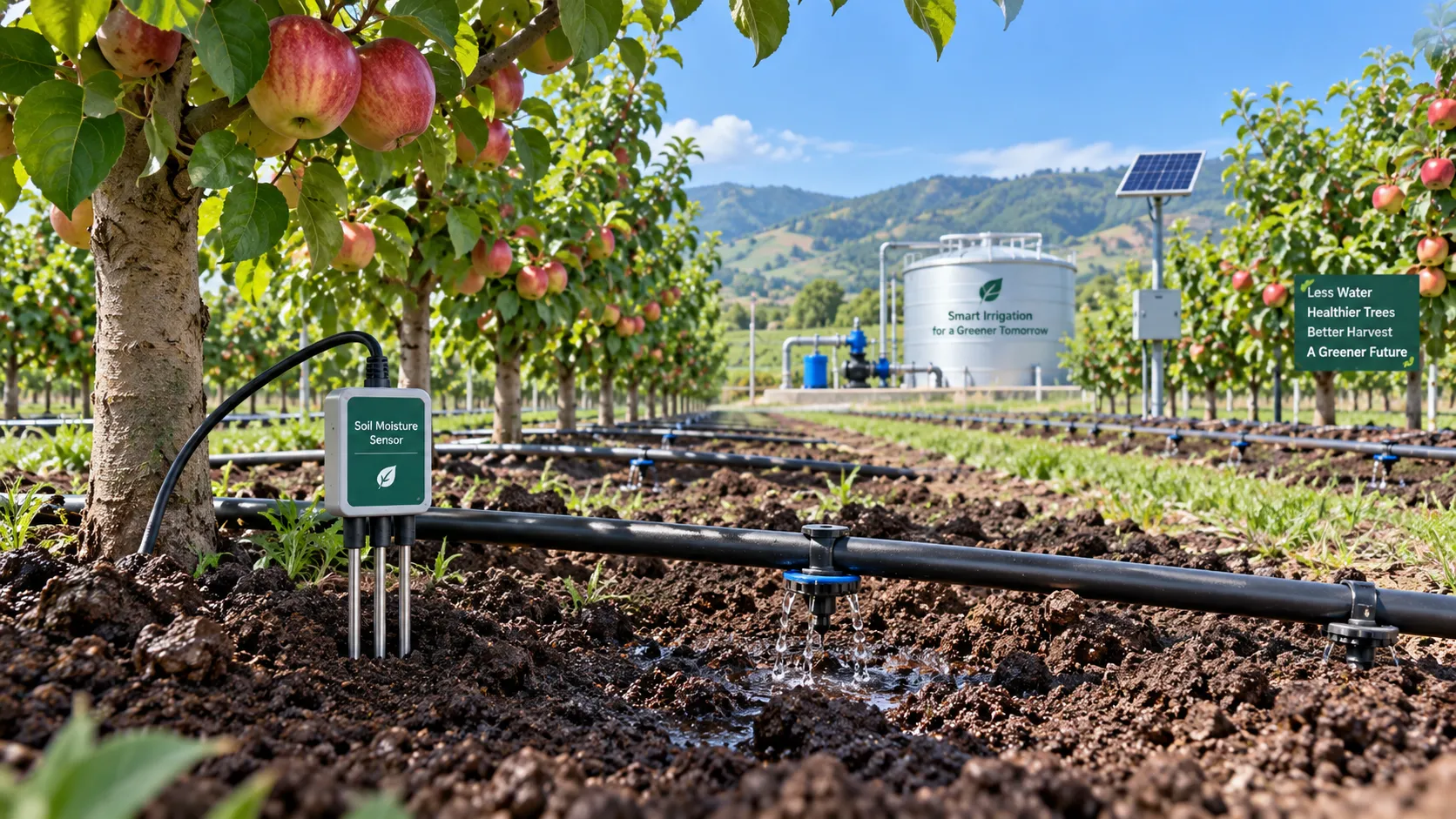
Orchard Water Management: Using Soil Moisture Data to Schedule Irrigation
Agricultural water management for orchards made practical: use soil moisture data to optimize irrigation timing, protect yield, reduce costs, and improve resilience.

Tractor Chassis Price: What Buyers Should Compare Beyond the Initial Quote
Tractor chassis price is only the start. Compare load capacity, compatibility, durability, and lifecycle costs to choose a reliable, high-value chassis.

How to Select Smart Irrigation Valves for Multi-Zone Water Management?
Intelligent irrigation systems valves: learn how to match smart valves with multi-zone flow, pressure, control, feedback, and communication needs for reliable water management.

Climate-Smart Farming for Drought: A Practical Plan for Protecting Yields
Climate-smart farming for drought: build smarter water budgets, protect critical crop stages, improve irrigation uniformity, and safeguard yields with practical field-proven strategies.

How Digital Agriculture Platforms Turn Field Data Into Better Input Decisions
Digital agriculture platforms turn field data into smarter fertilizer, water, seed, and equipment decisions—helping farms cut risk, improve margins, and scale sustainability.

GPS-Guided Farm Machinery: Where It Delivers Measurable Field Efficiency Gains
Agri-mechanization GPS guided systems deliver measurable field efficiency gains through reduced overlap, precise planting, smarter inputs, and reliable farm data.
Related News
- 00
0000-00
GPS-Guided Farm Machinery: Where It Delivers Measurable Field Efficiency Gains - 00
0000-00
ISOBUS for Smart Agriculture: How It Connects Tractors, Implements, and Farm Data - 00
0000-00
How North American Farms Can Select Crop Monitoring Systems by Acreage and Connectivity - 00
0000-00
How Tractor Intelligence Systems Improve Field Efficiency and Input Accuracy - 00
0000-00
Which equipment for larger fields maintains accuracy at higher speeds?
Popular Tags
Tractor Power Architect
Weekly Insights
Stay ahead with our curated technology reports delivered every Monday.