
WTO Cuts 2026 Global Agricultural Machinery Trade Growth to 1.9%





On March 19, 2026, the World Trade Organization (WTO) revised down its forecast for global agricultural machinery trade growth in 2026 to 1.9%—a sharp reduction from the earlier projection of 4.6%. This adjustment stems primarily from heightened logistics disruption linked to the Middle East conflict, particularly the 94% drop in vessel traffic through the Strait of Hormuz. The resulting rerouting via the Cape of Good Hope extends Asia–Europe shipping times by 10–14 days and triggers war-risk surcharges of USD 2,000–4,000 per container. These developments directly impact manufacturers, exporters, and distributors of self-propelled sprayers, center pivot irrigation systems, and other large-scale agricultural equipment.
Event Overview
On March 19, 2026, the WTO released a report lowering its 2026 global goods trade growth forecast to 1.9%, down from 4.6%. The revision attributes the downgrade chiefly to the Middle East conflict, which caused a 94% decline in transits through the Strait of Hormuz. As a result, vessels are diverting via the Cape of Good Hope, adding 10–14 days to Asia–Europe maritime transit times. Shipping lines have introduced war-risk surcharges ranging from USD 2,000 to USD 4,000 per twenty-foot equivalent unit (TEU). The report explicitly identifies self-propelled sprayers and center pivot systems as equipment categories facing elevated maritime cost and delivery uncertainty.
Which Subsectors Are Affected
Direct Exporters of Agricultural Machinery
Exporters of large-volume, high-value agricultural equipment—including self-propelled sprayers and center pivot irrigation systems—are directly exposed to both increased freight costs and extended lead times. Because these products typically ship fully assembled in 20- or 40-foot containers or on roll-on/roll-off (Ro-Ro) vessels, surcharges and schedule volatility significantly compress margins and complicate order fulfillment commitments.
Distributors and Channel Partners
Distributors managing regional inventories face greater difficulty aligning stock levels with demand due to unpredictable arrival windows. Extended transit durations reduce visibility into inventory replenishment cycles, increasing the risk of stockouts or overstocking—especially for time-sensitive seasonal deployments such as pre-planting irrigation setup or harvest-season spraying capacity.
Supply Chain and Logistics Service Providers
Freight forwarders, customs brokers, and multimodal integrators servicing agricultural equipment trade must now accommodate dynamic surcharge structures, revised documentation requirements for conflict-zone exposure, and tighter coordination windows across ports, inland transport, and last-mile delivery. Their service contracts and rate quotations require updated clauses addressing war-risk liability and delay contingency terms.
What Relevant Enterprises or Practitioners Should Monitor and Do Now
Track official updates from WTO, IMO, and major shipping alliances
Monitor for subsequent revisions to trade forecasts, maritime security advisories, or guidance on war-risk insurance frameworks issued by the International Maritime Organization (IMO) and carrier consortia. These may signal whether current surcharges and routing patterns represent short-term adjustments or structural shifts.
Assess exposure by equipment category, destination market, and shipment mode
Prioritize internal review of shipments involving self-propelled sprayers and center pivot systems destined for Europe, North Africa, or the Levant—markets most dependent on Hormuz-transited or Cape-rerouted services. Separate analysis should be conducted for containerized vs. Ro-Ro shipments, as surcharge applicability and delay profiles differ.
Review and adjust delivery commitments and inventory planning assumptions
Update delivery timelines in sales contracts and distributor agreements to reflect the new 10–14-day transit extension. Re-evaluate safety stock levels and reorder points using updated lead-time distributions—not historical averages—to maintain service-level integrity without excessive working capital lockup.
Engage proactively with carriers and insurers on surcharge transparency and coverage scope
Request written confirmation from carriers on how war-risk surcharges are calculated, billed, and reviewed. Similarly, verify with insurers whether existing marine cargo policies cover delays, demurrage, or consequential losses arising from conflict-related routing changes—coverage that is often excluded under standard clauses.
Editorial Perspective / Industry Observation
Observably, this WTO revision functions less as a finalized outcome and more as an early systemic signal: it reflects how geopolitical instability can rapidly propagate through physical infrastructure constraints—specifically maritime chokepoints—to recalibrate trade volume expectations across capital-intensive equipment segments. Analysis shows that the 1.9% figure does not yet incorporate potential secondary effects, such as delayed investment decisions by end-users awaiting equipment delivery or reduced tender activity in public-sector irrigation projects. From an industry perspective, the key implication lies not in the absolute growth number, but in the erosion of predictability—particularly for long-cycle procurement processes common in agricultural mechanization. Current conditions favor scenario-based planning over linear forecasting, especially for firms with exposure to multiple maritime corridors.
This development is best understood not as a one-off revision, but as a stress test revealing structural dependencies in global agri-machinery supply chains—dependencies that were previously masked by stable routing and predictable cost structures.
Conclusion
The WTO’s downward revision underscores how localized conflict can produce measurable, near-term trade impacts far beyond immediate geographic boundaries—particularly for bulky, low-frequency export items reliant on constrained maritime routes. For stakeholders in agricultural machinery trade, the priority is no longer just cost management, but resilience calibration: reassessing lead-time buffers, contract flexibility, and supplier diversification in light of persistent corridor vulnerability. This is not a temporary logistics hiccup, but a recalibration point for how trade reliability is measured and safeguarded.
Source Attribution
Main source: World Trade Organization (WTO), March 19, 2026 report on global trade growth forecasts.
Points requiring ongoing observation: evolution of war-risk surcharge structures, duration of Strait of Hormuz traffic reduction, and any formal guidance from IMO or carrier alliances on conflict-zone routing protocols.
Related News

Choosing a Digital Farming Platform Provider: Compatibility and Data Ownership
Compare digital farming platforms providers on equipment compatibility, data ownership, and export rights. Discover practical checks to avoid lock-in and choose with confidence.
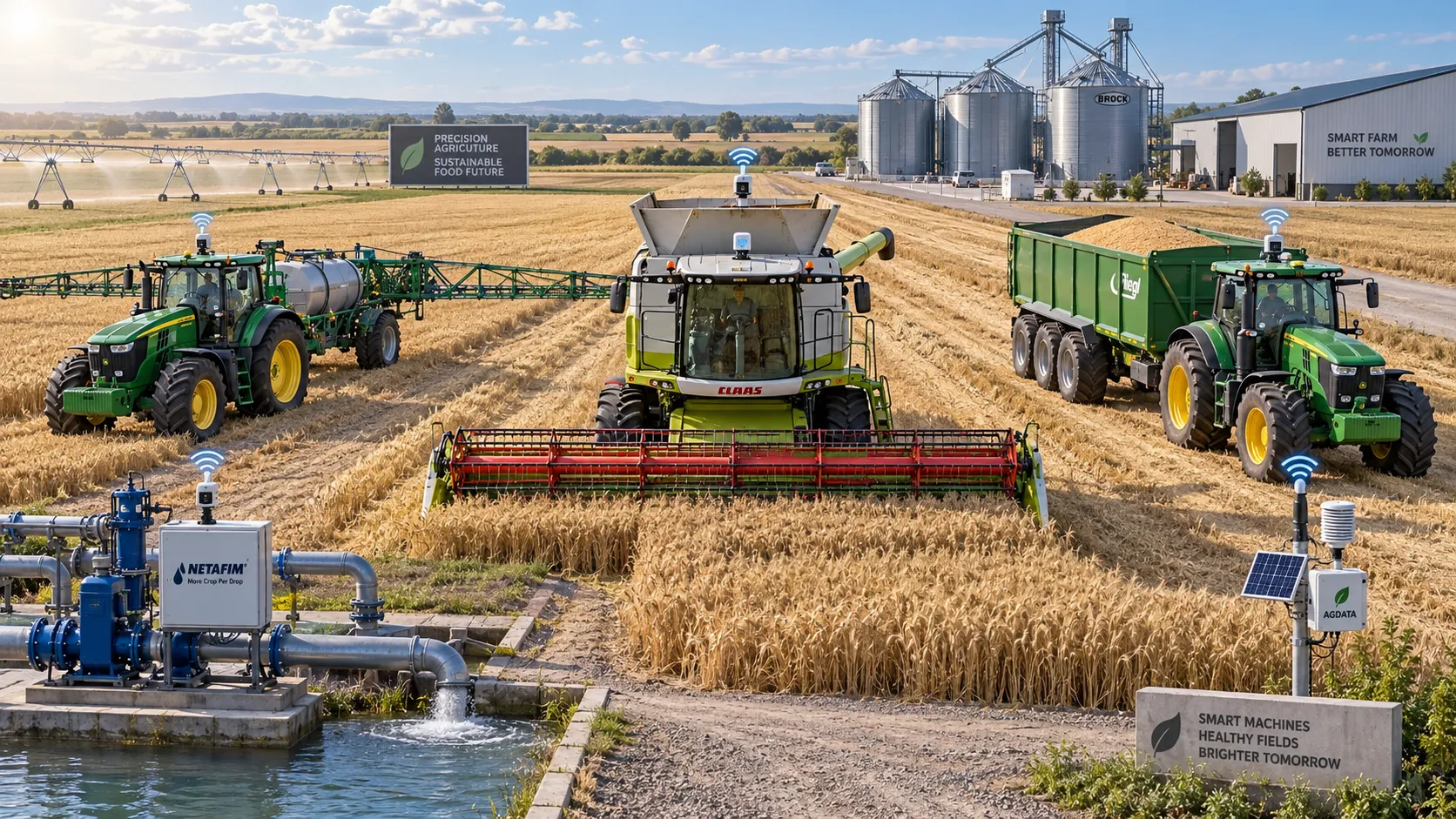
How Large-Scale Farm Telematics Cuts Downtime Across Mixed Fleets
Large-scale farm equipment telematics cuts mixed-fleet downtime with real-time alerts, smarter maintenance, and stronger operational control. Learn how to protect critical farm workflows.
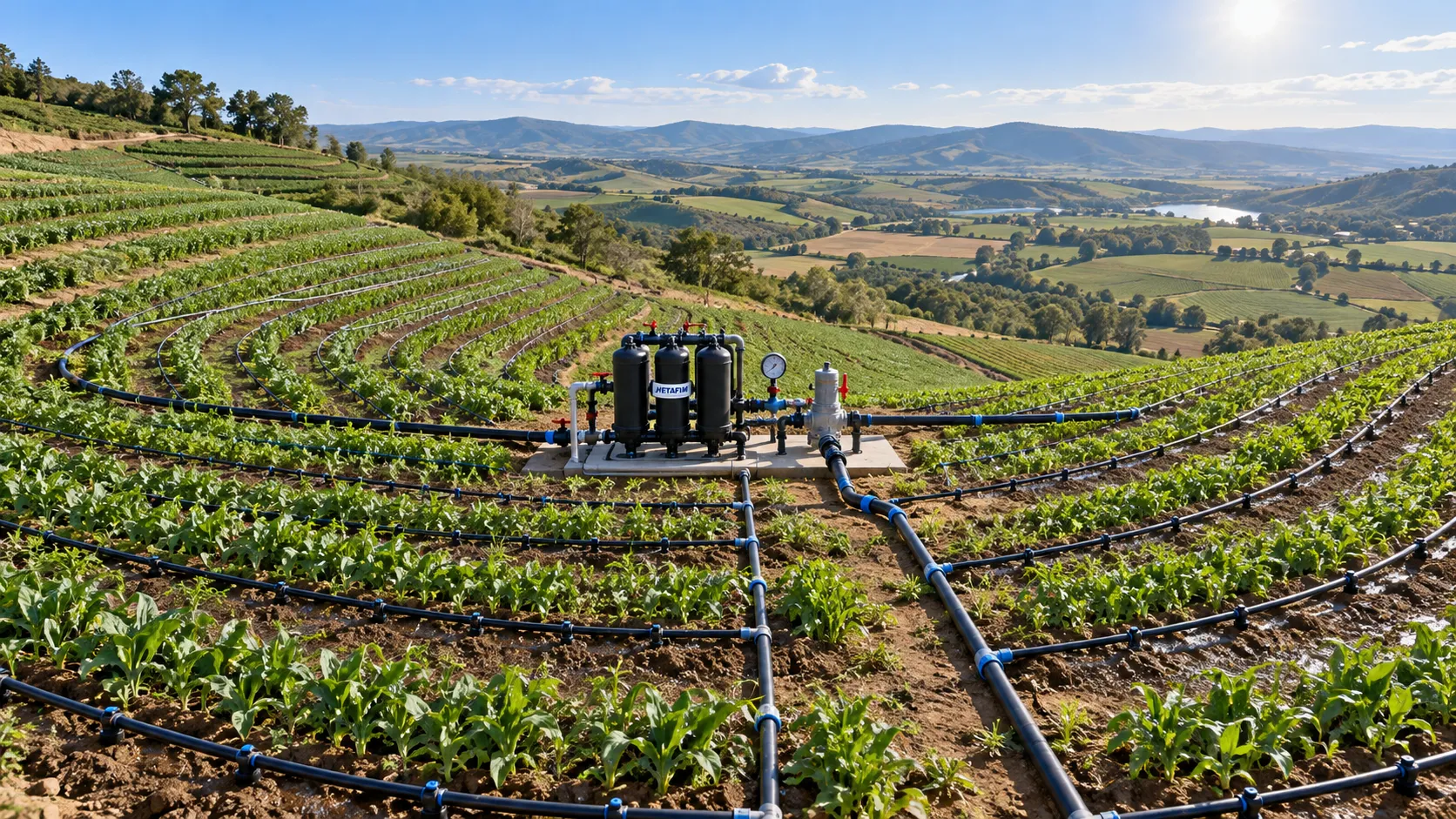
How to Size Low-Pressure Water-Saving Irrigation Systems for Uneven Fields
Low pressure water-saving irrigation systems for uneven fields: learn zoning, pressure mapping, pipe sizing, and pump selection to improve uniformity and reduce water waste.

Farm Machinery Sourcing: How to Vet Suppliers, Specs, and Lifecycle Costs
Farm machinery information for sourcing: learn to vet suppliers, compare specifications, control lifecycle costs, and secure reliable uptime for smarter equipment purchases.

Can hybrid propulsion systems reduce fuel use in farm machinery?
Hybrid propulsion systems for agricultural machinery can cut fuel use and boost productivity. Explore savings potential, key trade-offs, and smart investment factors.
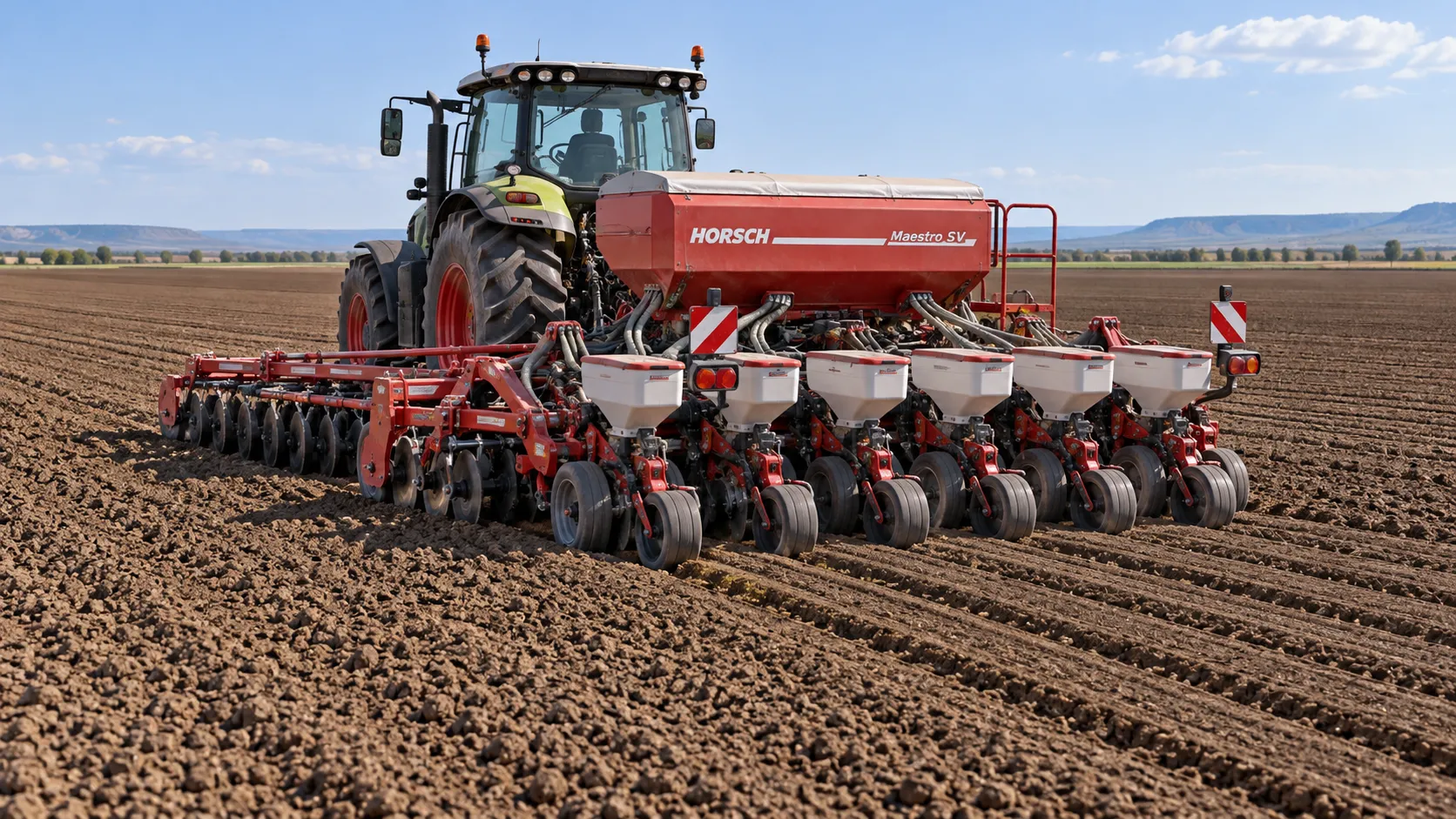
What to compare in integrated seeding combinations for heavy soils
Compare integrated seeding combinations for heavy soils: depth control, residue flow, consolidation, traction, and field capacity for more uniform crop establishment.
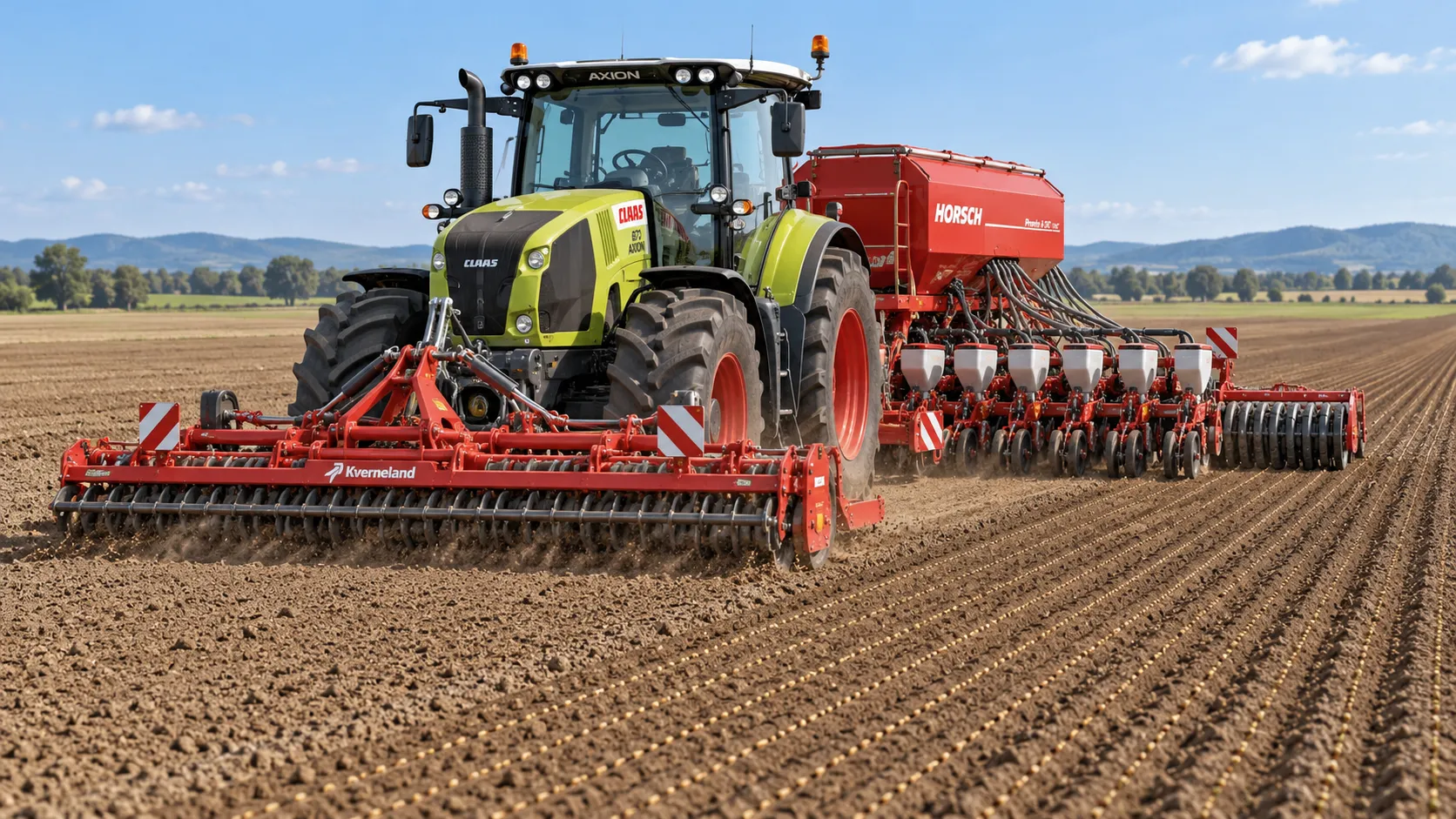
When an integrated seeding combination improves field efficiency
Integrated seeding combination improves field efficiency, protects planting windows, and balances speed with seedbed quality, tractor capacity, and reliable establishment.

Which costs matter most when calculating precision agriculture ROI?
Calculating ROI on precision agriculture equipment? Discover the costs that shape returns, from installation and subscriptions to downtime, labor, and data integration.

How to calculate ROI on precision agriculture equipment before buying
Calculating ROI on precision agriculture equipment: learn to assess total ownership costs, savings, payback, NPV, risks, and farm-scale value before you buy.
Related News
- 00
0000-00
Choosing a Digital Farming Platform Provider: Compatibility and Data Ownership - 00
0000-00
How Large-Scale Farm Telematics Cuts Downtime Across Mixed Fleets - 00
0000-00
How to Size Low-Pressure Water-Saving Irrigation Systems for Uneven Fields - 00
0000-00
Farm Machinery Sourcing: How to Vet Suppliers, Specs, and Lifecycle Costs - 00
0000-00
Can hybrid propulsion systems reduce fuel use in farm machinery?
Popular Tags
Industry Global
Weekly Insights
Stay ahead with our curated technology reports delivered every Monday.