
Turkmenistan Mandates BDS-3/GPS Dual-Mode GNSS for Imported Farm Machinery





Turkmenistan has updated its import standards for agricultural machinery, requiring北斗 (BDS-3) and GPS L5 dual-mode satellite navigation as a mandatory configuration for imported tractors, self-propelled sprayers, and combine harvesters — effective 1 August 2026. This regulatory shift directly affects manufacturers, exporters, distributors, and certification service providers engaged in the agricultural equipment trade with Turkmenistan, signaling a tightening of technical compliance requirements in a previously less-regulated market.
Event Overview
On 27 May 2026, the State Standardization Institute of Turkmenistan issued Technical Regulation Amendment No. TM-2026/05. The amendment stipulates that, starting 1 August 2026, all imported tractors, self-propelled sprayers, and grain combine harvesters must be equipped with a certified BDS-3/GPS L5 dual-mode GNSS receiver module. Devices featuring only a single GNSS system will not be registered. Each unit must also pass a 72-hour continuous positioning drift test using Turkmenistan’s local GNSS reference station network, with root-mean-square (RMS) error not exceeding 2.5 cm.
Industries Affected by This Regulation
Manufacturers of Agricultural Machinery
Manufacturers supplying to Turkmenistan must redesign or reconfigure navigation systems on applicable models. The requirement applies specifically to three machine categories — not to auxiliary equipment or aftermarket kits — meaning OEM-level integration is necessary. Impact includes revised bill-of-materials, firmware validation, and potential delays in model homologation.
Exporters and Trading Companies
Exporters handling shipments to Turkmenistan face heightened pre-shipment verification responsibilities. Non-compliant units risk rejection at customs or registration denial post-import. Since registration is required prior to market entry, failure to meet the GNSS specification may halt sales cycles entirely for affected product lines.
Certification and Compliance Service Providers
Third-party testing and certification bodies authorized for Turkmenistani conformity assessment must now validate dual-mode GNSS functionality and conduct the mandated 72-hour drift test. This introduces new test protocols and infrastructure demands — particularly access to Turkmenistan’s national GNSS reference station network, which is not publicly accessible outside official channels.
Distributors and Aftermarket Suppliers
Distributors cannot retrofit non-compliant machines post-import; the regulation explicitly requires factory-installed, certified modules. As a result, inventory planning must align strictly with pre-registered, compliant SKUs. Aftermarket GNSS upgrade services are excluded from compliance pathways under current wording.
What Enterprises and Practitioners Should Monitor and Do Now
Track official implementation guidance and test protocol documentation
The amendment references Turkmenistan’s local GNSS reference station network but does not publish technical access procedures or test lab accreditation criteria. Enterprises should monitor updates from the State Standardization Institute and engage with Turkmenistani customs or technical regulators for clarification before initiating certification applications.
Verify model-level compliance for the three specified machinery types
The mandate applies exclusively to tractors, self-propelled sprayers, and grain combine harvesters — not to seeders, tillage equipment, or irrigation systems. Companies should audit their export portfolios to identify which SKUs fall within scope and prioritize those for hardware revision or re-certification.
Distinguish between regulatory signal and operational readiness
While the effective date is fixed (1 August 2026), no public information confirms whether testing infrastructure and registration workflows are fully operational. Analysis shows this requirement functions more as a forward-looking policy signal than an immediately executable process — early engagement with local authorities remains critical to assess actual rollout timing.
Prepare for extended lead times in registration and shipment scheduling
Integrating certified dual-mode receivers, validating firmware across operating conditions, and completing the 72-hour drift test add minimum 4–6 weeks to standard type-approval timelines. Exporters should adjust order booking, production planning, and logistics coordination accordingly — especially for deliveries scheduled between June and September 2026.
Editorial Perspective / Industry Observation
Observably, this amendment reflects Turkmenistan’s broader effort to align agricultural mechanization standards with regional precision farming trends — particularly those seen in neighboring Kazakhstan and Uzbekistan. However, the strict RMS tolerance (2.5 cm) and mandatory use of national reference stations suggest an emphasis on sovereignty over GNSS data integrity, rather than purely performance-driven adoption. Analysis indicates the regulation is better understood as a technical sovereignty measure than a pure interoperability upgrade. It signals growing scrutiny of foreign-sourced navigation systems in critical infrastructure sectors — a trend likely to extend beyond agriculture in coming years. Continuous monitoring is warranted, as further amendments may expand scope or tighten validation methods.
This update marks a structural shift in Turkmenistan’s agricultural equipment import regime — moving from basic safety and emissions checks toward integrated digital system compliance. For industry stakeholders, it underscores that GNSS capability is no longer optional ancillary tech, but a core component of regulatory acceptance. Current understanding should treat this as a binding technical barrier with clear scope and timeline — not a provisional guideline or pilot initiative.
Source: State Standardization Institute of Turkmenistan — Technical Regulation Amendment No. TM-2026/05, published 27 May 2026.
Note: Implementation details — including accredited test laboratories, reference station access terms, and transitional arrangements for pending registrations — remain unconfirmed and require ongoing observation.
Related News
Choosing a Digital Farming Platform Provider: Compatibility and Data Ownership
Compare digital farming platforms providers on equipment compatibility, data ownership, and export rights. Discover practical checks to avoid lock-in and choose with confidence.
How Large-Scale Farm Telematics Cuts Downtime Across Mixed Fleets
Large-scale farm equipment telematics cuts mixed-fleet downtime with real-time alerts, smarter maintenance, and stronger operational control. Learn how to protect critical farm workflows.
How to Size Low-Pressure Water-Saving Irrigation Systems for Uneven Fields
Low pressure water-saving irrigation systems for uneven fields: learn zoning, pressure mapping, pipe sizing, and pump selection to improve uniformity and reduce water waste.

Farm Machinery Sourcing: How to Vet Suppliers, Specs, and Lifecycle Costs
Farm machinery information for sourcing: learn to vet suppliers, compare specifications, control lifecycle costs, and secure reliable uptime for smarter equipment purchases.
What to compare in integrated seeding combinations for heavy soils
Compare integrated seeding combinations for heavy soils: depth control, residue flow, consolidation, traction, and field capacity for more uniform crop establishment.
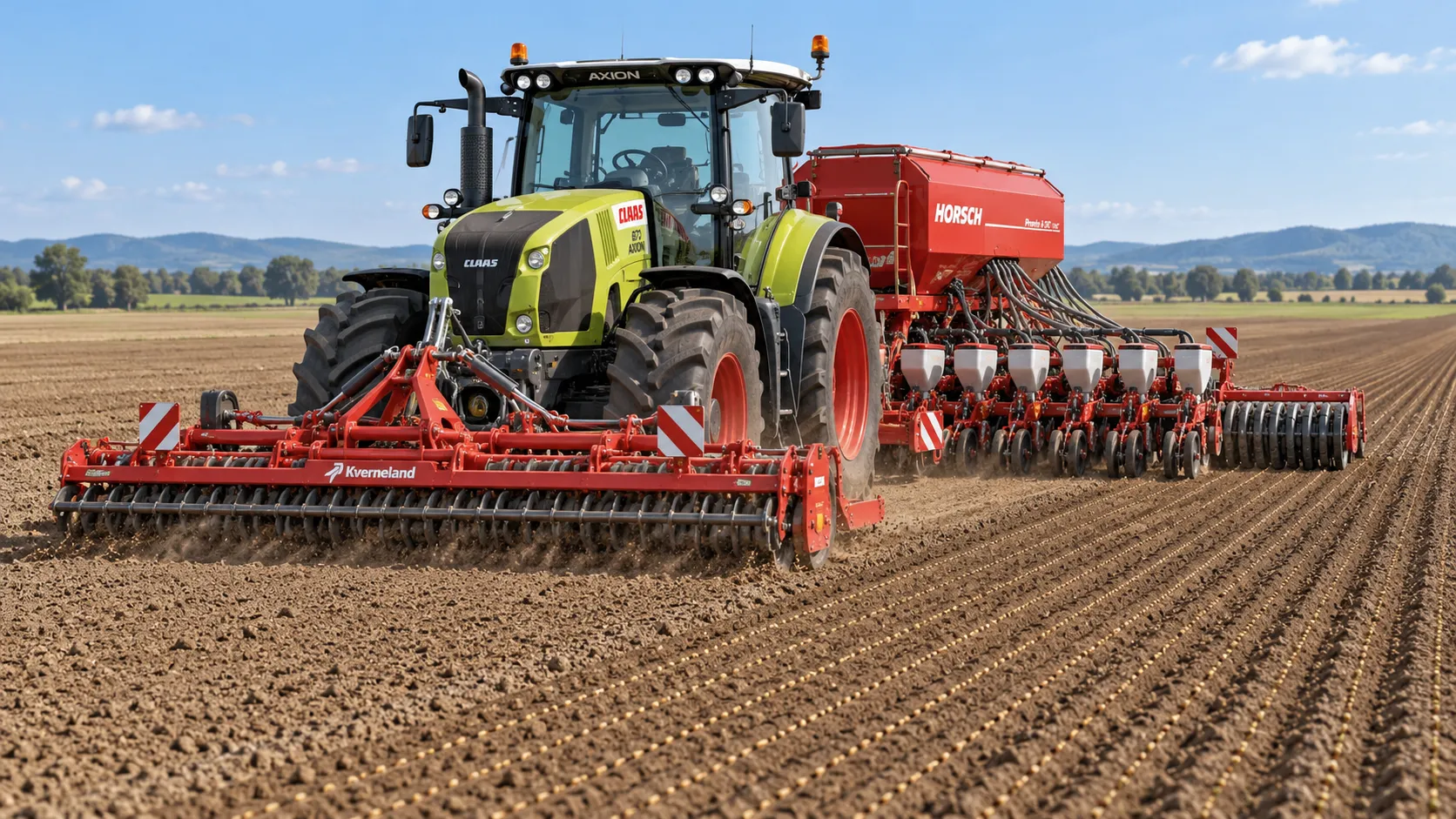
When an integrated seeding combination improves field efficiency
Integrated seeding combination improves field efficiency, protects planting windows, and balances speed with seedbed quality, tractor capacity, and reliable establishment.
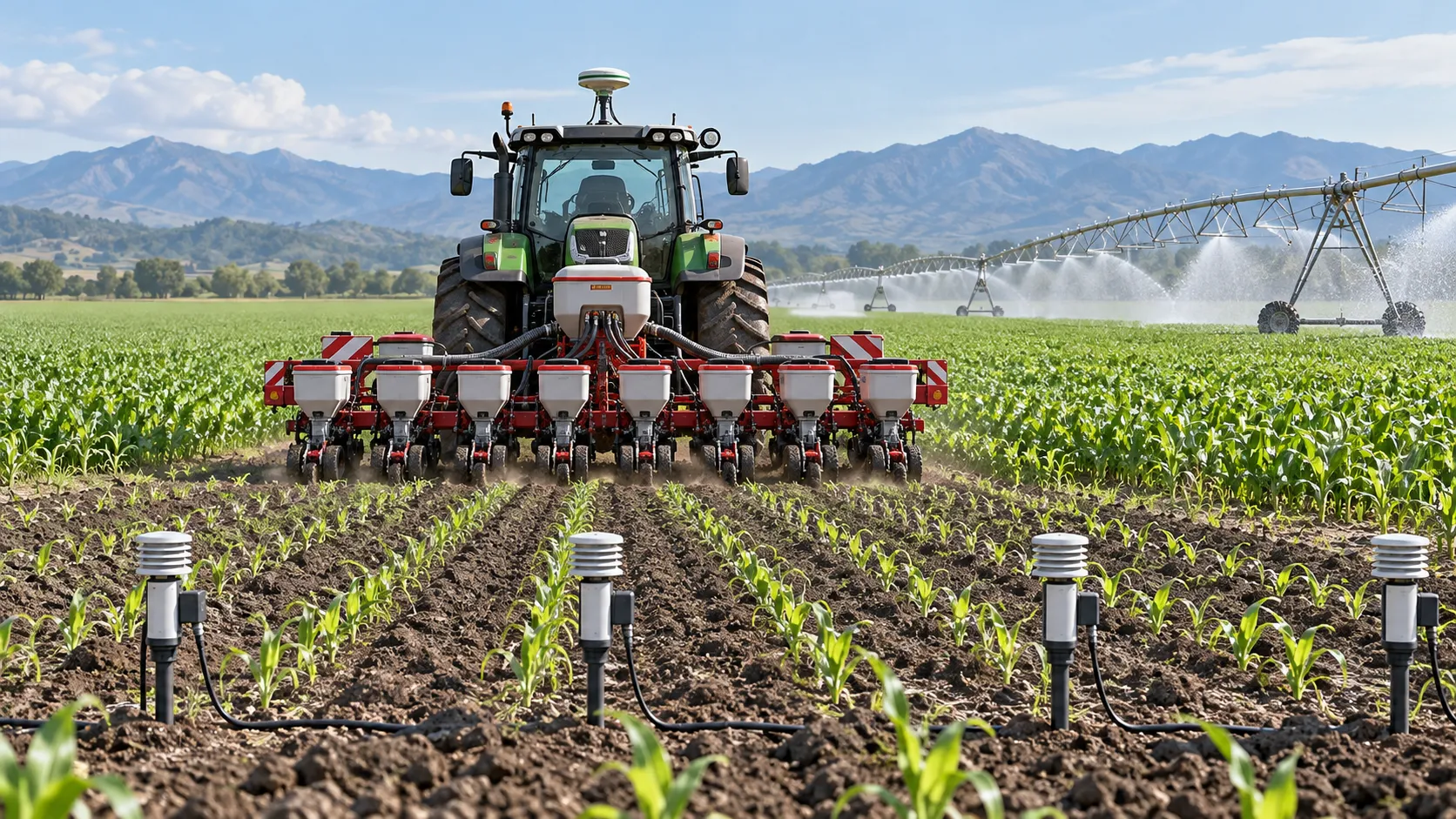
Which costs matter most when calculating precision agriculture ROI?
Calculating ROI on precision agriculture equipment? Discover the costs that shape returns, from installation and subscriptions to downtime, labor, and data integration.
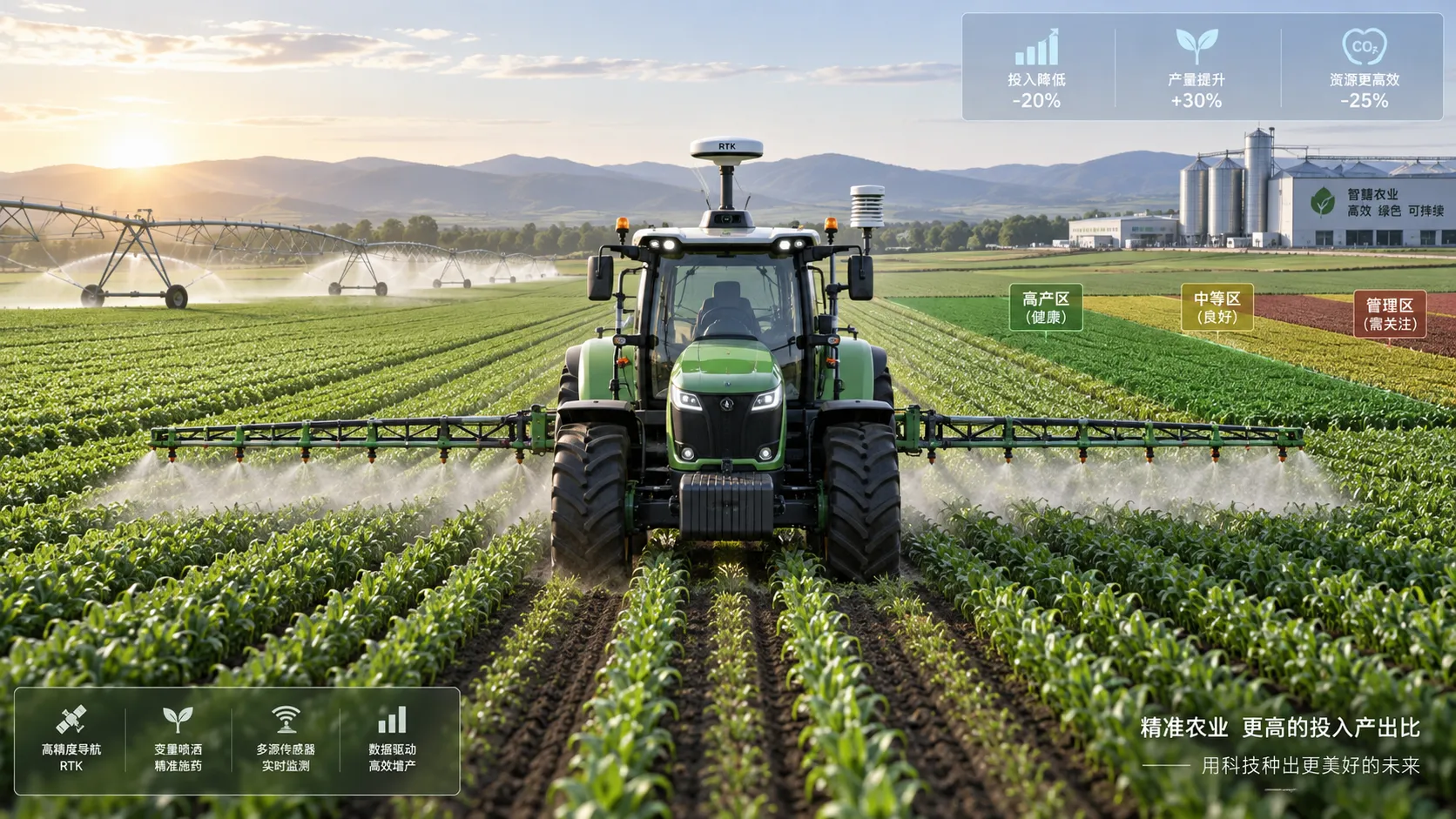
How to calculate ROI on precision agriculture equipment before buying
Calculating ROI on precision agriculture equipment: learn to assess total ownership costs, savings, payback, NPV, risks, and farm-scale value before you buy.
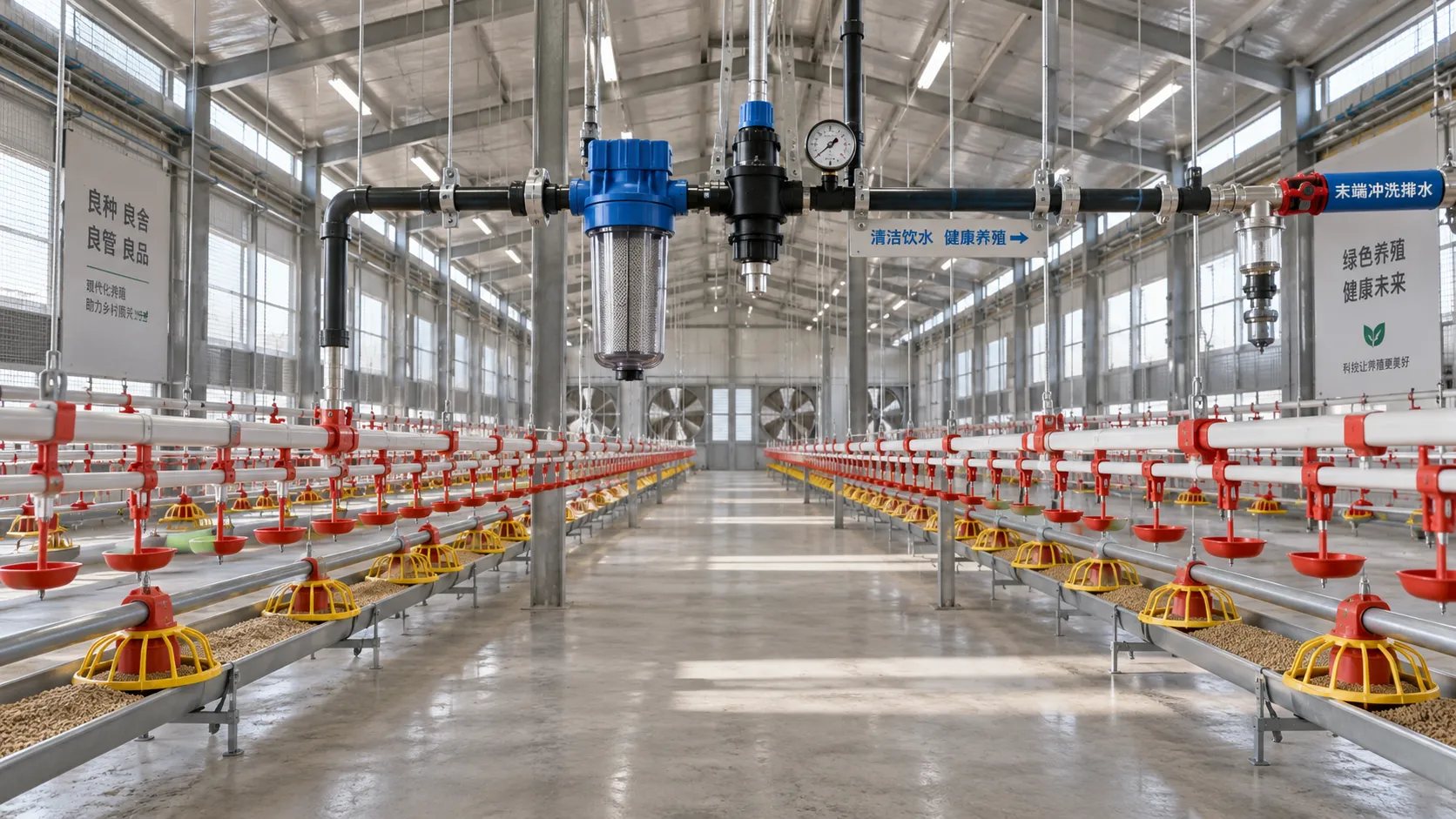
Planning Nipple Drinker Installation for Different Chicken House Layouts
How to install nipple drinker for chicken houses: plan line layouts, pressure control, flushing access, and maintenance for reliable water delivery.
Related News
- 00
0000-00
Choosing a Digital Farming Platform Provider: Compatibility and Data Ownership - 00
0000-00
How Large-Scale Farm Telematics Cuts Downtime Across Mixed Fleets - 00
0000-00
How to Size Low-Pressure Water-Saving Irrigation Systems for Uneven Fields - 00
0000-00
Farm Machinery Sourcing: How to Vet Suppliers, Specs, and Lifecycle Costs - 00
0000-00
What to compare in integrated seeding combinations for heavy soils
Popular Tags
Industry Global
Weekly Insights
Stay ahead with our curated technology reports delivered every Monday.