
Revised Maritime Code Shifts No-Pickup Liability to Shippers
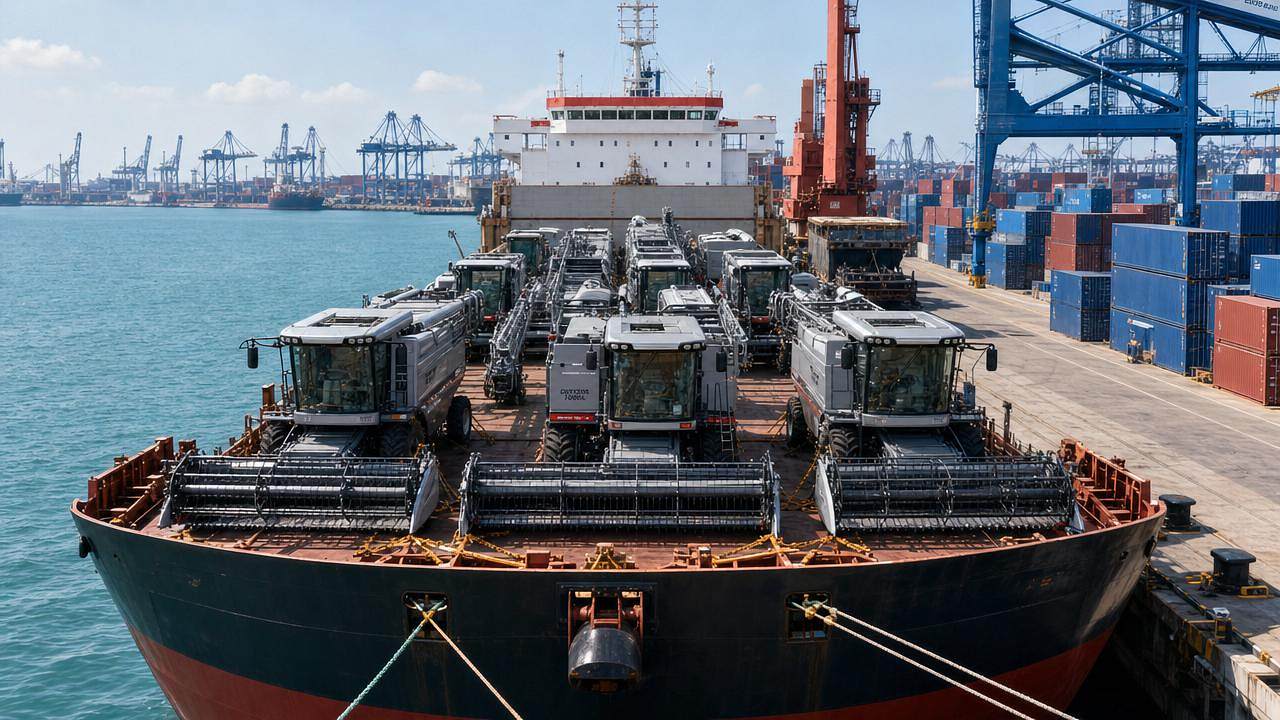




Effective May 1, 2026, the newly revised Maritime Code of the People’s Republic of China reassigns liability for cargo left uncollected at destination ports—from consignees to shippers. This change directly affects Chinese agricultural machinery exporters, particularly those shipping high-value equipment such as self-propelled combine harvesters and sprayers under FOB or CIF terms, reshaping export compliance, demurrage cost allocation, and marine insurance coverage boundaries.
Event Overview
On May 1, 2026, the revised Maritime Code entered into force. Article 93 explicitly shifts primary responsibility for uncollected cargo at discharge ports from the consignee to the shipper. This statutory amendment is publicly confirmed and reflects a formal legislative update with immediate legal effect.
Industries Affected by Segment
Direct Export Trading Enterprises
These enterprises—especially those handling FOB/CIF exports of agricultural machinery—are now legally liable for destination port detention charges, storage fees, and disposal costs if consignees fail to take delivery. The shift alters risk allocation previously assumed under standard trade terms, requiring reassessment of contractual clauses and liability caps in sales agreements.
Manufacturing Exporters (e.g., Combine Harvester & Sprayer Producers)
Manufacturers acting as shippers face heightened exposure on high-value, low-volume shipments. Since equipment like self-propelled harvesters often involves long lead times and complex import procedures in destination markets, delays in customs clearance or buyer insolvency may now trigger direct financial liability—including container demurrage and port storage—under the new provision.
Supply Chain Service Providers (Freight Forwarders, NVOCCs)
While not statutory shippers, forwarders frequently act as contractual shippers on behalf of exporters. Under the revised Article 93, their operational guidance, documentation practices, and contingency planning must now explicitly address shipper-level liability exposure—particularly when issuing house bills of lading or managing cargo release instructions.
Key Considerations and Immediate Responses for Stakeholders
Monitor official interpretations and implementation guidance
The Ministry of Transport and Supreme People’s Court have not yet issued detailed judicial interpretations or enforcement guidelines for Article 93. Stakeholders should track upcoming circulars or Q&A documents that may clarify thresholds for ‘reasonable efforts’ by shippers to secure timely pickup or exceptions for force majeure or buyer default.
Review and revise Incoterms® usage and contract language
FOB and CIF contracts must now explicitly allocate responsibility for post-discharge uncollected cargo. Exporters should avoid relying solely on Incoterms® rules to govern liability beyond delivery; instead, incorporate tailored clauses specifying consignee obligations, notice requirements, and cost recovery mechanisms.
Strengthen pre-shipment due diligence on overseas buyers
Given the shipper’s new primary liability, verifying the consignee’s financial capacity, import licensing status, and local logistics readiness—especially in emerging markets—is no longer optional. This includes confirming warehouse access, customs broker engagement, and documented acceptance of delivery timelines prior to vessel departure.
Adjust insurance coverage scope and claims protocols
Standard marine cargo insurance does not cover demurrage or port storage arising from non-pickup. Exporters should assess whether extended coverage (e.g., ‘warehouse-to-warehouse’ extensions or specialized trade credit insurance) can mitigate exposure—and ensure claims submissions include evidence of proactive communication with consignees and carriers regarding delivery coordination.
Editorial Perspective / Industry Observation
Observably, this revision signals a structural recalibration of risk allocation in China’s maritime export regime—not merely a technical update. Analysis shows it reflects growing regulatory emphasis on shipper accountability across the full lifecycle of international carriage, especially where cargo value and logistical complexity increase exposure. It is currently best understood as a binding legal shift with immediate applicability, rather than a transitional signal awaiting further refinement. From an industry perspective, the change underscores that compliance is now inseparable from commercial due diligence: legal liability can no longer be outsourced via trade terms alone.
Concluding, the revised Article 93 fundamentally redefines the scope of export履约 (performance) for Chinese machinery exporters. Its significance lies less in novelty and more in enforceability: it transforms long-standing commercial assumptions into statutory obligations. At present, it is more appropriately understood as an operational inflection point—one demanding concrete contractual, procedural, and risk-financing adaptations, rather than strategic repositioning alone.
Source: Official promulgation notice of the revised Maritime Code of the People’s Republic of China, effective May 1, 2026. No supplementary regulatory guidance or judicial interpretation has been issued as of publication. Ongoing monitoring of implementation practice is advised.
Related News

Choosing a Digital Farming Platform Provider: Compatibility and Data Ownership
Compare digital farming platforms providers on equipment compatibility, data ownership, and export rights. Discover practical checks to avoid lock-in and choose with confidence.

How Large-Scale Farm Telematics Cuts Downtime Across Mixed Fleets
Large-scale farm equipment telematics cuts mixed-fleet downtime with real-time alerts, smarter maintenance, and stronger operational control. Learn how to protect critical farm workflows.

How to Size Low-Pressure Water-Saving Irrigation Systems for Uneven Fields
Low pressure water-saving irrigation systems for uneven fields: learn zoning, pressure mapping, pipe sizing, and pump selection to improve uniformity and reduce water waste.

Farm Machinery Sourcing: How to Vet Suppliers, Specs, and Lifecycle Costs
Farm machinery information for sourcing: learn to vet suppliers, compare specifications, control lifecycle costs, and secure reliable uptime for smarter equipment purchases.

What to compare in integrated seeding combinations for heavy soils
Compare integrated seeding combinations for heavy soils: depth control, residue flow, consolidation, traction, and field capacity for more uniform crop establishment.

When an integrated seeding combination improves field efficiency
Integrated seeding combination improves field efficiency, protects planting windows, and balances speed with seedbed quality, tractor capacity, and reliable establishment.

Which costs matter most when calculating precision agriculture ROI?
Calculating ROI on precision agriculture equipment? Discover the costs that shape returns, from installation and subscriptions to downtime, labor, and data integration.

How to calculate ROI on precision agriculture equipment before buying
Calculating ROI on precision agriculture equipment: learn to assess total ownership costs, savings, payback, NPV, risks, and farm-scale value before you buy.

Planning Nipple Drinker Installation for Different Chicken House Layouts
How to install nipple drinker for chicken houses: plan line layouts, pressure control, flushing access, and maintenance for reliable water delivery.
Related News
- 00
0000-00
Choosing a Digital Farming Platform Provider: Compatibility and Data Ownership - 00
0000-00
How Large-Scale Farm Telematics Cuts Downtime Across Mixed Fleets - 00
0000-00
How to Size Low-Pressure Water-Saving Irrigation Systems for Uneven Fields - 00
0000-00
Farm Machinery Sourcing: How to Vet Suppliers, Specs, and Lifecycle Costs - 00
0000-00
What to compare in integrated seeding combinations for heavy soils
Popular Tags
Industry Global
Weekly Insights
Stay ahead with our curated technology reports delivered every Monday.