
Kazakhstan Introduces 35% VAT Reduction for Green Agricultural Machinery





Kazakhstan’s Ministry of Finance announced on May 28, 2026, that a 35% import VAT reduction will take effect on June 1, 2026, for 12 categories of smart agricultural machinery—including electric seeders compliant with IEC 62040-3 and variable-rate fertilizer application systems supporting ISOXML protocol. The policy targets precision agriculture equipment with real-time soil data feedback interfaces and built-in variable execution verification logic. Importers, manufacturers, and distributors serving the Kazakh market—particularly those active in precision farming hardware, agritech integration, and agricultural equipment trade—should monitor this development closely, as it signals a formal shift toward regulatory alignment with Variable Rate Technology (VRT) functionality.
Event Overview
On May 28, 2026, Kazakhstan’s Ministry of Finance issued an official notice stating that, effective June 1, 2026, a 35% reduction in import VAT will apply to 12 specified categories of intelligent agricultural machinery. Eligible equipment includes electric seeders meeting IEC 62040-3 standards and variable-rate fertilizer systems compatible with ISOXML. The policy explicitly requires devices to feature real-time soil data feedback interfaces and embedded variable execution calibration logic—criteria directly tied to core VRT functional compliance.
Impact on Specific Industry Segments
Importers and international trade firms supplying agricultural machinery to Kazakhstan will face immediate changes in landed cost calculations and customs classification procedures. The VAT reduction applies only to units verified against technical criteria—not merely by product category—so tariff code assignment and conformity documentation will become more consequential for clearance efficiency and duty eligibility.
OEMs and Tier-1 equipment manufacturers exporting to Kazakhstan must assess whether their current electric seeder or variable-rate system models meet both the IEC 62040-3 and ISOXML requirements—and whether their firmware and data architecture satisfy the mandatory real-time soil feedback interface and variable execution verification logic. Non-compliant models may lose competitive pricing advantage despite identical physical specifications.
Agritech integration service providers supporting farm-level deployment—especially those offering retrofitting, calibration, or data interoperability solutions—may see increased demand for validation support. Since the policy hinges on functional verification rather than hardware-only attributes, third-party verification services could gain relevance in pre-clearance preparation.
Distributors and local channel partners in Kazakhstan will need to adjust inventory planning and customer education efforts. End-user awareness of VRT compliance requirements remains limited; therefore, distinguishing between technically eligible and ineligible products will become a key differentiator in sales conversations and after-sales support workflows.
What Relevant Enterprises or Practitioners Should Focus On
Monitor official technical guidance and implementation protocols
The Ministry of Finance’s notice outlines eligibility criteria but does not specify testing methodologies, certification pathways, or recognized conformity assessment bodies. Enterprises should track upcoming clarifications from Kazakhstan’s State Revenue Committee or authorized technical regulators—particularly regarding how ‘real-time soil data feedback interface’ and ‘variable execution verification logic’ will be audited at point of entry.
Verify eligibility at the model-firmware level—not just category or branding
Analysis shows that compliance is determined functionally, not nominally. A seeder labeled ‘electric’ or a fertilizer controller advertised as ‘variable-rate’ does not automatically qualify. Companies must review device firmware versions, API documentation, data schema compatibility (e.g., ISOXML v3.3 vs. v4.0), and onboard diagnostic logs to confirm operational alignment with the stated technical thresholds.
Distinguish between policy signal and operational readiness
Observably, the June 1, 2026 start date establishes a firm timeline—but no public information confirms whether customs authorities have updated automated tariff classification systems or trained frontline officers on VRT-specific verification steps. Importers should treat early shipments as pilot cases and allocate buffer time for manual document review and potential technical queries.
Prepare pre-shipment documentation packages with technical annexes
Current more practical preparation includes compiling device-specific technical dossiers: IEC 62040-3 test reports, ISOXML conformance certificates, interface schematics showing soil sensor input pathways, and software verification records demonstrating closed-loop execution calibration. These materials—though not yet mandated—will likely form the basis of future eligibility assessments.
Editorial Perspective / Industry Observation
This measure is best understood not as an isolated tax incentive, but as Kazakhstan’s first formal regulatory articulation of VRT functionality as a condition for market access. From an industry perspective, it reflects a broader regional trend where agri-policy instruments are increasingly calibrated to software-defined performance—not just mechanical capability. Analysis suggests this is primarily a signaling mechanism at present: while the VAT reduction is enforceable, its real-world impact depends on consistent interpretation across ports and clarity on verification rigor. It does not yet constitute a full technical regulation (e.g., mandatory type approval), but sets a precedent for future compliance frameworks in Central Asian agricultural markets.
Consequently, stakeholders should view this less as an immediate commercial opportunity and more as an early indicator of evolving technical gatekeeping—where interoperability, data transparency, and embedded logic verification begin to shape trade conditions alongside traditional safety or emissions standards.
Conclusion
This VAT reduction marks a targeted step toward incentivizing precision agriculture adoption in Kazakhstan—but its significance lies not in the fiscal benefit alone, rather in its explicit linkage of import eligibility to verifiable VRT functionality. For industry participants, it underscores a growing requirement: hardware must now demonstrate interoperable, auditable intelligence—not just electrification or automation—to qualify for policy support. At this stage, it is more accurately interpreted as a regulatory orientation marker than a fully operationalized subsidy program.
Source Attribution
Main source: Republic of Kazakhstan Ministry of Finance official notice, published May 28, 2026.
Areas requiring ongoing observation: Technical verification procedures, designated conformity assessment bodies, and customs implementation guidance—none of which have been publicly released as of the policy’s effective date.
Related News
Choosing a Digital Farming Platform Provider: Compatibility and Data Ownership
Compare digital farming platforms providers on equipment compatibility, data ownership, and export rights. Discover practical checks to avoid lock-in and choose with confidence.
How Large-Scale Farm Telematics Cuts Downtime Across Mixed Fleets
Large-scale farm equipment telematics cuts mixed-fleet downtime with real-time alerts, smarter maintenance, and stronger operational control. Learn how to protect critical farm workflows.
How to Size Low-Pressure Water-Saving Irrigation Systems for Uneven Fields
Low pressure water-saving irrigation systems for uneven fields: learn zoning, pressure mapping, pipe sizing, and pump selection to improve uniformity and reduce water waste.

Farm Machinery Sourcing: How to Vet Suppliers, Specs, and Lifecycle Costs
Farm machinery information for sourcing: learn to vet suppliers, compare specifications, control lifecycle costs, and secure reliable uptime for smarter equipment purchases.
What to compare in integrated seeding combinations for heavy soils
Compare integrated seeding combinations for heavy soils: depth control, residue flow, consolidation, traction, and field capacity for more uniform crop establishment.
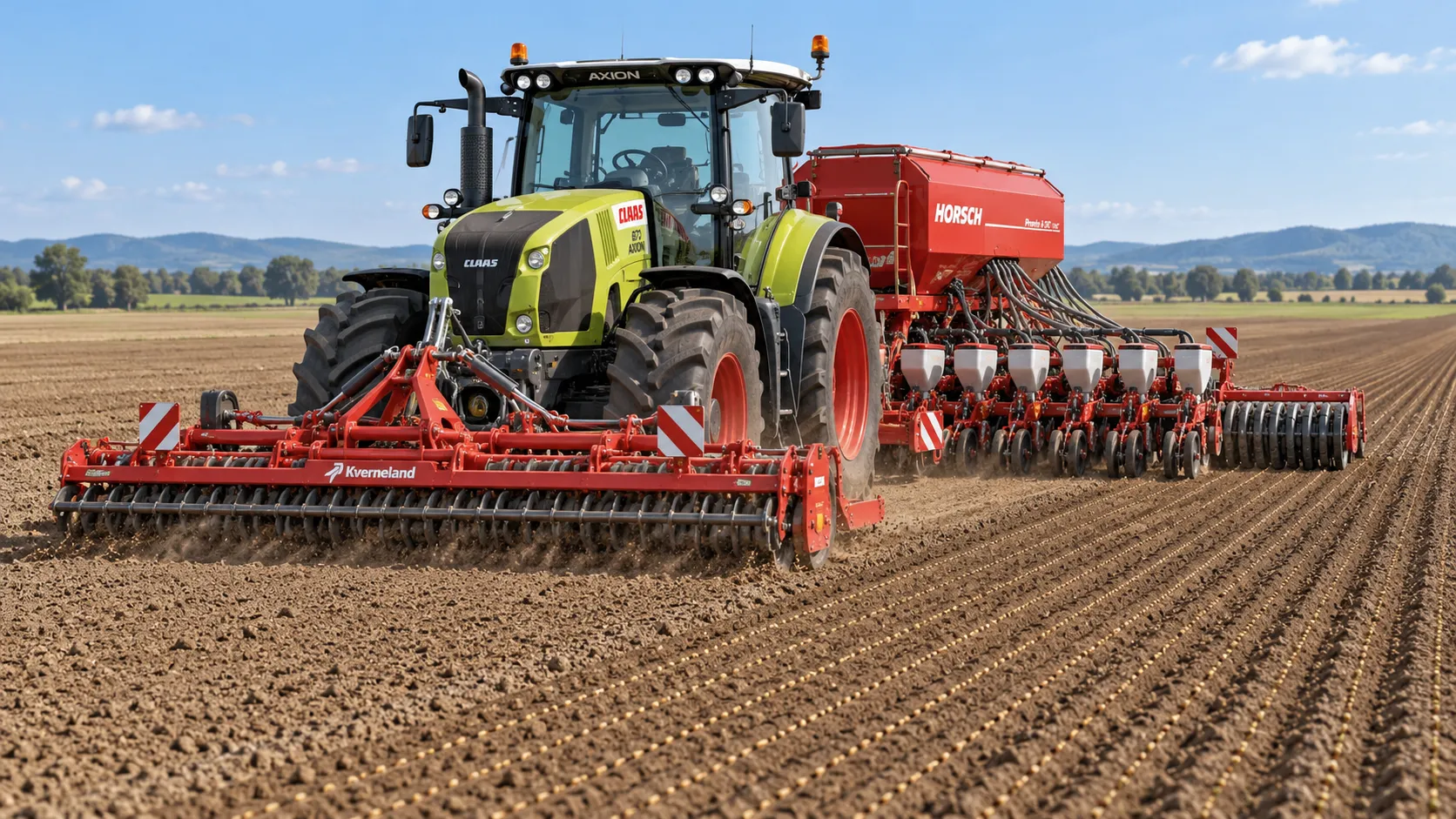
When an integrated seeding combination improves field efficiency
Integrated seeding combination improves field efficiency, protects planting windows, and balances speed with seedbed quality, tractor capacity, and reliable establishment.
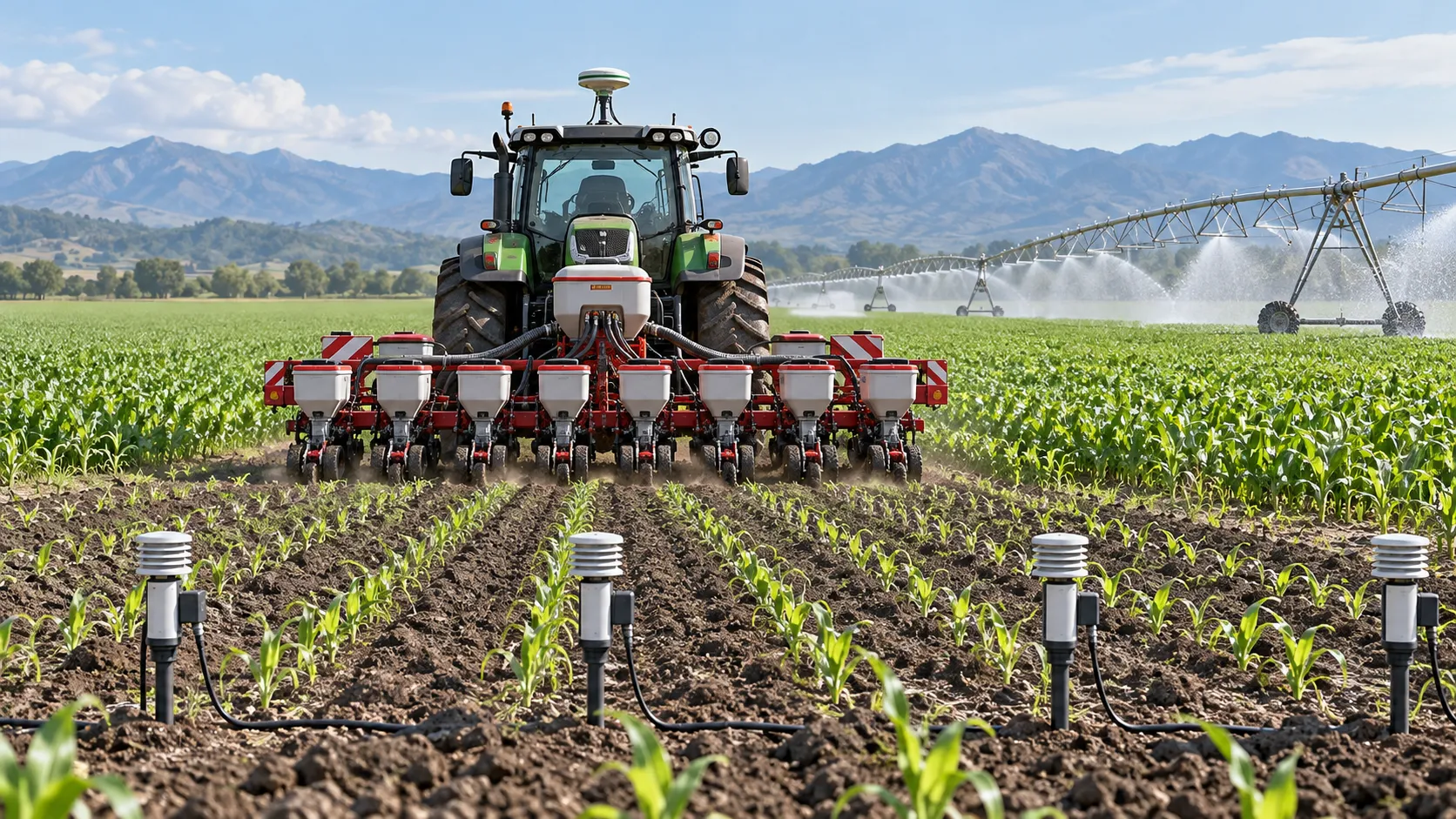
Which costs matter most when calculating precision agriculture ROI?
Calculating ROI on precision agriculture equipment? Discover the costs that shape returns, from installation and subscriptions to downtime, labor, and data integration.

How to calculate ROI on precision agriculture equipment before buying
Calculating ROI on precision agriculture equipment: learn to assess total ownership costs, savings, payback, NPV, risks, and farm-scale value before you buy.
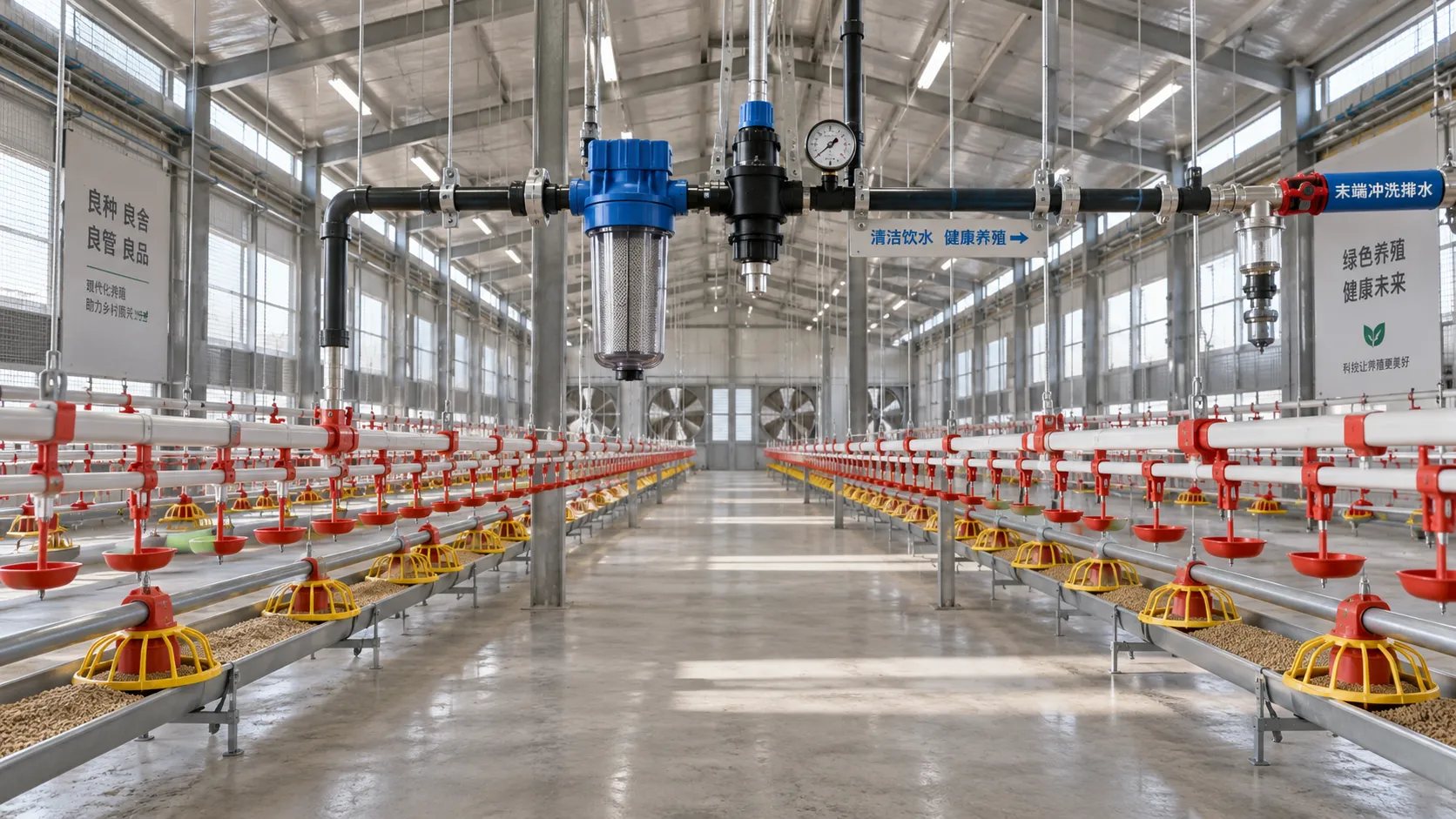
Planning Nipple Drinker Installation for Different Chicken House Layouts
How to install nipple drinker for chicken houses: plan line layouts, pressure control, flushing access, and maintenance for reliable water delivery.
Related News
- 00
0000-00
Choosing a Digital Farming Platform Provider: Compatibility and Data Ownership - 00
0000-00
How Large-Scale Farm Telematics Cuts Downtime Across Mixed Fleets - 00
0000-00
How to Size Low-Pressure Water-Saving Irrigation Systems for Uneven Fields - 00
0000-00
Farm Machinery Sourcing: How to Vet Suppliers, Specs, and Lifecycle Costs - 00
0000-00
What to compare in integrated seeding combinations for heavy soils
Popular Tags
Industry Global
Weekly Insights
Stay ahead with our curated technology reports delivered every Monday.