
2026 Xinjiang International Agricultural Machinery Expo Closes with NEV Tractors as Belt and Road Procurement Highlight
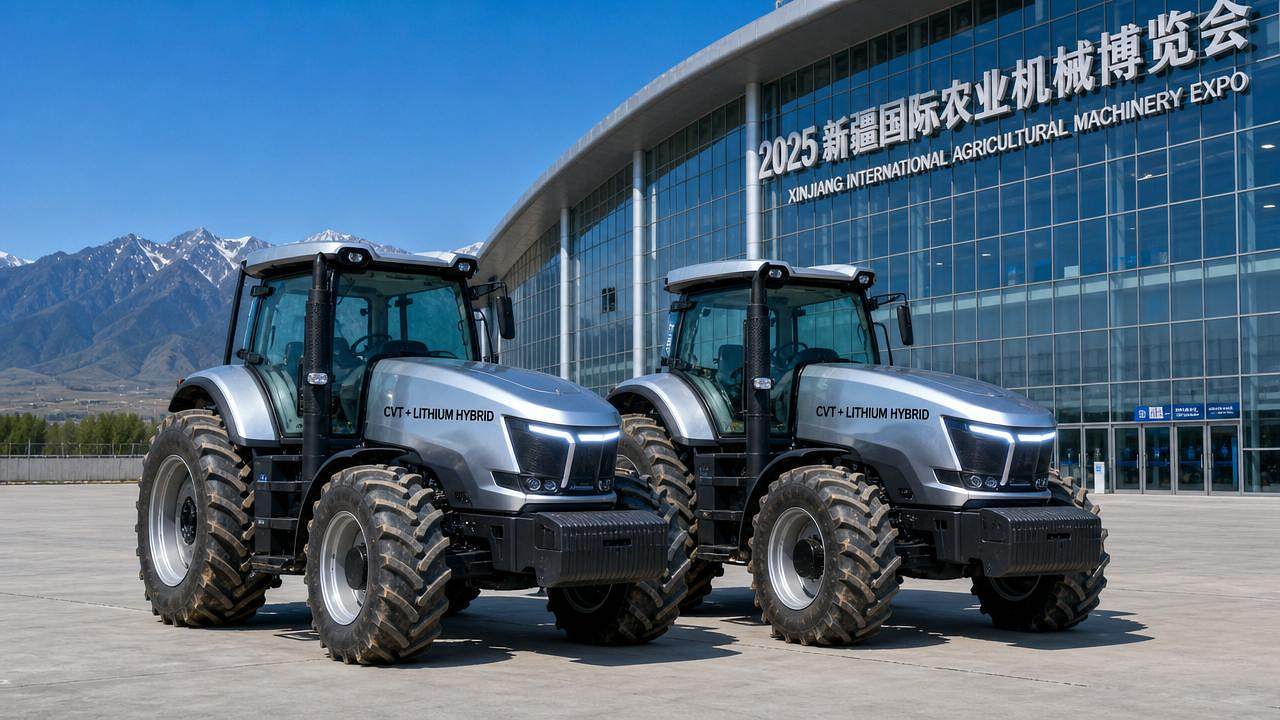




The 2026 Xinjiang International Agricultural Machinery Expo, held in Urumqi from May 25 to 27, concluded with新能源拖拉机 (new energy vehicle tractors) emerging as a focal point for procurement from Belt and Road partner countries—particularly Central Asia and the Middle East. The event signals shifting demand patterns in agricultural machinery trade and warrants attention from export-oriented manufacturers, component suppliers, logistics providers, and after-sales service operators.
Event Overview
The 2026 Xinjiang International Agricultural Machinery Expo took place in Urumqi from May 25 to 27, 2026. Approximately 700 enterprises from 10 countries participated. A dedicated exhibition zone for new energy tractors generated confirmed orders exceeding RMB 1.2 billion. Buyers from Central Asia and the Middle East showed concentrated interest in CVT-transmission-equipped lithium battery hybrid tractor models. Seventeen ‘agricultural machinery going global’ cooperation agreements were signed during the event, covering localized assembly and after-sales service network development in Kazakhstan, Uzbekistan, and other countries.
Impact on Specific Industry Segments
Direct Export Enterprises
Export-focused agricultural machinery manufacturers are directly affected by the demonstrated demand shift toward CVT + lithium hybrid tractors. This reflects a move beyond basic electrification toward integrated powertrain solutions requiring higher technical integration and compliance with diverse regional certification standards.
Component Suppliers (CVT & Battery Systems)
Suppliers of continuously variable transmissions (CVT) and lithium-based power systems face increased downstream inquiry volume. Demand is no longer generalized but specifically targets CVT–battery hybrid configurations validated for field operation under arid and high-temperature conditions typical of Central Asian and Middle Eastern markets.
Localized Assembly & After-Sales Service Providers
Enterprises engaged in overseas joint ventures or local assembly—including those supporting warranty, maintenance, and parts distribution—are impacted by the 17 signed agreements on localized assembly and service network co-construction. These agreements imply near-term operational scaling requirements in target markets, not just long-term strategic intent.
Logistics & Trade Facilitation Services
Freight forwarders, customs brokers, and trade finance providers handling agricultural machinery exports must adapt to evolving cargo profiles: heavier battery-integrated units, specialized packaging for sensitive electronics, and documentation aligned with new bilateral service commitments—not only equipment delivery.
What Relevant Enterprises or Practitioners Should Focus On Now
Monitor official implementation timelines for the 17 signed cooperation agreements
While 17 agreements were announced, their execution schedules—including pilot assembly launch dates, regulatory approvals for local production, and service center rollout milestones—remain unconfirmed. Tracking these timelines is critical for capacity planning and resource allocation.
Prioritize CVT–lithium hybrid system validation for Central Asian operating conditions
Buyer inquiries centered on CVT + lithium hybrid models suggest market readiness hinges less on novelty and more on proven reliability under specific environmental stressors (e.g., dust ingress, thermal management, grid-independent charging). Technical validation—not just product listing—is now a prerequisite for competitive positioning.
Distinguish between procurement interest and enforceable order commitments
The RMB 1.2 billion in orders reported from the NEV tractor zone represents confirmed commercial commitments—not indicative estimates or MOU-level expressions of interest. Enterprises should treat this figure as evidence of near-term revenue pipeline formation, particularly for hybrid powertrain suppliers and certified integrators.
Prepare supply chain coordination for dual-market compliance pathways
Exporting to Kazakhstan or Uzbekistan under newly agreed local assembly frameworks may require parallel compliance pathways: one for China-exported CKD/SKD kits, another for locally sourced components. Proactive alignment with local partners on traceability, testing, and certification handover is advisable before production ramp-up begins.
Editorial Perspective / Industry Observation
Observably, this event marks a transition from demonstration-phase NEV tractor promotion to early-stage commercial deployment across Belt and Road markets. The concentration of buyer interest on CVT–lithium hybrids—not standalone electric or hydrogen variants—suggests market preference has coalesced around a technically mature, operationally pragmatic configuration. Analysis shows that the 17 signed agreements represent more than diplomatic signaling: they indicate institutionalized collaboration structures now entering operational definition. However, it remains to be seen whether local assembly commitments will translate into sustained domestic content requirements or remain reliant on imported core modules. From an industry perspective, this is best understood not as a single-event milestone, but as the first publicly verifiable inflection point in the cross-border industrialization of agricultural NEVs.
This expo outcome does not yet constitute broad-based market transformation—but it does confirm that targeted, technically grounded NEV tractor deployment is advancing beyond pilot trials into contracted, geographically anchored commercial execution. The current phase favors actors with both modular powertrain integration capability and structured international partnership experience—not just product availability.
Conclusion
The 2026 Xinjiang International Agricultural Machinery Expo serves as empirical evidence that demand for advanced new energy tractors is materializing in Belt and Road markets—not as conceptual interest, but through binding orders and formalized local cooperation frameworks. It is more accurately interpreted as the onset of structured, regionally adapted commercialization rather than a general market breakthrough. Enterprises should respond by aligning technical roadmaps with verified regional requirements, verifying agreement implementation schedules, and preparing for compliance and logistics complexity inherent in localized assembly models.
Source Attribution
Main source: Official summary of the 2026 Xinjiang International Agricultural Machinery Expo (released May 27, 2026).
Points requiring ongoing observation: Implementation timelines and scope definitions for the 17 signed ‘agricultural machinery going global’ cooperation agreements.
Related News
Choosing a Digital Farming Platform Provider: Compatibility and Data Ownership
Compare digital farming platforms providers on equipment compatibility, data ownership, and export rights. Discover practical checks to avoid lock-in and choose with confidence.
How Large-Scale Farm Telematics Cuts Downtime Across Mixed Fleets
Large-scale farm equipment telematics cuts mixed-fleet downtime with real-time alerts, smarter maintenance, and stronger operational control. Learn how to protect critical farm workflows.
How to Size Low-Pressure Water-Saving Irrigation Systems for Uneven Fields
Low pressure water-saving irrigation systems for uneven fields: learn zoning, pressure mapping, pipe sizing, and pump selection to improve uniformity and reduce water waste.
Farm Machinery Sourcing: How to Vet Suppliers, Specs, and Lifecycle Costs
Farm machinery information for sourcing: learn to vet suppliers, compare specifications, control lifecycle costs, and secure reliable uptime for smarter equipment purchases.
What to compare in integrated seeding combinations for heavy soils
Compare integrated seeding combinations for heavy soils: depth control, residue flow, consolidation, traction, and field capacity for more uniform crop establishment.
When an integrated seeding combination improves field efficiency
Integrated seeding combination improves field efficiency, protects planting windows, and balances speed with seedbed quality, tractor capacity, and reliable establishment.
Which costs matter most when calculating precision agriculture ROI?
Calculating ROI on precision agriculture equipment? Discover the costs that shape returns, from installation and subscriptions to downtime, labor, and data integration.

How to calculate ROI on precision agriculture equipment before buying
Calculating ROI on precision agriculture equipment: learn to assess total ownership costs, savings, payback, NPV, risks, and farm-scale value before you buy.
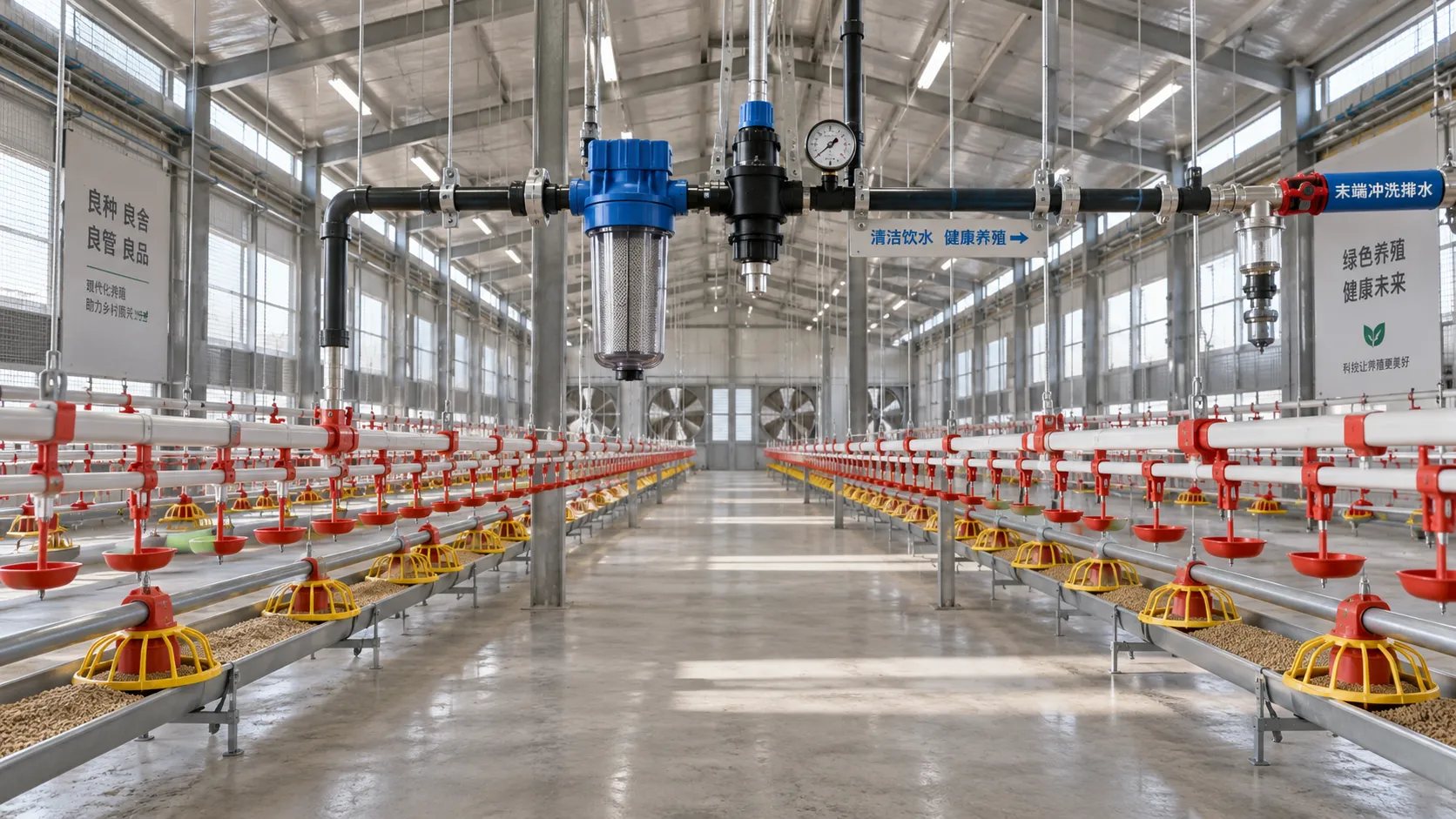
Planning Nipple Drinker Installation for Different Chicken House Layouts
How to install nipple drinker for chicken houses: plan line layouts, pressure control, flushing access, and maintenance for reliable water delivery.
Related News
- 00
0000-00
Choosing a Digital Farming Platform Provider: Compatibility and Data Ownership - 00
0000-00
How Large-Scale Farm Telematics Cuts Downtime Across Mixed Fleets - 00
0000-00
How to Size Low-Pressure Water-Saving Irrigation Systems for Uneven Fields - 00
0000-00
Farm Machinery Sourcing: How to Vet Suppliers, Specs, and Lifecycle Costs - 00
0000-00
What to compare in integrated seeding combinations for heavy soils
Popular Tags
Industry Global
Weekly Insights
Stay ahead with our curated technology reports delivered every Monday.